
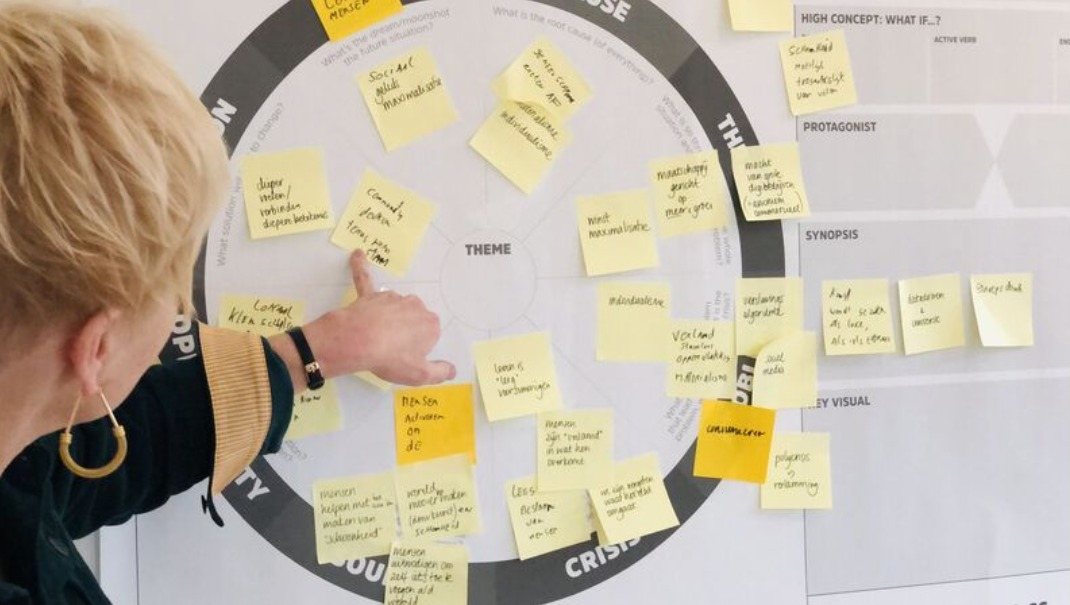
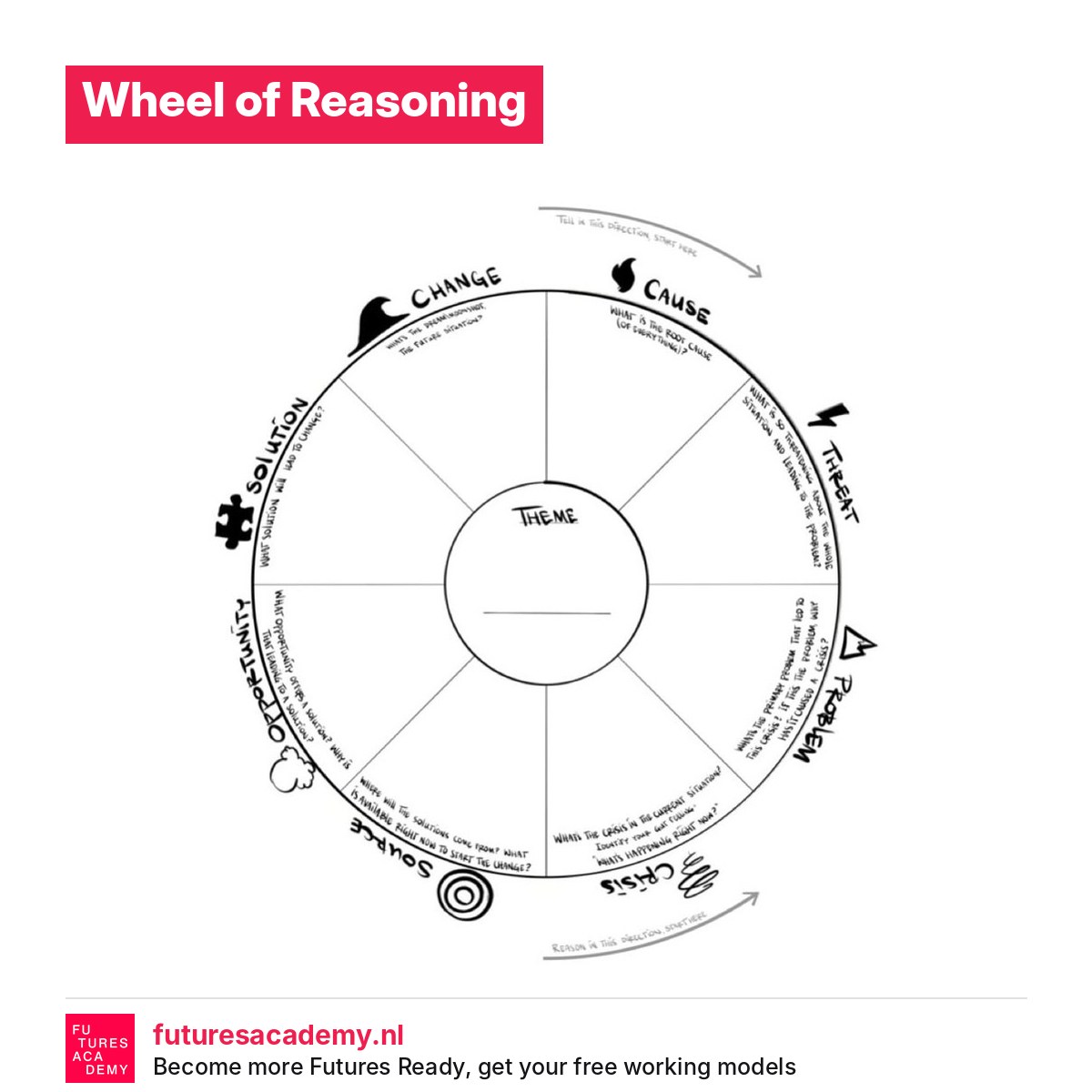
A model rooted in age old folk tales: stories with an underlying logic. You reason from a crisis back to the cause, and from the future in which the problem is solved back to the source: the smallest intervention with the biggest change. That way you design your own story of change, for a scenario, a vision or a strategy.
This model challenges you to really look at the argument beneath your vision or story.
When to use
the Wheel of Reasoning
Like the 5 Whys, you look for the cause. But the Wheel does not stop there. Halfway, it turns you towards the change you want and the source that can set it in motion.
From Crisis to Change
The Wheel has two sides. The Problem space, also called the dark side, asks why and looks back, from crisis to cause. Then you turn the Wheel around. The Opportunity space starts in the future in which the problem has already been solved, asks how and works back to the source.
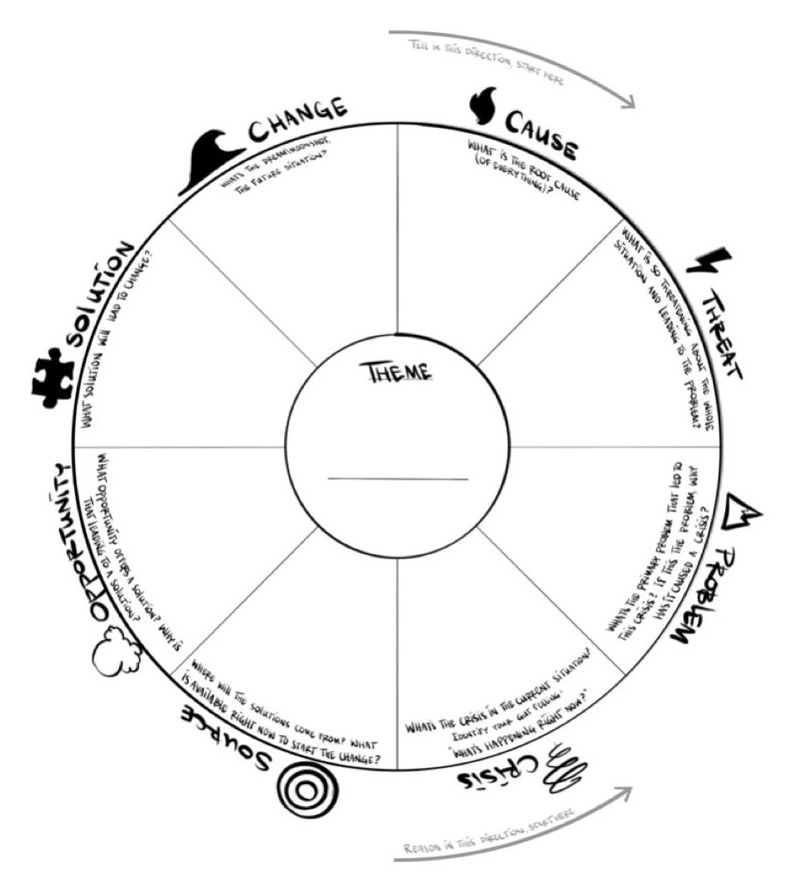
This is where you feel the pain. There has to be urgency before people want to solve something. You keep asking why, until you reach the deeper cause.
How do you experience the pain today? What makes it a crisis? Without urgency, nobody moves.
What is the real problem behind the crisis? Look beyond the symptoms.
What happens if you change nothing? That is where the threat lies.
What is the cause of it all? Keep asking why until you hit the root.
Turn the Wheel around. You start in the future in which the problem has already been solved and keep asking how, until you reach the source: the small beginning that set everything in motion.
Imagine the problem has been solved. What has changed?
Which solution did you create to get there?
Which opportunity did you see and seize?
What was the small beginning that set all the change in motion? The source is often right at your feet, so small and simple that you overlook it. Look for the smallest intervention with the biggest change.
How do you apply it?
- 1Choose your theme. Write it in the middle of the Wheel.
- 2Start with the crisis. What hurts today, and why is it urgent?
- 3Reason back to the cause. From crisis to problem, threat and cause. Keep asking why.
- 4Turn the Wheel around. Start in the future in which the problem has been solved and work back: change, solution, opportunity and source. Ask how.
- 5Shift until it fits. Move back and forth between the cause and your preferred future. This is abductive reasoning: trying and adjusting, with notes you can move around.
- 6Test your story. Tell it to people who were not there. Listen to their questions without defending yourself. They show where you make a leap or leave a gap.
- 7Write it in eight sentences. One sentence per perspective, like a headline. Together they are your elevator pitch.
- 8Work it out in eight paragraphs. Three or four sentences per headline. That way it becomes a story others can follow.
Tips from practice
- Start where your audience stands. A CFO thinks in risk: start with the crisis. A CEO wants the vision: start with the change. A sales manager looks for the opportunity, an innovation manager for the problem.
- You can start anywhere on the Wheel. We prefer to start with the problem and the crisis.
- Expect to move things around. It is trying and adjusting, like a puzzle.
- Listen to other people’s questions without explaining straight away. Every question points to a gap in your story.
- Look diagonally across the Wheel to see which counterforce is at play.
- Close with one next step you can take tomorrow.
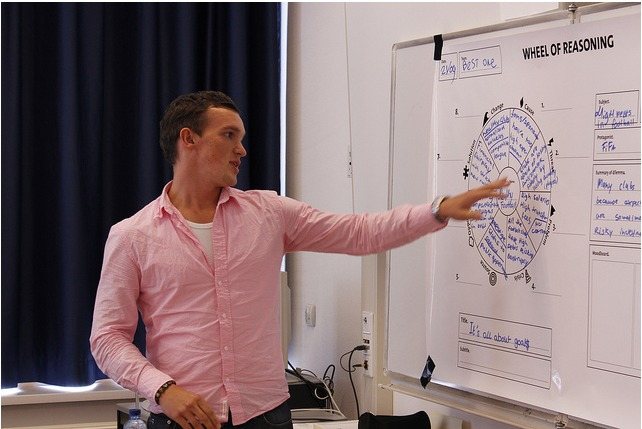
Swapfiets on the Wheel
Students’ bikes kept breaking down or being stolen. Swapfiets did not build a better bike. It found a different place to start. Below is the story in eight sentences, one per perspective.

Why · from crisis to cause
How · from change to source
Students keep losing their bikes to theft and repairs, because a bike is sold as a product and nobody stays responsible. Swapfiets moved from ownership to access: a bike that always works, for one monthly fee. It started small and visible, with a blue front tyre as a promise.
Every week one pioneer like Swapfiets
What did that organisation really do, and why? In ten minutes. With three reflection questions and a canvas to apply the move to your own challenge.
- 1new pioneer every week
- 30 minlive webinar, every other week
- €10per month, cancel any month


Possible next steps
Further reading
Good reads
- Stealing Fire from the GodsJames Bonnet
- The Design of BusinessRoger Martin, 2009
Scientific background
- Morphology of the FolktaleVladimir Propp, 1928
- Developing an Abduction Based Method for Futures ResearchErkki Patokorpi and Marko Ahvenainen, 2009