
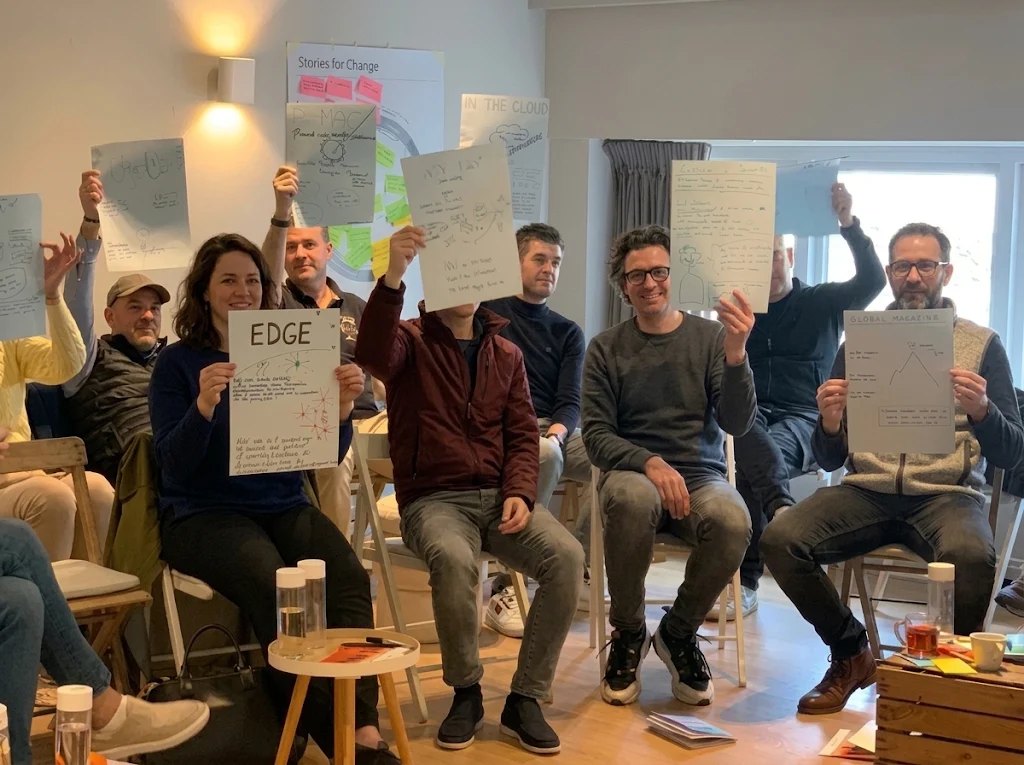
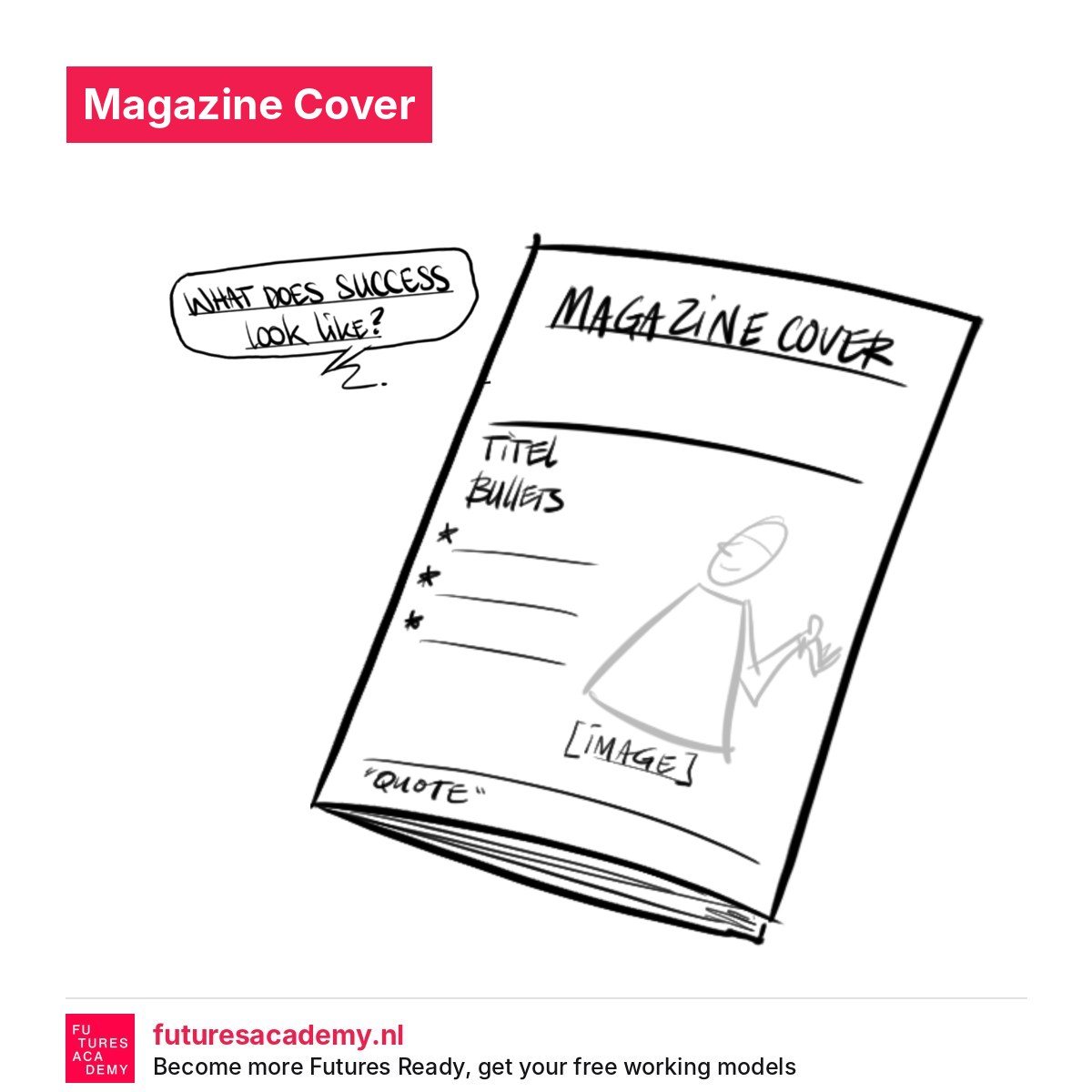
A creative vision exercise in which you put your project or organisation on the cover of a magazine, three years from now. You choose the magazine, write the headline and draw the image of your success.
The cover challenges your assumption that everyone means the same thing by success, and forces you to make it concrete.
When to use
the Magazine Cover
A vision statement stays abstract. A cover forces you to choose: which magazine, which headline, which image. Amazon uses a related principle, working backwards: first the press release of the launch, then the product.
The definition of success
A cover has five fixed parts. The magazine title says who is writing about you. The headline, the bullets and your quote tell the story. The image shows what success looks like.
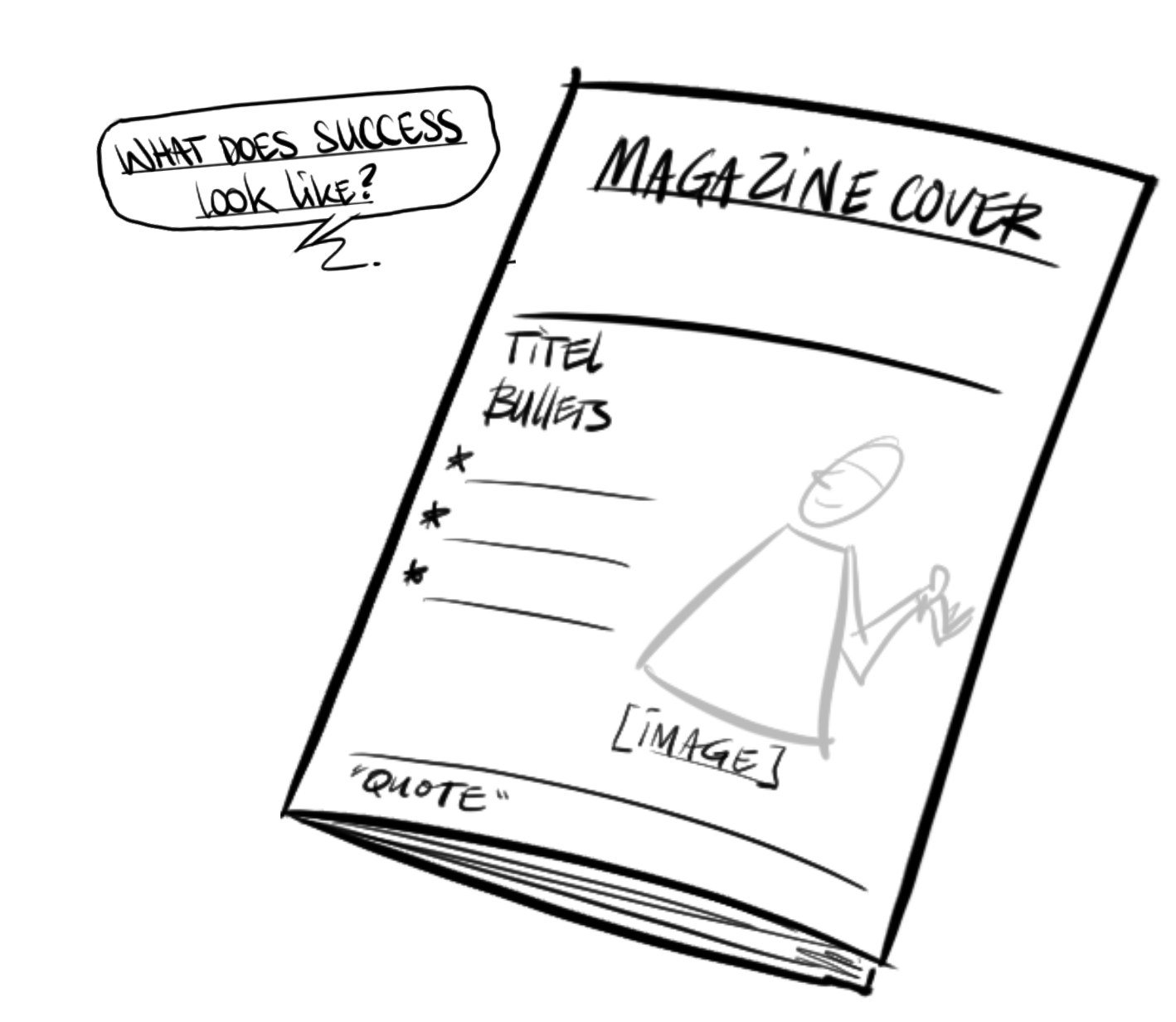
Which magazine, newspaper or blog would call you? And on which cover would you be proud to appear? Choose an existing or made up title. Your choice says something about which authority matters to you.
What is the headline that tells the core of your story? Short, big and concrete.
Which three striking sides of your story make readers curious? Ask for a number too, so you see the scale of your success.
What do you say in the interview? A statement about the project or a lesson you have learned.
Which image shows your success? Draw it, however simple. The image supports the story.
How do you apply it?
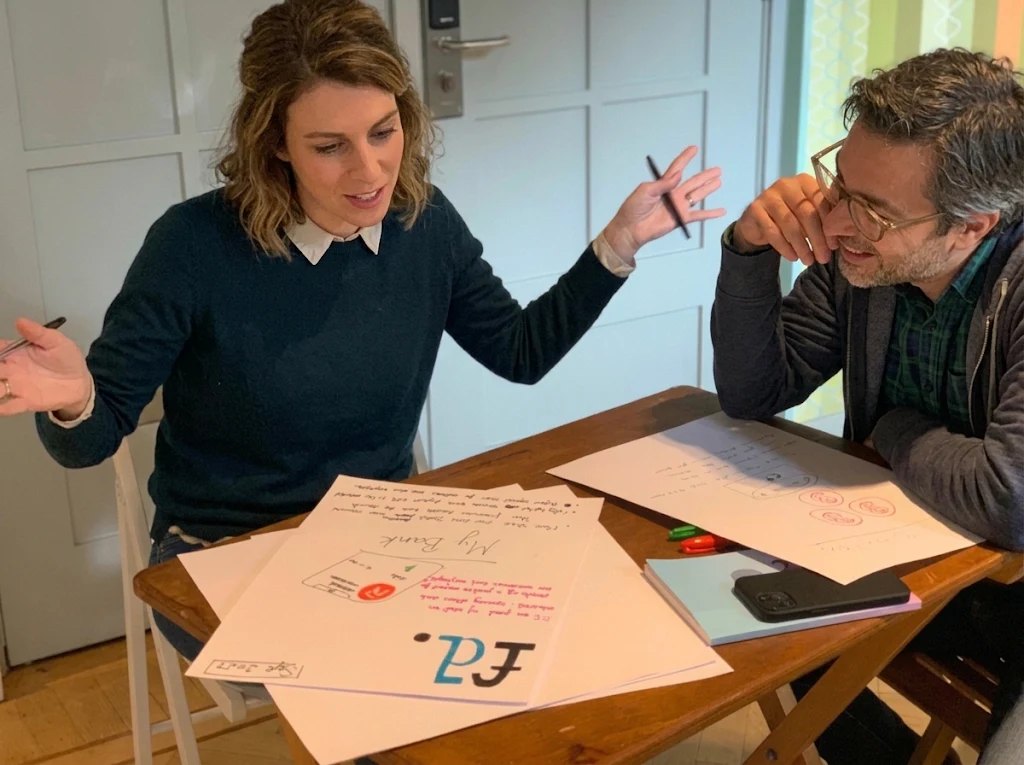
- 1Get paper and markers. An A4 or A3 sheet in portrait, and a few markers.
- 2Imagine the future. It is three years from now. Your project is a breakthrough and a journalist calls for an interview.
- 3Choose your magazine. Think for five minutes: which magazine or blog calls you, and on which cover would you be proud to appear?
- 4Write the headline. The headline that tells the core of your story.
- 5Add bullets and a quote. Three striking sides of your story, and a statement of your own.
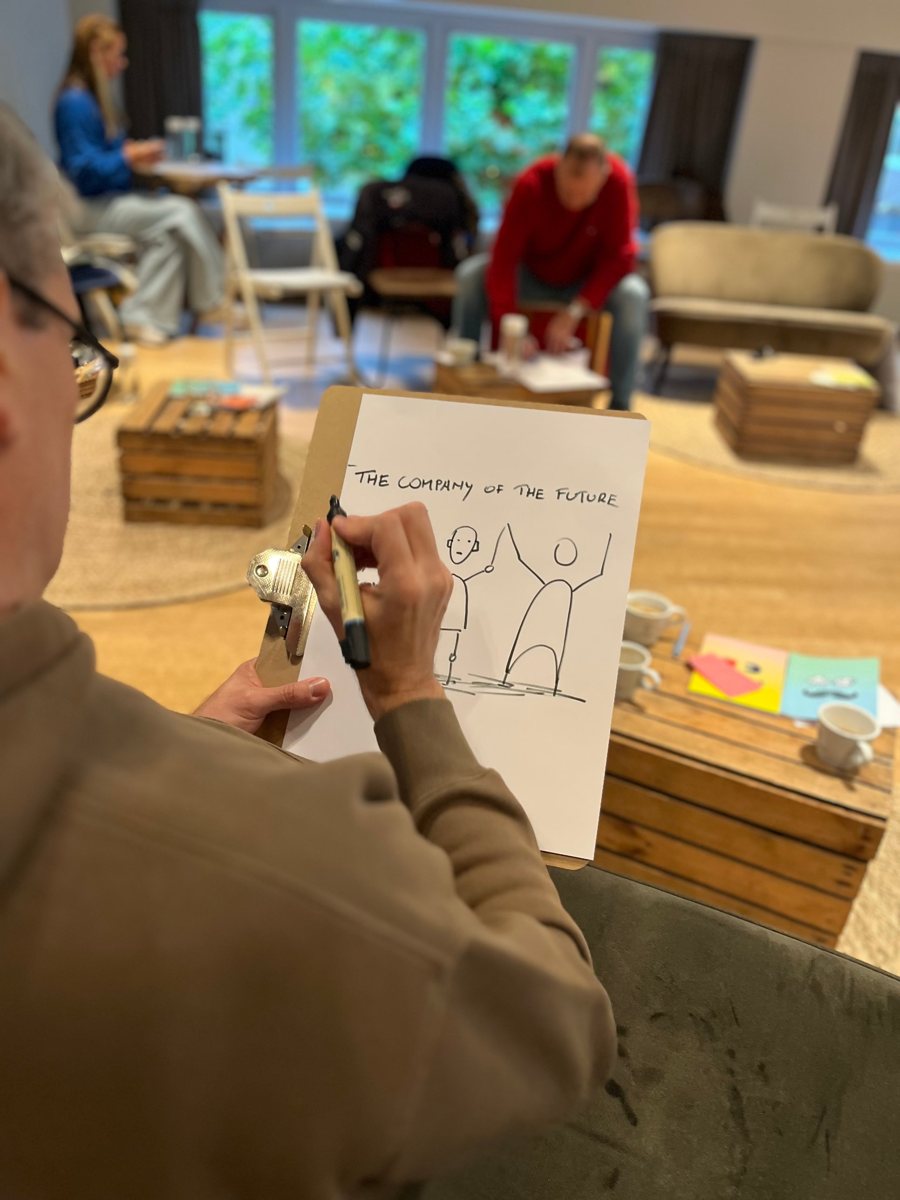
- 6Draw the image. Take 20 to 30 minutes for the whole cover. The image may be simple.
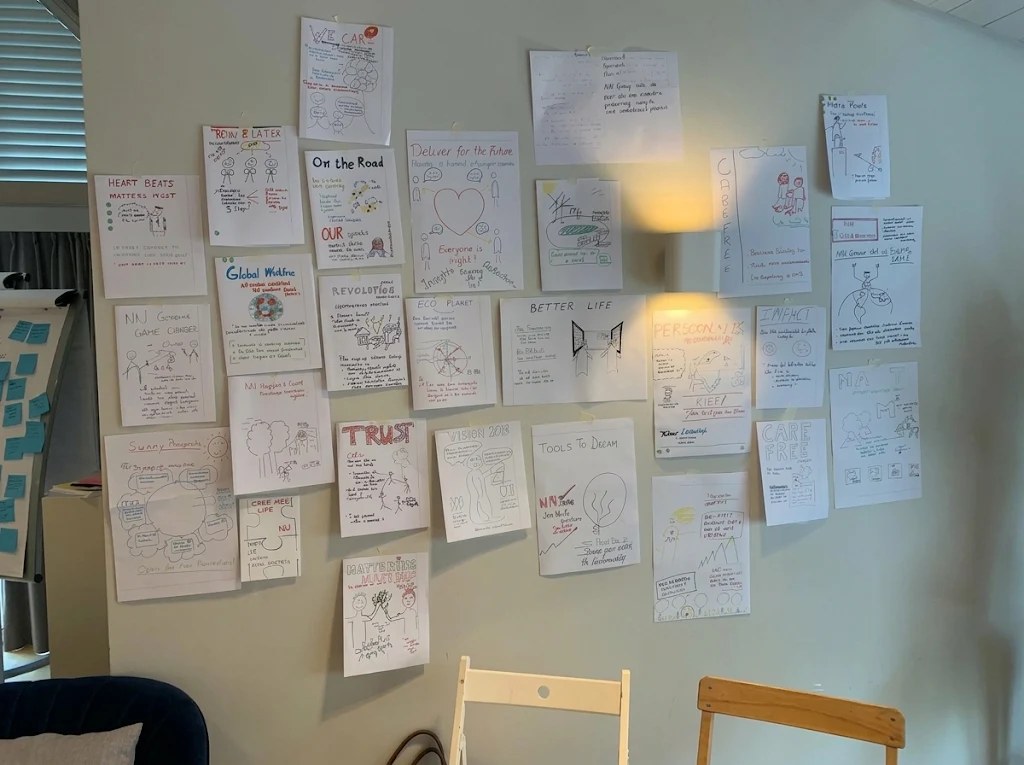
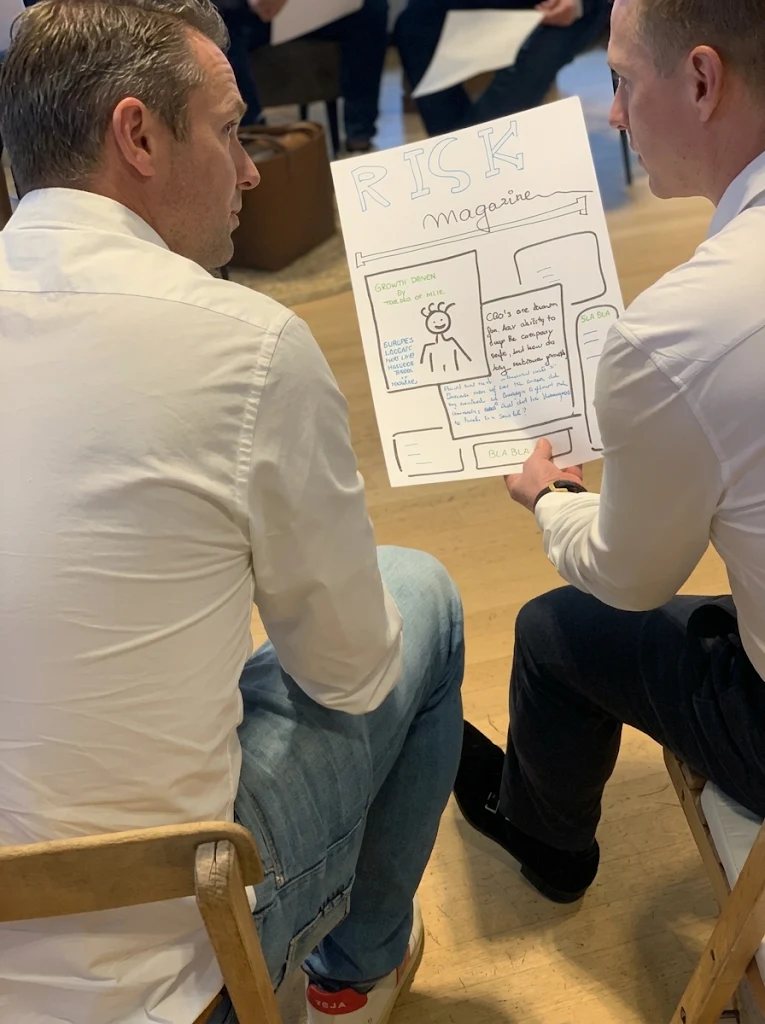
- 7Reflect. Show the covers. What does the chosen magazine say, and what stands out in each other’s picture of success?
Tips from practice
- Vary the question to fit what you want to explore: your team, your product or your organisation.
- Ask for a number in the headline or bullets. Then you also reflect on the scale.
- Afraid of the blank page? Warm up with a short drawing lesson of a few minutes.
- The magazine someone chooses says a lot. Ask further: why this magazine?
- Upload the drawing into an AI tool and turn it into a real glossy cover. That makes it tangible. And it becomes a real conversation piece.
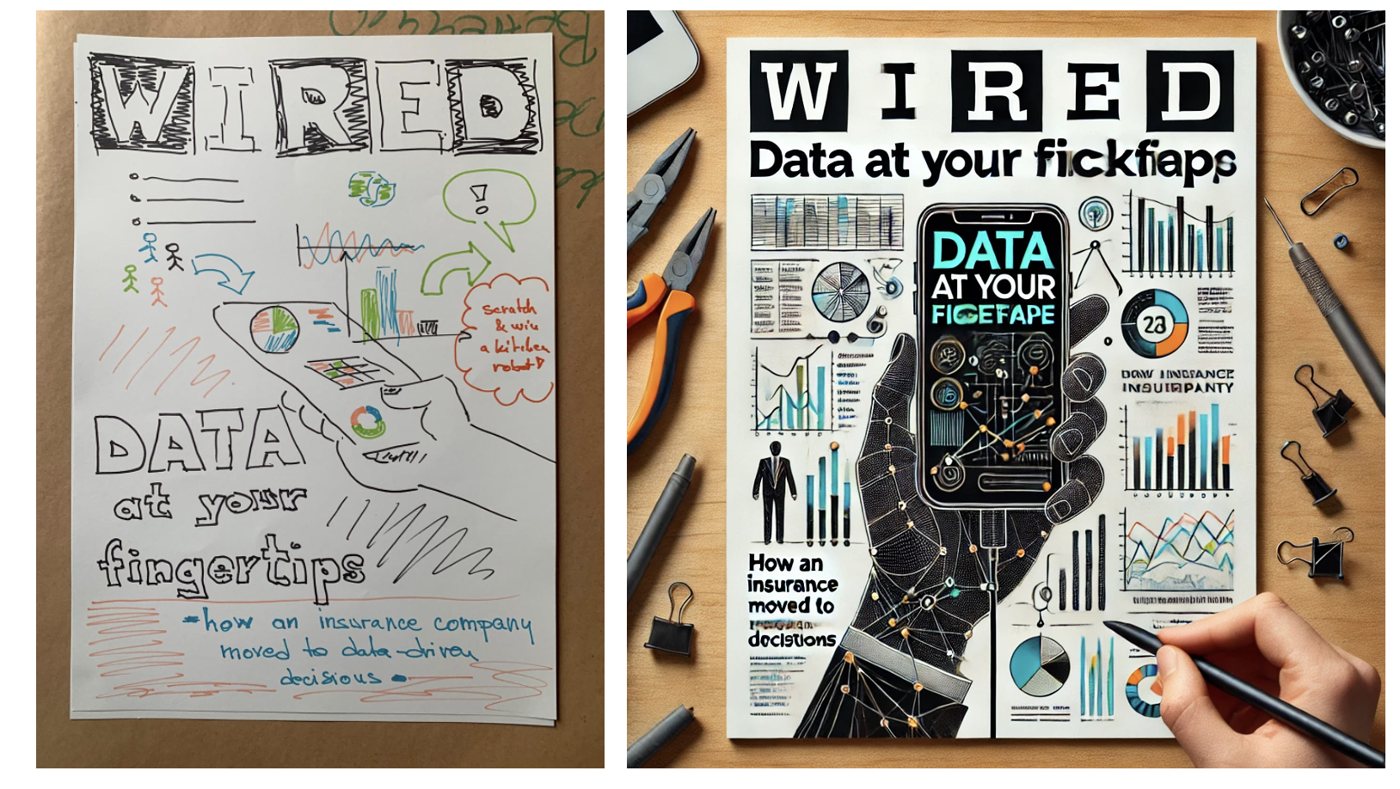
Wired on an insurer
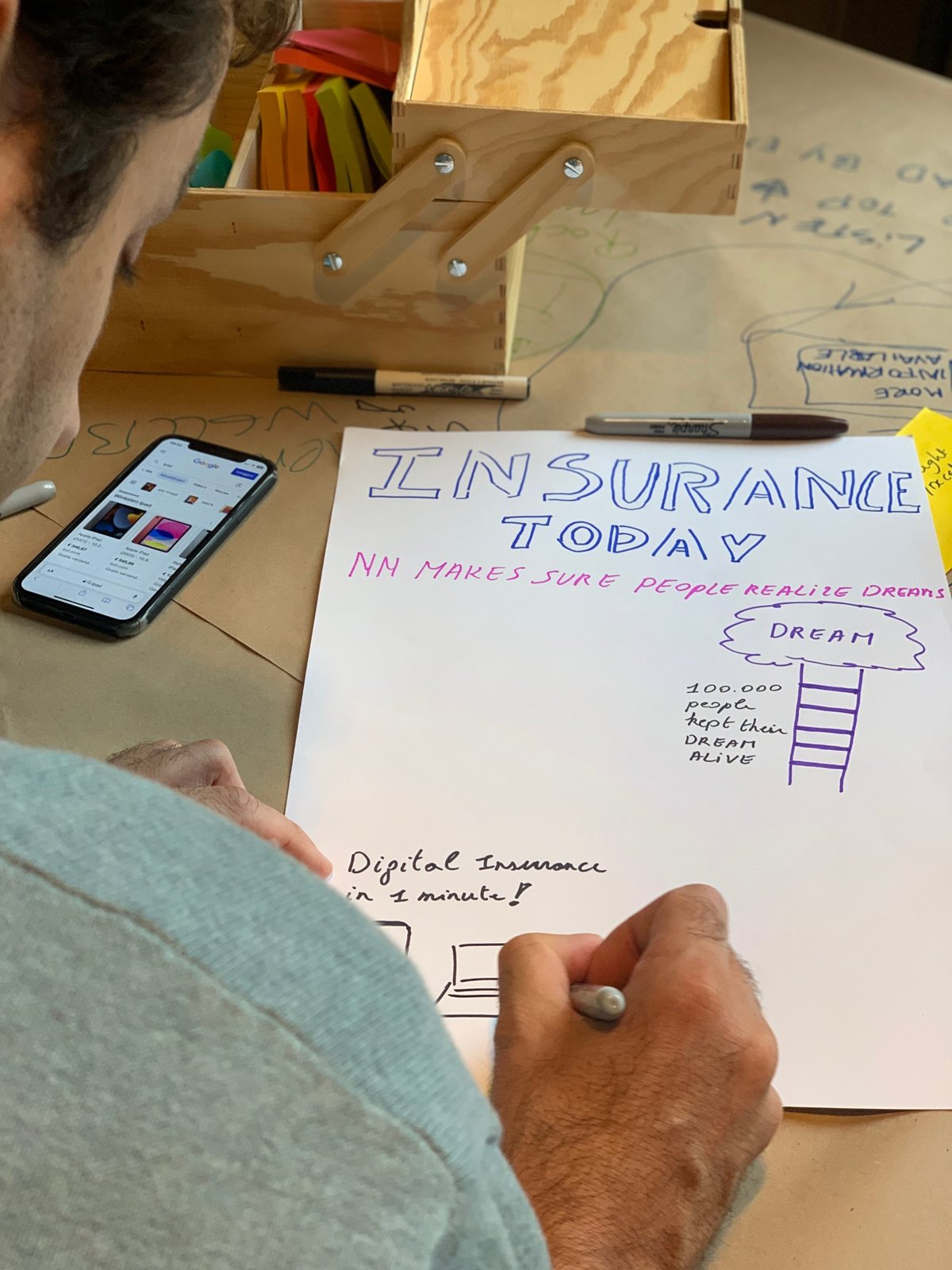
From a leadership session at an insurer. The drawing then went through our AI tool and became a real glossy cover.
Magazine · who writes about it
Story · what has happened
Image · what it looks like
The insurer saw itself on the cover of Wired three years from now: as the company that decides on the basis of data, with all the information at hand.
Every week one pioneer like Klarna
What did that organisation really do, and why? In ten minutes. With three reflection questions and a canvas to apply the move to your own challenge.
- 1new pioneer every week
- 30 minlive webinar, every other week
- €10per month, cancel any month
Possible next steps
Further reading
Good reads
- Cover Story VisionDavid Sibbet, The Grove Consultants
- Design a Better BusinessPatrick van der Pijl, Justin Lokitz and Lisa Kay Solomon, 2016
- Equitable Futures Toolkit: Headline the FutureInstitute for the Future, 2019
Scientific background
- Designing an Experiential Scenario: The People Who VanishedStuart Candy and Jake Dunagan, 2017
- Speculative EverythingAnthony Dunne and Fiona Raby, 2013