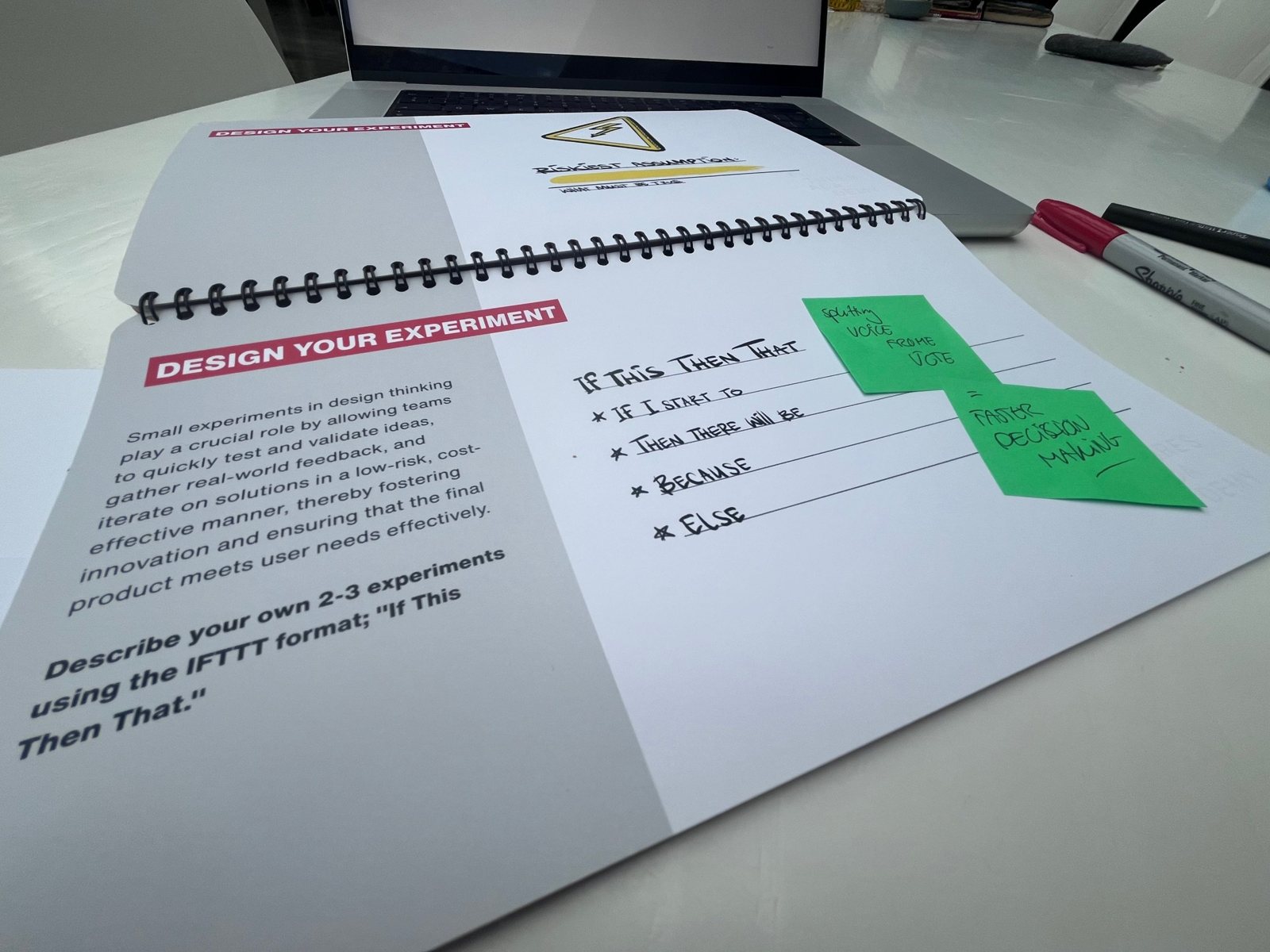
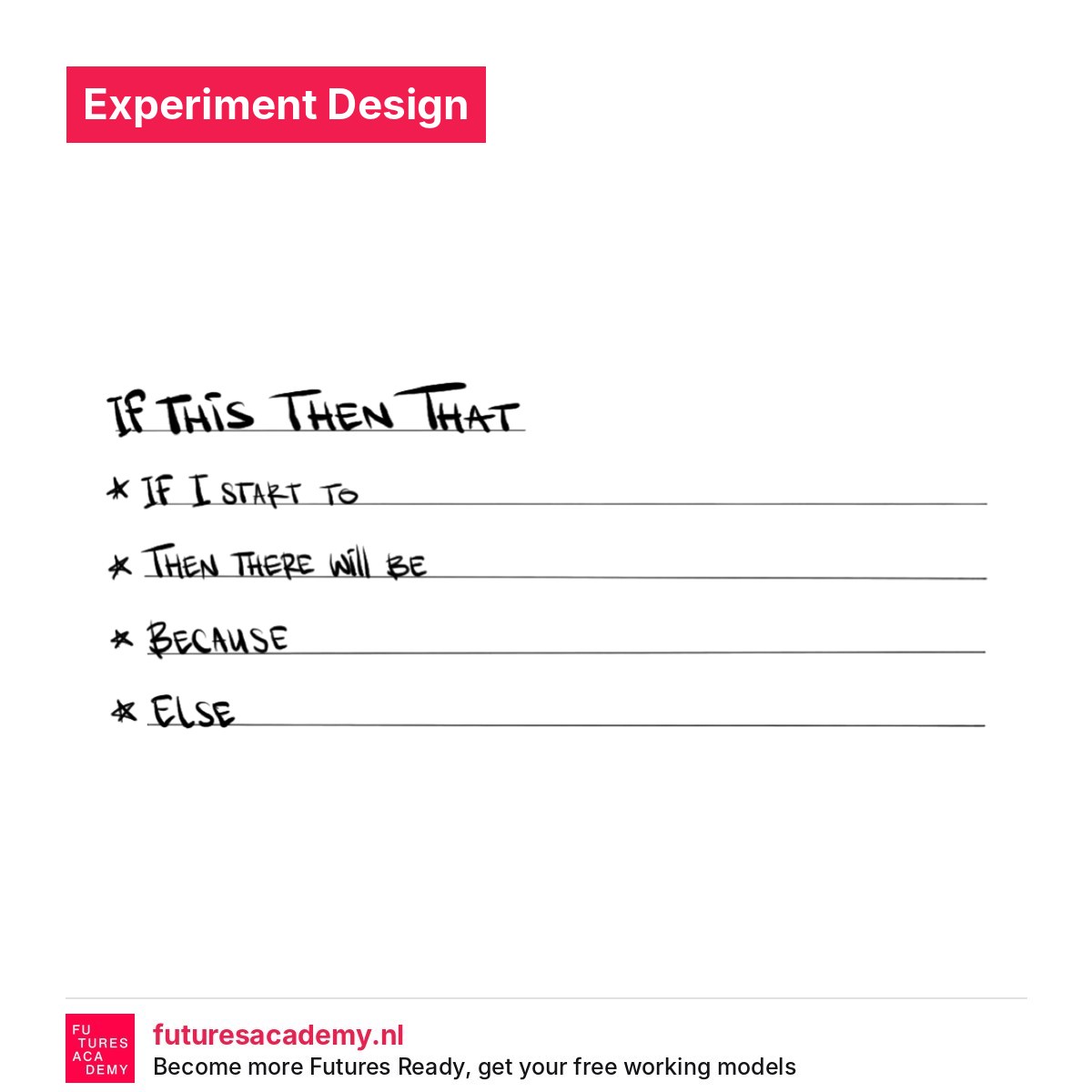
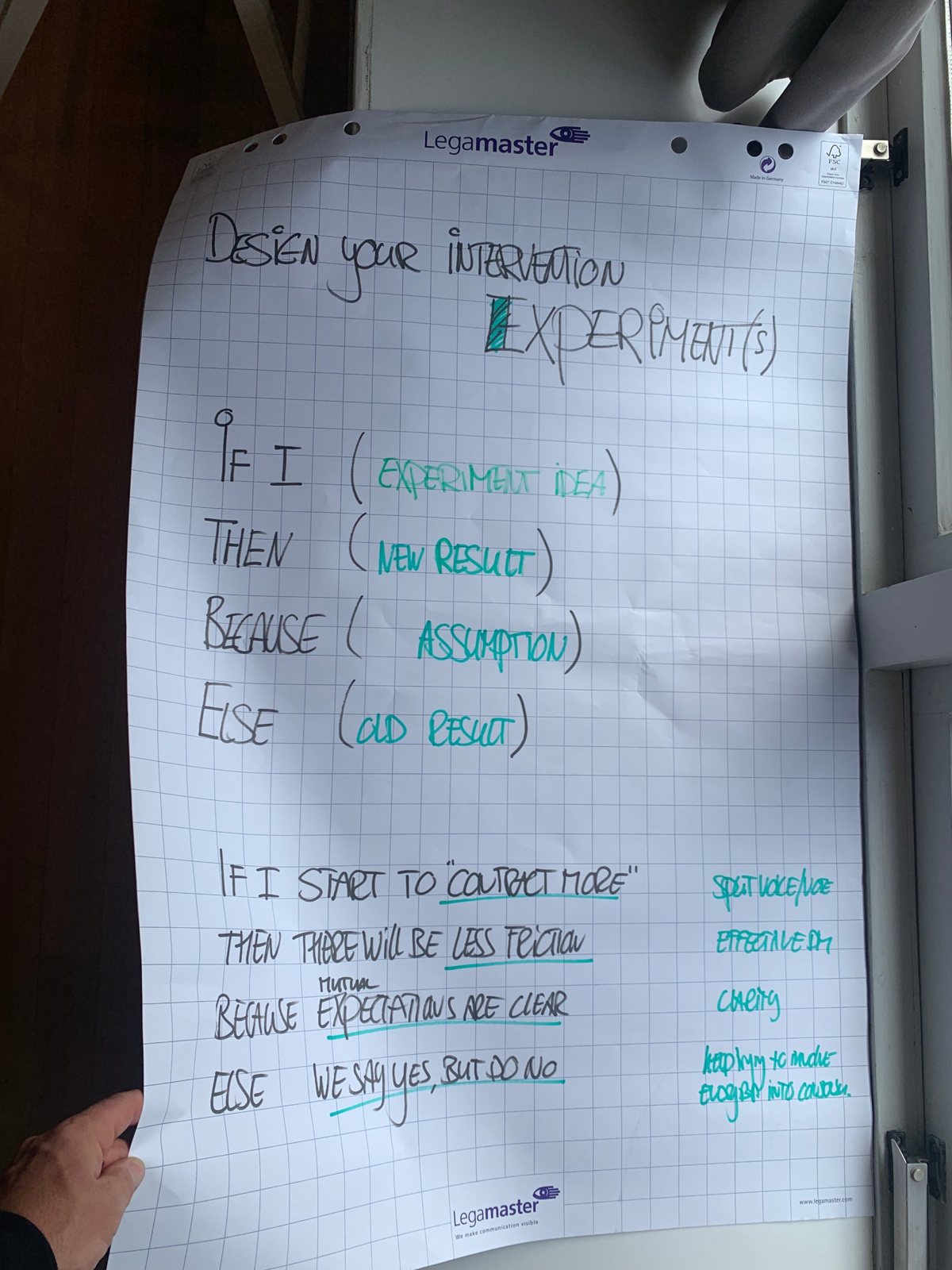
A model to design a small experiment around one sharp hypothesis: If I start to…, then I expect…, because…, else… That way you test your riskiest assumption in the real world, and learn which change has which effect.
It challenges your assumption that you already know what works, and turns an opinion into a test.
When to use
Experiment Design
A plan assumes your assumptions are right. An experiment tests them. And the Else completes it: it shows what is at stake if you do nothing.
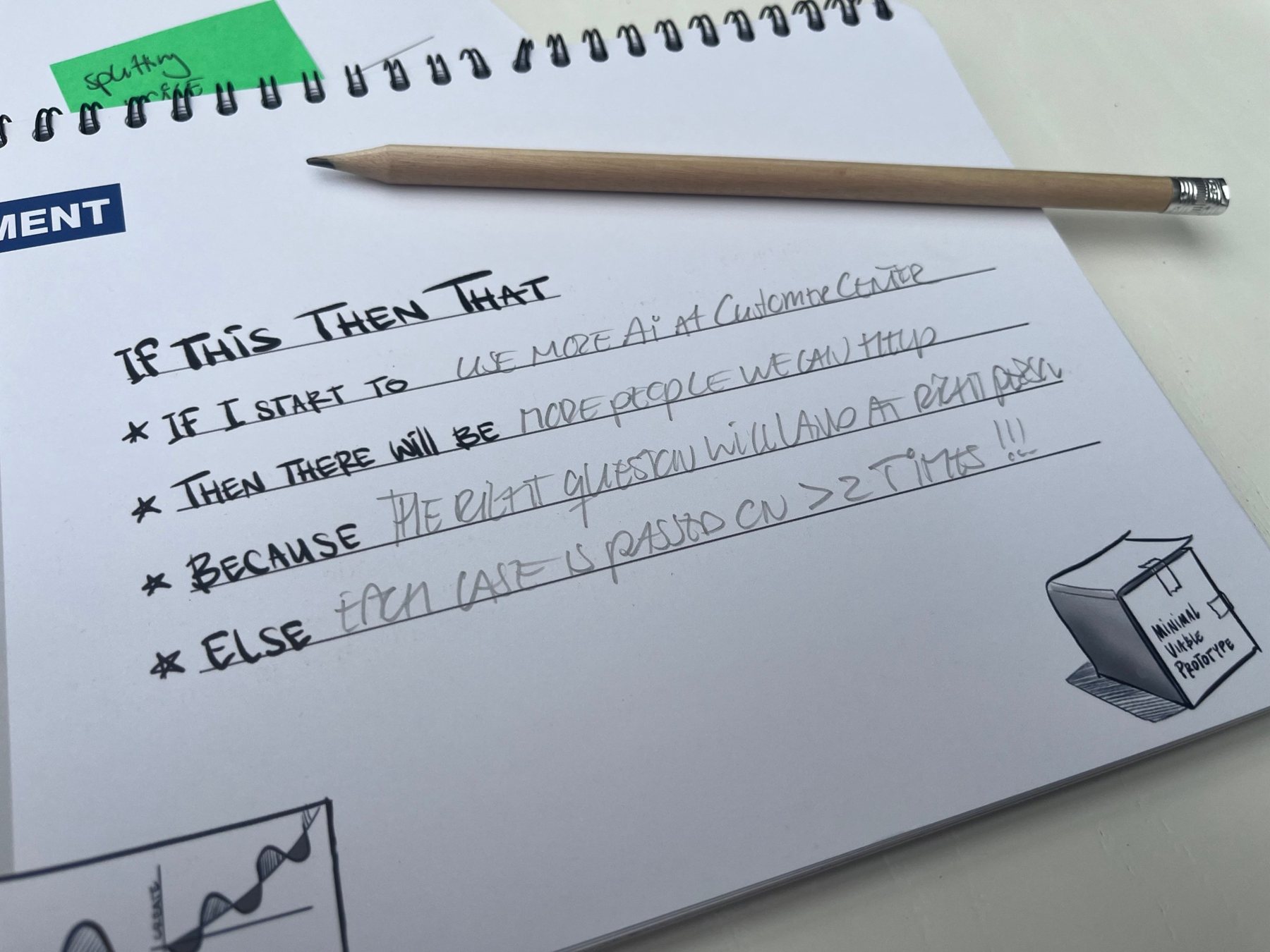
If This Then That
A hypothesis in four lines, each with its own role: the intervention, the expected effect, the underlying assumption and the urgency if you do nothing.
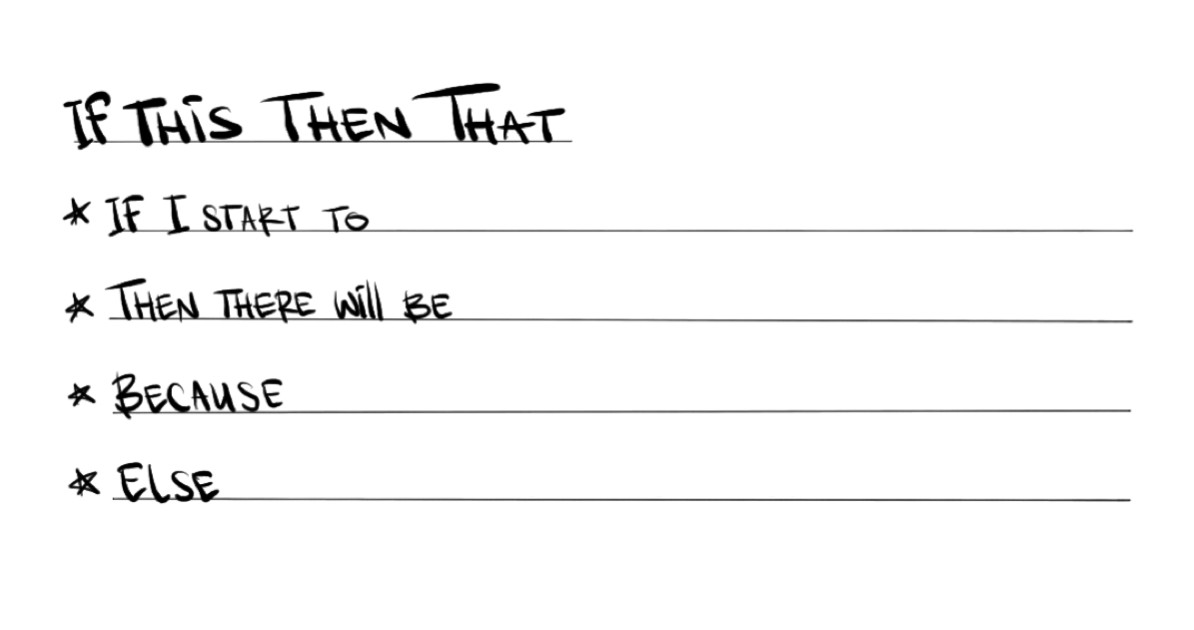
What will you do differently? Usually it is a new activity. This is the experiment itself.
Which result do you expect from that intervention? Make it so concrete that you can see or measure it.
Why would the intervention lead to that outcome? This is what you are actually testing. Choose your riskiest assumption.
What stays the same if you change nothing? The Else makes the urgency visible, and with it the reason to experiment.
How do you apply it?
- 1Choose your ambition. What do you want to achieve, and what could you do differently to get there?
- 2If I start to… Write the intervention: what will you do differently? Usually a new activity.
- 3Then… Write the expected outcome: which result do you expect?
- 4Because… Write the underlying assumption: why does your intervention lead to that result?
- 5Else… Write what happens if you do not intervene: what stays the same if you change nothing?
- 6Set your measure. When is your hypothesis confirmed, and when not? Decide this up front.
- 7Design the experiment. Who, what, where, when and above all how. Choose a format from the toolbox.
- 8Repeat and record. Run each experiment a few times and put the outcome on your experiment board.
Tips from practice
- Know what you are doing: discovering or validating. Discovering is searching freely for insights. Validating is confirming or rejecting a claim.
- Find a measure you can track quickly. In a fast experiment, a click or a response says more than an annual figure.
- Record all results on an experiment board or in a database. That way you build up knowledge.
- Start with your riskiest assumption. That is where the most uncertainty sits, and so the most to learn.
- There is no such thing as a failed experiment. A rejected hypothesis is an insight too.
- Rank your experiments by impact, confidence and effort. That way you choose what to do first.
Examples from recent sessions
These are real hypotheses that participants wrote in recent sessions, in their own words. Browse through the examples.
I limit meetings to 25 minutes.
we will make decisions faster.
limited time forces us to focus.
we will continue wasting valuable time in meetings.
I ask three questions before sharing my opinion.
my team will contribute more original ideas.
my opinions may unintentionally limit their thinking.
we will keep depending on my ideas and decisions.
I let a team member lead our weekly meeting.
they will take more ownership.
responsibility encourages initiative.
I will remain the bottleneck for decisions.
I start exercising in nature three times a week,
I will create more mental space for new ideas.
physical activity in nature gives me time to process information and reflect.
my head will remain filled with data and facts, leaving little room for new ideas.
I become more conscious of how much time I spend reacting to emails,
I will spend more time on strategy, improvements and challenging the way we work.
this is where I can create more value in my role.
we will keep doing things the way we always have, even when we know they are no longer effective.
I reach out to at least two new people every week,
I will gain more outside perspectives, build stronger connections and improve collaboration.
we often work towards similar goals and can help each other by sharing knowledge and insights.
we will remain stuck in our silos and achieve less than we could together.
I start expressing my opinion more explicitly,
teams will have clearer guidance and be able to move forward faster.
clear direction reduces unnecessary discussion and uncertainty.
important decisions will continue to take too long.
I clearly communicate my strategic expectations to colleagues,
there will be fewer misunderstandings about the direction we are heading.
people will better understand our shared objectives and what is expected of them.
everyone will continue working in their own silo, without a shared sense of direction.
I organize an inspiring AI session with all management team members every two weeks,
there will be greater understanding of and commitment to the change.
it takes people out of their daily routines and actively involves them in shaping the change.
the transformation will move ahead without them, increasing the risk of resistance and disengagement.
A good hypothesis is small and concrete: one intervention, one expected outcome, one assumption. And the Else shows why it matters.
Every week one pioneer like Klarna
What did that organisation really do, and why? In ten minutes. With three reflection questions and a canvas to apply the move to your own challenge.
- 1new pioneer every week
- 30 minlive webinar, every other week
- €10per month, cancel any month

Possible next steps
Further reading
Good reads
- The Lean StartupEric Ries, 2011
- Testing Business IdeasDavid J. Bland and Alexander Osterwalder, 2019