

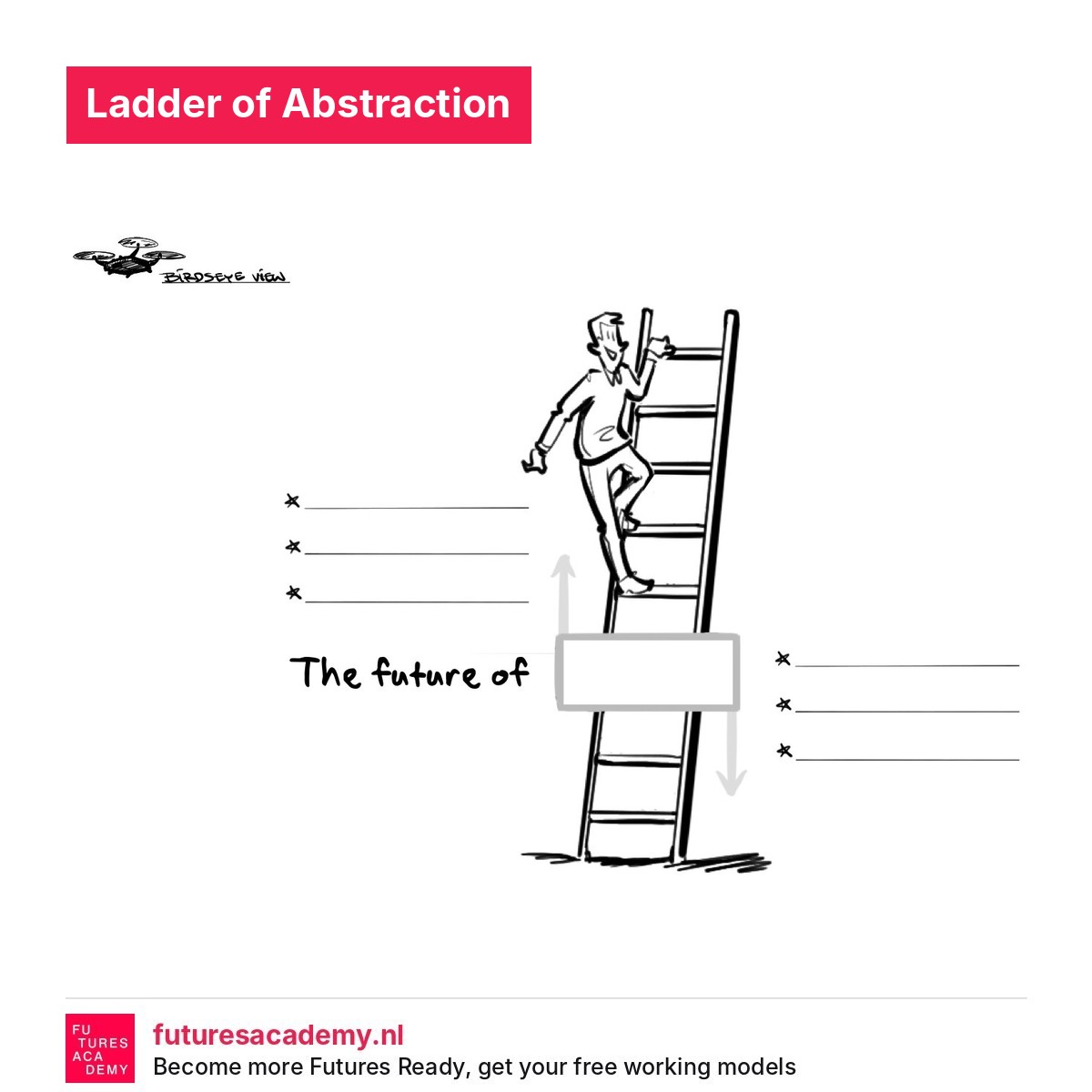
A model to choose the scope of your research. Every step of the ladder is a different level of abstraction: from expert, team and employees at the bottom, via company and market, to economy, wealth, wellbeing and planet at the top. From your starting point you climb up to the bigger theme and down to a tangible situation, and then choose your topic: the future of… The idea goes back to the linguist S.I. Hayakawa, who showed in 1939 that every word sits at its own height of abstraction.
The ladder challenges your assumption that your topic is already fixed, and shows that everything depends on the height from which you look.
When to use
the Ladder of Abstraction
You often choose a research question on whichever step you happen to stand. The ladder makes you look up and down first, so you consciously choose how broad and how concrete your topic is.
Zooming out
and zooming in
You read the ladder from the middle. The box holds your starting point. Climb two to three steps up and ask why it matters. Climb two to three steps down and ask where it becomes tangible. Then you choose your topic: the future of…
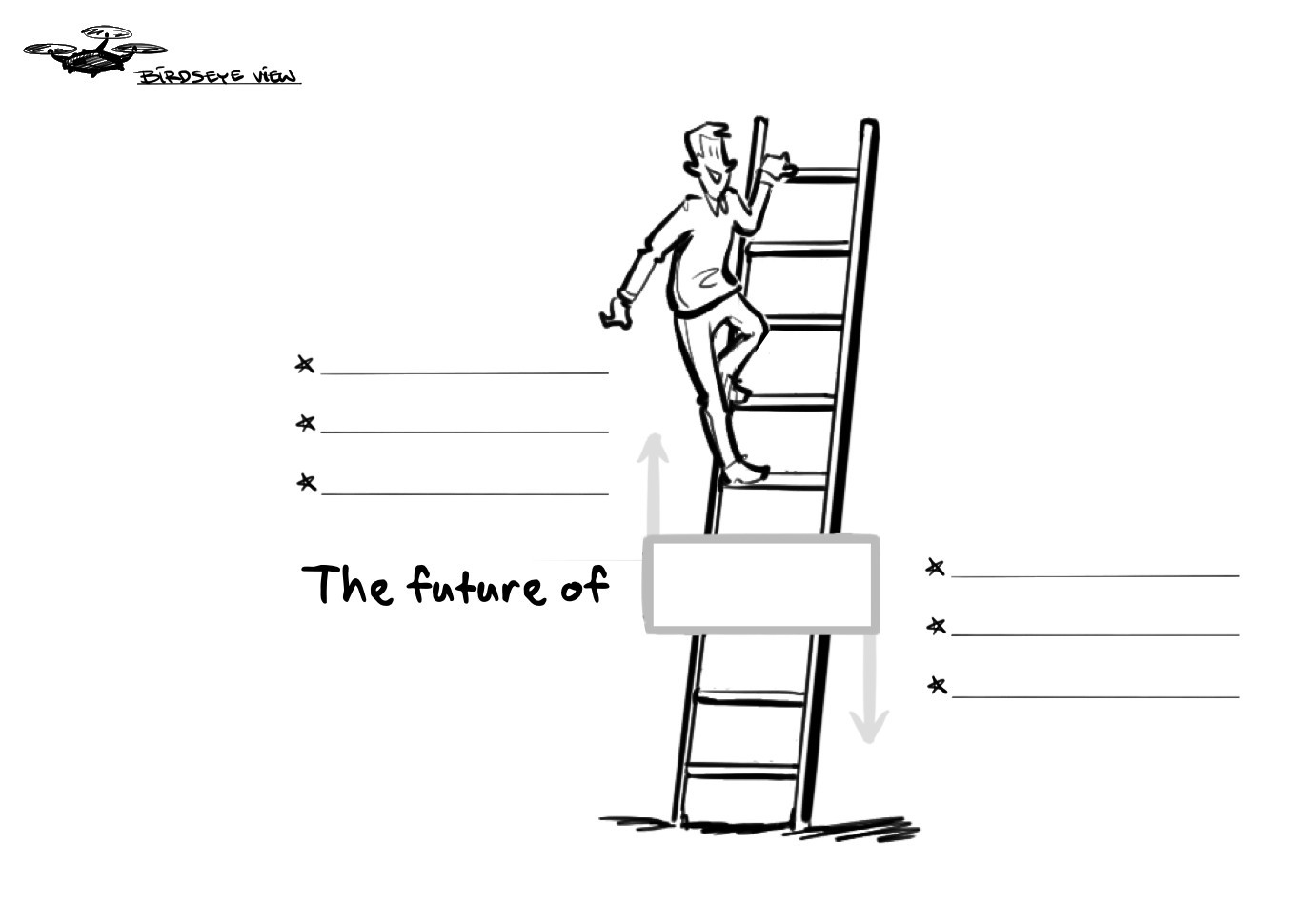
Write in the box the topic that first comes to mind: your market, your product, your department or a question already on the table. It does not have to be right yet. It is the step you are standing on now.
Describe your topic in more conceptual terms. Which bigger theme does it belong to, and what is its relevance to society? Keep asking: why does this matter? That way you get a birdseye view, like a drone above the field.
Climb back past your starting point and further down. Which department, element or situation makes the topic tangible? Keep asking: what does this look like in practice?
Look at all the steps you have described and choose one. Broad enough to see real change, concrete enough to do something with. Complete it: the future of…
How do you apply it?
- 1Write down your starting point. The topic that first comes to mind. Put it in the box in the middle.
- 2Climb up. Two to three steps. Each time, describe your topic in bigger, more conceptual terms. Ask: why does this matter?
- 3Name the relevance. Which bigger theme or which change in society does your topic connect to?
- 4Climb down. Two to three steps below your starting point. Ask: what does this look like in practice?
- 5Make it tangible. Name a specific department, element or situation in which the topic becomes visible.
- 6Choose your topic. Choose one step and complete the sentence: the future of… This is the scope of your trend research.
Tips from practice
- Climb up with the question why, and down with the question how. That way you stay on the same ladder.
- Too high is too vague: there is little you can do about the future of the planet. Too low is too narrow: then you only see the details of today.
- Do it alone first and compare afterwards. You will immediately see that everyone started on a different step.
- Do not automatically choose your starting point. The best choice is often one step higher or lower.
- Put your topic up where everyone can see it. It is the lens for everything you collect afterwards, and you can adjust it later.

From automotive to batteries
A team from the car industry starts with the obvious topic: automotive. This is how it climbs up and down the ladder.
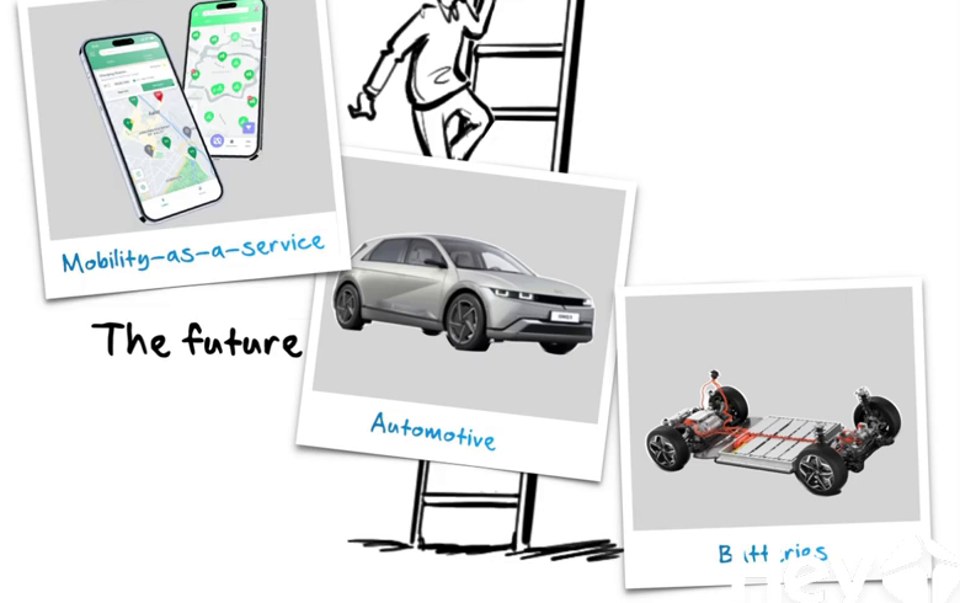
Starting point
Zoom out · why does it matter?
Zoom in · where does it become tangible?
Choice
The team started with automotive and in the end chose one step lower: the future of batteries. Concrete enough to research, big enough to see the shift towards mobility as a service.
Every week one pioneer like Klarna
What did that organisation really do, and why? In ten minutes. With three reflection questions and a canvas to apply the move to your own challenge.
- 1new pioneer every week
- 30 minlive webinar, every other week
- €10per month, cancel any month



Possible next steps
Further reading
Good reads
- Made to Stick: Why Some Ideas Survive and Others DieChip Heath and Dan Heath, 2007
Scientific background
- Language in Thought and ActionS. I. Hayakawa, 1949. Direct source for the ladder.
- Science and SanityAlfred Korzybski, 1933. Earlier theoretical foundation.
- Construal Level Theory of Psychological DistanceYaacov Trope and Nira Liberman, 2010