Recente postings

Het blogboek van de Futures Academy. Doorbraakprojecten, experimenten, de laatste prototypes, onze twijfels en nieuwe inzichten.

Design for breakthroughs

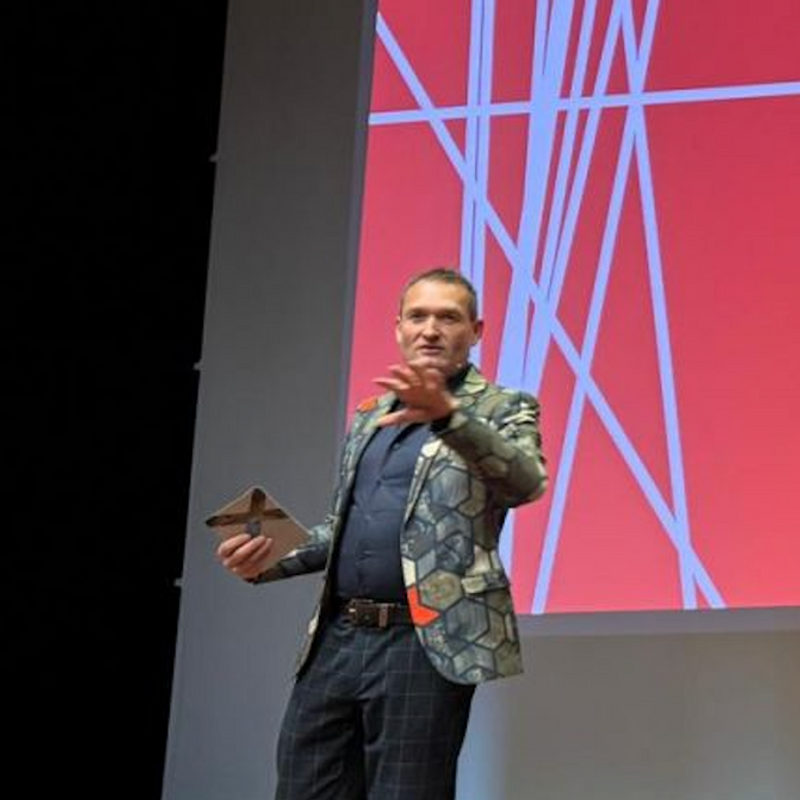
As an opening speaker at Games For Health, I tried to do my utmost to really create something that not only indicates the theme of the conference, but is also food-for-conversation during the day. Gets things moving a bit. That connects those present. With each other, but also with what is happening in the world around us; Why does it matter that we visit ourselves together these days? Then there is relevance, urgency and willingness to explore everything possible together.


Beyond the hype

We often see hype as something negative. And a bubble, especially. But it is also part of the process of change. These are mainly signals that a major shift is imminent, but that it has yet to take shape. It is therefore also a warning that it actively demands our attention... to literally shape the change. Not only what can it do, but also why?!

The well-known hype cycle to which this congress refers seems to be a smooth, sinus-like line. But in reality, it is a representation of two colliding icebergs, two worlds: existing and new. That's not an easy task, so after the initial hype comes what they call the "disappointment phase". And that is exactly the phase where our work really begins. That's where you build the bridges from idea to impact.

Innovation is not a project; it is always a transition.
A 'break' in habits. A kind of rite of passage. In indigenous cultures, these phase shifts are captured in rituals to reflect on them. So that we can value it. In modern societies, we are more likely to talk about projects, milestones and disruptions. But there is also something in capturing it not only in terms of process but also more in the cultural way.

That is why I argue that breakthroughs are about connecting. Between people. Between now and later. Between small deeds and big systems. And especially the latter is difficult... That we do not approach all parts separately, but that we will see what is not immediately visible: the underlying superstructure. The system that holds everything together and sets it in motion. You have to recognise those patterns to really realise change. so... Making a difference starts with seeing the difference!

We live in such a transition. As organisations, in healthcare, but also in the world. A worldwide rite of passage. It is up to us to experiment with small interventions, to further shape the 'new world' together in the middle of that transition. Small interventions with a big impact.

That's why we do it. One breakthrough at the time.
Putting a face to the content

This week, the English version of the online course, Trends Research, has become available. It is the digital companion of the upcoming book: Seeing what is not visible yet. Check out over 20 hours of inspiration on global trends and videos to help you build your own trends radar.


This is a demo text

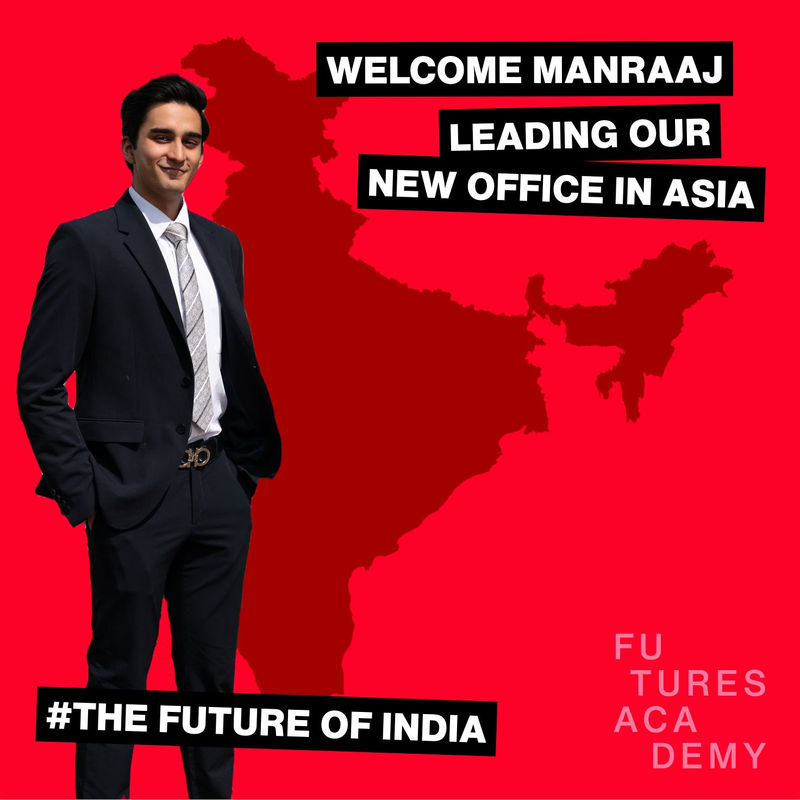
New partner: Manraaj Malhotra


From September 2026 Manraaj Malhotra will join us as the international partner of the Futures Academy. His special focus will be the South Asian region and, of course, the voice of new generations building the future of India and beyond.


This is a demo text

Putting our identity to words and vice versa. Will AI understand 'us'?

Had another fantastic meet-up with our partners at DottingAi. Charles, Richard, and I delved deep into exploring the boundaries of our AI bots. It's exciting to see how far we've come with automation, data warehousing, and AI integration. But now, we're facing an intriguing new challenge: defining the style in which we train our AI.

How to use visuals to make new deliverable that work?
We've been pondering over the visual representation of concepts like moonshots - those 10X ideas for the future. It's fascinating how AI tends to depict the future in blue tones. But should we aim for hyper-realistic, almost photographic representations? Or would that diminish the visionary aspect, the fantasy, the ability to imagine? Perhaps a more conceptual sketch style, like those used in advertising, might be more appropriate for tools like PIVOT.

Putting your identity to words (and back again)
Jeroen's meticulous attention to design details - from fonts to color, line thickness, and proportions - is really paying off now. It's providing us with a solid foundation for prompting and training the AI effectively. As Charles aptly put it, many AI algorithms excel at creativity and generation but struggle with logic and following precise instructions. One of the questions I asked Jeroen;"How would you brief a designer over the phone to create something in our style?"

Design system & storyworlds
More and more I'm convinced that we don't need to design logo's or ideas we need to build identities that are more like a storyworld, that are based on a design system. I will elaborate on that later, sorry!

Training a visual AI
We're still working on finding a consistent approach, especially with visuals. Text is somewhat easier to manage. For now, we're feeding the algorithm with our own images. I've already uploaded more than 1000 elements from Jefta's drawings. It'll be interesting to see what the system comes up with in the coming week. The goal isn't to replace Jefta's unique vision and soul, but to create images that align closely with his style, making it easier for users to develop plans and concepts.

Meta-prompting
We're also exploring meta-prompting. Crafting effective prompts is challenging - my attempts with Leonardo or Dalle-2 often result in childish drawings, while Charles' prompts are much more on point. He explains this by saying that computers are better understood by computers (my loose translation). Using meta-prompts to let AI write its own prompts is proving effective. We're also using negative prompts to specify what the AI should avoid, like text in images, which helps with use in different regions.

Why do we do this like that?
I'm curious about potential adjustments for regional partners. If we expand with our partner in India, should we generate different images than in the USA or EU? It's fascinating how technical possibilities constantly drive us to question our core purpose. Why? Why? Why do we do this? Each advance brings new questions. Long live the frontier of new possibilities!

This journey is pushing us to really define our identity, both in words and visuals.

End-result for today; 100% AI.

Mobile, a first.

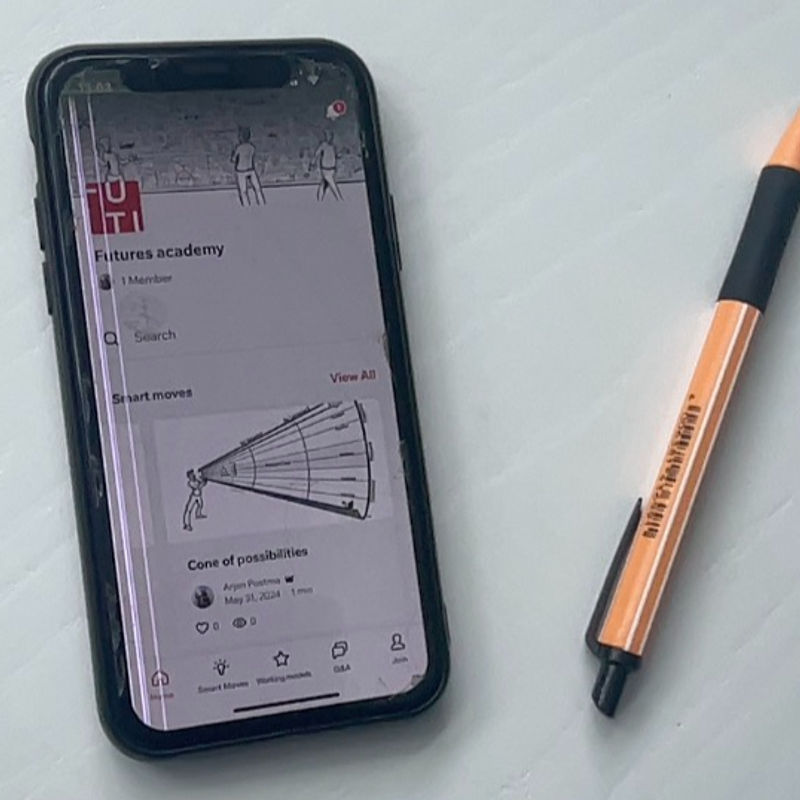
We are about to make a significant step; The first version of our mobile app is finally ready. As soon as we have our formal Apple developers approval, the app will become available as a branded app on both the Apple Store and Google Play. We've opted for this approach to accelerate our learning in the mobile space.

Not just responsive more like adaptive
Rather than simply transferring all our existing functionalities so you can read it on a mobile screen (being responsive as a site), we're carefully considering what makes most sense for a mobile platform. This process is pushing us to adapt our content for smaller screens, going beyond mere responsiveness to truly embrace mobile dynamics.


Just imagine having all tools and moves in your pocket

For now, the app serves as a prototype. It functions as a quick reference tool, offering facilitator notes on models, providing rapid advice, and keeping users updated on new smart moves. Users can access it through their existing digital subscriptions.

The funny thing is that the first time we created the framework I walked for months with the brownpaper prototype map in my back pocket. I used it to remember, explain, capture. In a sense, the app is now the digital version!!

From paper prototype to a first demo app

Do we dare to go Mobile 1st, for some elements?!
This mobile initiative has also driven us to refine our content into more digestible, TikTok-style chunks. It's s forcing us to grow and enhance our offerings. We're targeting an end-of-September launch for a wider audience.

Online coach tool; Help, I'm looking for a plan.

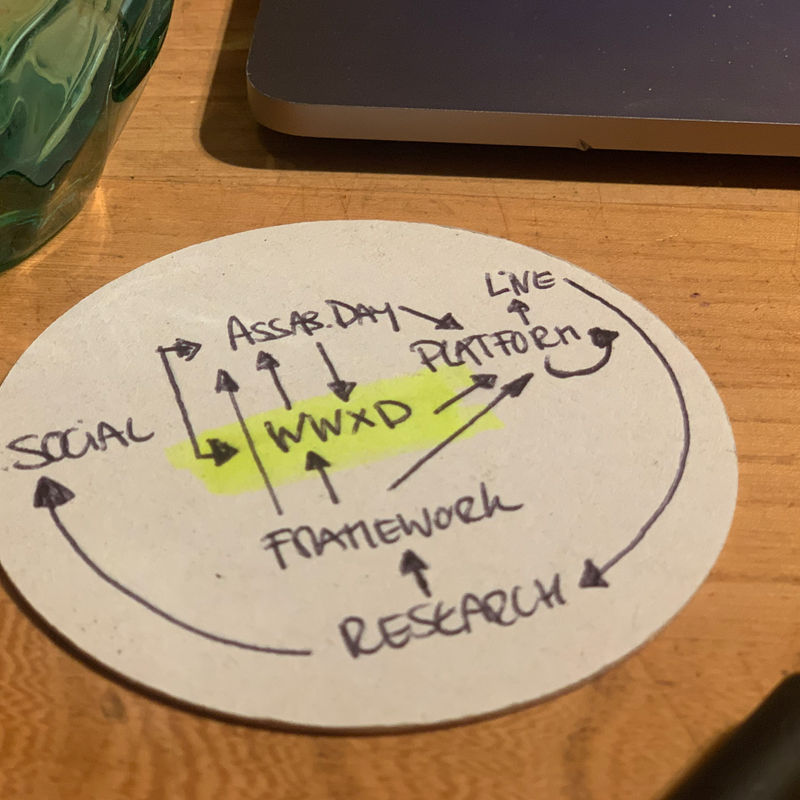
What is it that great facilitators do? They most likely know when to nudge you with what question or working model. They allow you to think for yourself. For this reason I have been fooling around with a new prototype: a WWXD-based coaching tool. The goal is to create a smart questioning tool that mimics our approach to asking intelligent questions. We recognize that many people feel overwhelmed when faced with a blank form, so we want to develop something more intuitive and guided.


A question lead coaching tool for our working models

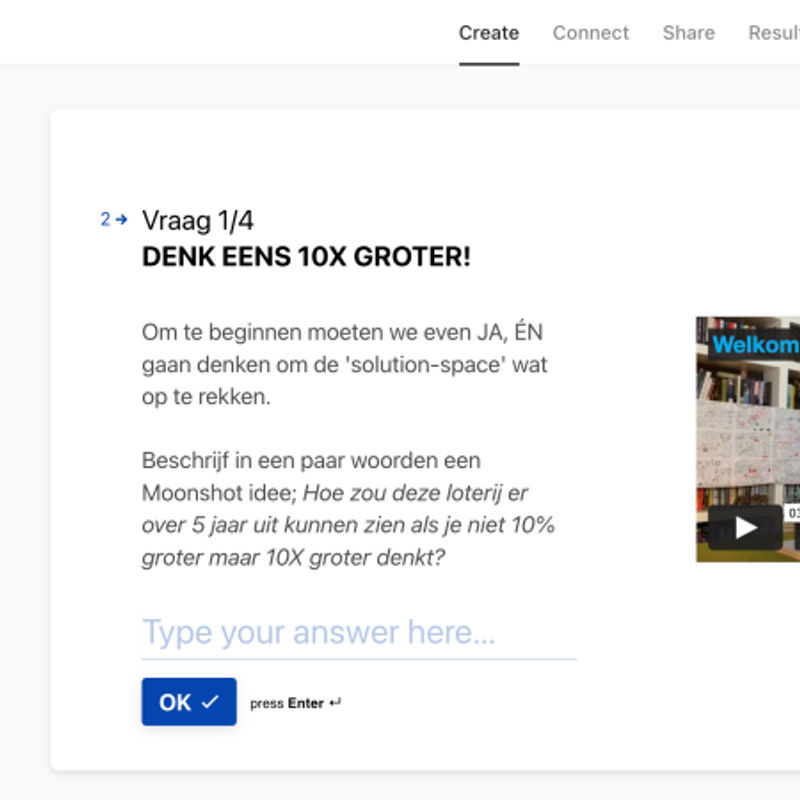
I'm exploring Typeform as a potential platform for this tool. It offers the customization and flexibility we need to create a decision tree-like structure. I've already created some demos linked to our existing tools, such as Moonshots and Wheel of Reasoning.

The most exciting part is the overarching version I'm developing for "Help, I'm looking for a plan." This tool guides users step-by-step, connecting different tool-question-approach combinations into a seamless flow. It's like a digital estafette, passing user data from one section to the next.

This project feels like a significant step forward in making our coaching methods more accessible and user-friendly. Try it yourself...

DEMO WHEEL: https://kloka57uzby.typeform.com/to/oPK0MSvm

DEMO MOONSHOT: https://kloka57uzby.typeform.com/to/QRajC1S9#name=xxxxx

DEMO CHANGE: https://kloka57uzby.typeform.com/to/yW9FI26e

DEMO BUSINESS PLANNING: https://kloka57uzby.typeform.com/to/hV3aLsXW

We will be taking this questionnaire approach to the next level by integrating Zapier with our Typeform setup. The exciting part is that we can now automatically generate a professional-looking PDF from the user's responses.


A new business model?

I'm considering a business model where the questions are free, but users pay for the polished PDF output. It's like getting a real business plan or empathy map at the end of the process. The challenge will be creating enough variation to make it feel personalized.

My next step is to build a working demo of this Zapier-powered PDF generator. I need to find the right PDF tool and set up the Zapier rules. This could be a game-changer for our project and for your project?!?! I can't wait to see it in action!

Skepticism is good!!

I've always considered myself creative, but a recent conversation with Bregje made me realize that my strength lies more in critical thinking than pure creativity.

The power of doubt

My ideas, whether for logos, services, strategies, or names, always stem from analysis. I see structures, underlying connections, and gaps. This makes me more of a critical thinker, a disciple of Pyrrho, the founder of Skepticism. This realization was profound.

Convergent & divergent thinking
Applying this to Design Thinking, I now see it's 90% critical thinking - careful analysis rather than wild brainstorming. The creative part comes at the end, connecting seemingly unrelated elements. This is good news because it's easier to learn and share!

I've also been pondering the relationship between convergent and divergent thinking. Interestingly, I think it might work opposite to what's commonly assumed. Critical thinking can lead to divergent ideas by challenging norms, while creativity helps in convergence by connecting ideas.

Continuous switching
What sets our processes apart is the ability to switch between critical and creative thinking simultaneously, rather than sequentially. Our approach involves asking the right questions, identifying the most profitable obstacles, and simplifying complex issues. It's about structure, making connections, tools, patterns, and principles.

I've translated this approach into a new prototype for guiding our participants, members, and users. It's designed for those feeling stuck or starting something new, addressing common problems like:

- Help, I need a business plan

- Help, I need to set up my office

- Help, I have an important meeting

- Help, what's our purpose

- Help, I need more customers

This journal entry has helped clarify my thoughts on our unique approach to problem-solving and client work. It's exciting to see how these insights can be applied to help others more effectively.


A first demo;: https://kloka57uzby.typeform.com/to/hV3aLsXW

The engine underneath our platform

To build a 'platform' or our Digital home and services, it's time to define our requirements for a Learning Management System based on our evolving understanding of effective "courses". Ae we looking for a community management system, a learning management system, a content publishing process.

We need to make a choice and the system we will choose says a lot on WHAT WE WANT TO BE(COME)!

A Trojan horse; This is a moment where a tool will shape our future culture
It is all kind of the same but the underlying (database) structure is fundamentally different. And that structure looks invisible but you will recognize it later ij everything from the check-out, your profile, the app etc. This has much to do with what we earlier called Tool culture...

Choices like these are often made from a technical specs point of view, but these tech tools all have a certain design that promotes or prevents certain behaviors. So the tool is like a Trojan Horse to our culture.

So far we tested Kajabi, Learnworld, Magic Monkey, Teachable, Wix, Flutterflow, Softer

Dialogue mapping

With Dave I halve delved deeper into dialogue mapping. A concept I've been experimenting with recently. It's fascinating how these decision trees, commonly used in gaming environments, can be applied to our work. I'm exploring ways to create interfaces for these trees using various tools like chatbots (via Landbot.io), Typeform, or even Alexa (though that's less likely for our purposes).

I'm considering different approaches to structuring these trees:

- By tool (e.g., Empathy map)

- By course (e.g., Reframing)

- By user need (e.g., "I need a plan")

From static dialogues into natural language using AI LLM models
I've also prototyped a new approach for providing guidance to our participants, members, and users. It's designed with someone in mind who's either stuck or starting something new and unsure where to begin. This user-centric approach feels promising especially if we could change static dialogues into natural language using AI LLM models which are progressing rapidly.

PS We're now calling the "making connections" content type "the Bridge" internally. Also the famous psychologist Stutz speaks about tools as bridges.

First tests with online DIY courses

Can you train creativity for example via online learning?
Looking back, it's remarkable how our perspective on online learning has evolved. Pre-Covid, I was skeptical about training soft skills like trust-building, intuition, and creative confidence online. Then the pandemic forced us to adapt, and surprisingly, it worked.

We redesigned our approach entirely, addressing the challenges of replicating the energy and interpersonal dynamics of physical workshops. While we lost some aspects of in-person training, we discovered unexpected benefits of online learning: shorter, more focused sessions, increased anonymity for experimentation, and the ability to repeat exercises multiple times.

Testing DIY content as an add-on to our regular sessions.

Blended learning, self-paced, near the job

Blended learning has emerged as a powerful model. Though maintaining motivation can be challenging, the potential for greater learning transfer through repeated practice is significant. I've gained confidence in online components, especially in blended formats.


Experiment with lessons and course content before looking at an LMS!

We're still exploring platforms, tools, and content creation. I'm excited about testing visual work courses with Jefta, an area I once thought impossible to teach online. Our quick experiment on Udemy has shown surprising reach and potential.

There's much to learn, but the future of online and blended learning looks promising.

One of the reports showing our Udemy participants spread around the world.

Towards 'TikTok' granularity

The new system for organizing our models is finally coming together. I have put each model now on its own card or slide, making everything so much clearer and more accessible. Jeroen has created templates for all the different content types, This really works! Maybe in the smallest sense... each model is a 'course'. That is TikTok granularity ;-0

On the brink of shifting from setting-up toward being operational

I'm in the process of writing instructions for each tool, which will make them even more user-friendly and ready for DIY learning. I'm not in a hurry... as I mentioned before, one model per day is also ok ;-)

Think inside the box

We've created a comprehensive package for participants, including model cards, affiliated learning goals, and Smart move cards. While we experimented with Pattern and Dilemma cards, we've put those on hold for now. #MakeChoices

We now really start to feel how a design system makes all the difference

The best part? With just one click, we can transform the models into various formats, all managed from a single source. I'm quite proud of this!! The versatility of this system is impressive. We can easily present it as a slide set, online course, card deck, or workbook. It's not only simple for participants to use but also a breeze for us facilitators to maintain. I'm excited about how this will streamline our development and improvement processes. It feels like we're on the cusp of something truly game-changing for our training methods.

Right sizing; make it manageable

Feeling overwhelmed by the prospect of 21 trainers and courses. Jeroen read my face and suggested franchising, which sparked some excitement about scaling potential. But I'm unsure if managing franchisees or 21 trainers aligns with our vision and ambition.

Are we too soon... or is this just a way to crack the chicken-egg puzzle?

The Mischief talks and the whole procedure to find 21 trainers was an amazing useful journey, but I still sense that we are a bit too early to move ahead. This is a bit chicken and egg discussion. We need trainers and faces to show to clients, we need clients to start training and hiring new facilitators.


From 21 back to seven, back to 3, start with 1

We decided to scale back from 21 to 7 physical workshops, based on our framework's pillars. This feels more manageable. It also provides a bit more flexibility towards clients. If they order a design session I have some space to maneuver, of they order a Customer Succes course it is far more specific and for a full day course would demand too much at this moment in time.

So back to the 7 and most 80% of the clients will request the top 3 topics for now. I feel saved.

Make great Session lab per workshop, in modules, based on learning goals

The 21 workshops concept isn't dead, but will transition to online-only and is put on hold until next year. I'll ask Jorgen to help design 7 exceptional workshops as a foundation. We'll create perfect Session Labs, then adapt between physical and online formats. In this way we can make sure that we stick to our core; the working models, the learning goals and the smart moves. Together they shape modules, tracks, courses etc.

What is the critical mass to start selling subscriptions.

By making it smaller it will also prevent rework. Smallers sized content and courses will have a higher turnover and thus faster learning and tinkering. We will be moving forward with these smallers learning-chunks, it will be more like daily content creation - one slide or card per day?! This aligns better with our TikTok-style learning approach and allows for organic growth of the platform. Future members can build their own knowledge incrementally, day by day, chunk by chunk. We just need to determine; what is the critical mass to start selling subscriptions.

This new direction seems more aligned more with our vision and my capabilities. Feeling relieved. Next step: Aggregate the 21 product sheets into 7. Feels achievable.

21 courses for the 21st century pro

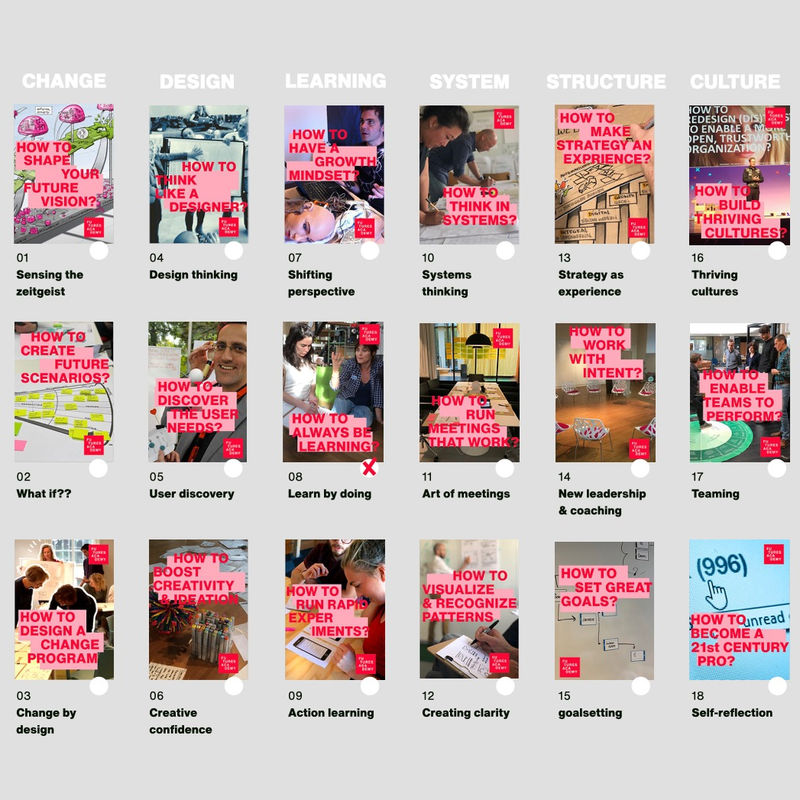
Finally, our brochures are ready! It was again a lot of work. Everytime, everything times 21. Grrrr. Yet, it really helped us clarify and streamline our offerings. These new product sheets, complete with learning goals, modules, and key models, will be invaluable for (re)designing sessions, making client proposals, and developing content for our online courses. There's still some reorganizing to do, as everything will become a module, but it'll be worth it.

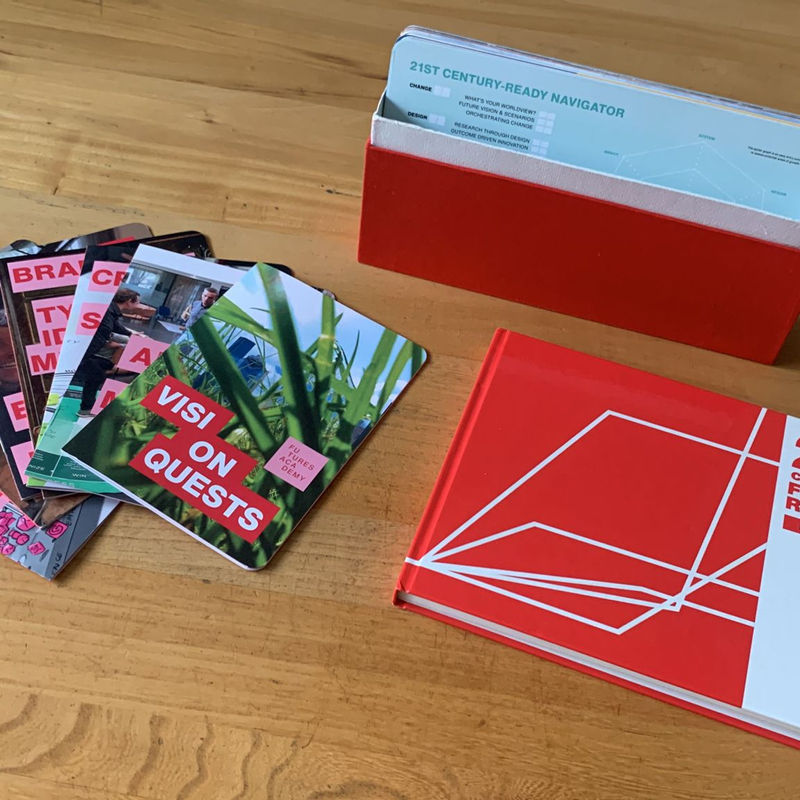
A box with 21 product sheets

We've packaged all 21 brochures in a box, calling it "21 Capacities for the 21st Century Professional." It's serving as our sales kit for now. Interestingly, the first clients we showed it to this week all wanted to buy the box outright! They found the content, structure, and overall look so inspiring that they saw the brochures as learning materials in themselves. Who would've thought our sales kit would become a product? Haha...

Check out the 21 product sheets

Making Mischief

Writing 21 product sheets was too much. I'm tired, very tired. I am losing motivation to keep diving back into my 'dungeon of endless head down creation'. Make, make, make. Thankfully, the reactions are positive, and there's learning happening. Learn, learn, learn.

A new partner: Mischief makers
We're reaching out to Emily from Mischief Makers through Jeroen. They have facilitators who are a bit different from your average corporate trainer - environmentalists, LGBTQ activists, etc. This group aligns much better with our topics and learning goals. These facilitators are almost role models for our way of working. Plus, they're one of the most diverse groups I've seen, which perfectly underlines our impact-driven approach.


These diverse group of facilitators put a face to our 'content'

We're thrilled with this partnership. With Saskia's help, we've found trainers for all 21 courses. We can now respond to Requests for Proposals from clients like PGGM and SHV, who are eager for us to deliver numerous trainings. If I take this on myself, we'll have good revenue and new experiences, but development will stagnate. We need to be smart and learn to say NO. The Mischief Makers could be a solution. Now I just need to update all 21 booklets with new trainers... It feels great putting a face to the content. I am very happy.


Feeling happy, but... I sense that 21 is impossible to operationalize at this moment

But I can also sense what's coming. I'm wondering how to organize 21 train-the-trainer sessions. It's more than just handing over the slides. We need to deo sessions tiogether, give feedback, write facilitator notes etc.

My enthusiasm is quickly giving way to some mild panic. I feel we're NOT on the right level. The number '21' is too many trainers, too bulky content to constantly load into my head or transfer to someone else. It's time for another PIVOT! Keep the 21 in the framework, but find another way to embed it in our services. Back to seven pillars? or just start one by one and grow these coming years? How to make it manageable? Where to start?

Bite sized learnings like TikTok

Create bite sized learnings. TikTok is becoming our reference ;-)
The sessions are ongoing on a weekly basis. We are increasingly incorporating Smart Moves and the 21-Framework and tools. As facilitators, especially when I'm working closely with Jorgen, we're learning the importance of breaking down all sessions and courses into manageable chunks. That benefits everyone: it's easier for us, simplifies train-the-trainer processes, and makes learning and replication more accessible for our participants to use in their own teams.


Sessions also modular to connect it all

We're standardizing our courses using SessionLab, aiming for five modules per day. Each module has specific learning goals and key models that align with the targeted capacity. Following the Smart Moves example, we're converting all models into Working Model cards (for print) and slides (for Keynote presentations). Jeroen has done an excellent job ensuring everything is easy to maintain, with consistent sizes and ratios.


Writing 21 product sheets

My next task, though somewhat daunting, is to write 21 product sheets or brochures for our courses. These will need to cover both on-location and digital (via Zoom) options, with the potential for future self-paced online learning.

It's a Smart Move!

We are reflecting on the concept of "Next Practice," a term I learned from the late C.K. Prahalad, author of "The Bottom of the Pyramid." It's a powerful idea that challenges the notion of "best practices" in consulting, which Prahalad argued were leading to mediocrity and
complacency.


From Best practice to Next practice?

The term Next Practices resonates deeply with me, encouraging us to push beyond the status quo and seek innovative solutions. However, I've noticed that it often falls on deaf ears. It's frustrating when a concept you find so inspiring doesn't seem to connect with others.

"Smart Strategic Moves"
In light of this, we have decided to rename this part of our approach. What we're offering isn't a full business case study like Harvard's, but rather a spotlight on specific, impactful strategic made within a pioneering organizations. These are the choices that truly made a difference - the "Smart Strategic Moves."

From now on, I'll be referring to the inspirational aspects of our work as "Smart Moves." It feels more accessible and accurately describes what we're showcasing: wisdom in action, decisions that drive change and success. I hope this new framing will help others grasp the essence of what we're trying to achieve.

The front is the Smart Move, the back is a challenging question for you or your team.


Booklets will become modular cards
Oh and we turned the booklets into cards. Similar like the learning goals... something is bubbling here. This modular approach makes it more easy to create, maintain, use in sessions, share online. This is two flies in one go. BAM!

The power of metaphors!!!

We have used many different metaphors throughout this journey. The open Learning landscape we compared to a game like Grand Theft Auto, we have compared the materials to the Michelin of working models, the card-game felt like Magic or Dungeons & Dragons and now the online courses are conceptually compared to be TikTok-fit.

The power of metaphors!!!

Next Practice Magazine (WWXD 4.0)

The first three issues

Today, I cut up the shiny A3 working sheets for Polestar, Soap, and Nike, distilling each case into five unique, bold, and creative strategic moves related to future-proofing and sustainability. I've added my narrative alongside these "next practices."

The booklets are a hit - people take them, read them, and clients order them. Though they're expensive to produce with no profit margin, the real value lies in the learning they provide. However, I'm questioning their practical impact. Are people truly challenging themselves with this information?

Our next goal is to enhance engagement. How can I inspire users to apply this new perspective, broaden their minds, and identify fresh alternatives and opportunities?

I'm considering a new format, like the learning goals: Next Practice Cards in A5 size. This could offer more flexibility in sessions, allow for collection, and seem less daunting. It's time to test this new approach and see how it performs.

How to make this DIY?

Eye candy and brain freeze

We've taken in another round of user feedback on WWXD. The key takeaway? Users love it, especially when it relates to business. The leap from nature or art to business seems too big for now. Remembering my mentor's words: "People can only do one new thing at a time," we're narrowing our focus to brilliant strategic moves from global companies.


Learning from Pioneering companies

Our current lineup includes Nike, Polestar, Schiphol, Patagonia, and Slack. I'm working on case studies and designing a worksheet for our sessions and classes.

Jeroen is structuring our design around the "Bauhaus meets Dada" concept. It's a mix of superstructure and wild collage work. The A3 thick paper sheets are a hit in my classes, though a bit pricey for multiple cases per session.


Do It Yourself (DIY)?

An interesting observation: while people love the look, feel, and my storytelling, they struggle to understand the sheets on their own. This poses a challenge for our end-goal of a self-paced, scalable solution.

Moving forward, we might need to integrate the case story and the sheet more closely. There's still work to do, but we're making progress.

Dancing priest or Slack founder?

This week, I started writing some new WWXDs. I want to test the editorial process in terms of time and effort, but also to have some results to show. I began with a couple of fantastic examples that, in my opinion, perfectly embody the Amormundi philosophy:

"What Would A Dancing Priest Do?"
"What Would a Star Sushi Chef Do?"

These are two amazing stories. One about manifesting engagement and reconciling conflicting values, the other about holding onto traditions while embracing daily improvement, Kaizen-style - becoming a little better at making sushi every day for 900 years.

What I want to tell or what makes the user learn?!

For me, these examples were spot-on, bringing tears to my eyes as I wrote them. However, when I shared them this week, I didn't see the same enthusiasm. People appreciated the stories and characters, agreeing that "it makes sense." But when I gave other examples like Musk, Nike, Slack, or Patagonia, their ears really perked up.

I build mock-up site to test a bit more on these user-hypothesis and maybe later on their willingness to subscribe for € xx,xx?

Prototyping WWXD stories. Ik keep failing these tests and that is a good thing (for now)

It's good that I created these examples for feedback; it's another moment of letting go. If I want to get users to look at the future and their environment with an open mind, I shouldn't use examples that are too far removed. I need to find role models that inspire and have authority for our user group, which are mainly organizations. Fortunately, I have many great examples in that area too. So, new round, new opportunities!

Hybrid brand; Futures Academy and/or Impacts Academy?

I am grappling with a dilemma that's been bouncing around in my head for a while now: Future Ready or Making Impact? It's fascinating to see how our clients naturally fall into two categories.

Two type of clients, with two different questions or perspectives
There's Client A, focused on preserving their current success and preparing for the future. Then there's Client B, in the midst of change, aiming to create positive impact and seeking guidance for immediate decisions.

Futures Ready and/or Impact Driven
We've realized that both approaches are about crafting a Future Vision and making Wise decisions - just from different starting points. This insight has led us to restructure our materials, allowing them to be read the book for example from front to back (Future Ready) or back to front (Impact-driven).


Hybrid branding, especially in our digital space

The naming conundrum persists: Futures Academy or Impact Academy? Both have their merits and fill gaps in their respective markets. We're uniquely positioned to bridge these worlds, much like our 21-framework.

I briefly considered creating separate brands but decided against it. Instead, we're opting for a hybrid approach. Our digital presence will allow entry from either perspective, with users navigating a continuum between Future Ready and Impact-driven approaches.

Is this smart? I'm not entirely sure, but it aligns with our vision and design principles for now. Only time will tell if this hybrid strategy will resonate with our diverse clientele.

Re-branding on the table, again.

After much deliberation, we've decided to rebrand and refocus our efforts. The separation between inspiration for next practices and contemporary working models no longer makes sense - they're deeply intertwined.


Every day we need to say to ourselves; MAKE IT SIMPLER!

We're moving away from WWXD.COM and SKOUT.ED, consolidating our vision into a single entity: The Futures Academy. This name pays homage to the roots of Future Studies and embodies our goal of providing a space for critical thinking and fresh perspectives on the future.

The concept of an "academy" resonates with us, inspired by philosopher Rene Gude's explanation of academia as a place slightly removed from the mainstream, allowing for objective observation and analysis. We want our participants to experience this as they contemplate their futures and ours.

Visually, we're bringing back the lines - representing connections, relationships, and the Levy flight patterns. These will form a unique style that can adapt to partner identities while remaining distinctively ours. (https://www.futuresacademy.nl/post/our-key-consumption-pattern)

Jeroen is excited about the challenge of creating a reference brand that enhances other brands rather than overshadowing them. We're aiming for a descriptive name with a recognizable style and color scheme.


The new color scheme from earth tone to a bit more 'brighter future', while are font is going to be Helvetica Now... also to be as down-to-earth as possible, allowing partners to use our materials without conflict of interest of identities,


The design system is connecting on all levels

While everything is still under construction, it feels like the pieces are finally falling into place. We've already had successful sessions using our framework and tools, featuring some excellent 21st-century examples.

It's been a journey of discovery, with many Bagels & Beans sessions along the way. But now, as Jeroen and I align on this new direction, it feels right. We're following the content, the user, and our sense of purpose.

One of the very first versions left, the firm text and wobbly 'tape', form lines and a even more 'we are just a label' style branding

Not a brand bible but a design system

Today's brainstorming session was intense yet illuminating. We keep circling back to core ideas like "letting users find their true north" and providing "nudges for a fresh perspective." It's clear our approach isn't about rigid rules, but rather a flexible structure that encourages exploration, about seeking the edge of things, the tention.

Intentional is standing ín the tention!

The concept of intentional leadership is at the heart of our work. We're embracing the tension between the known and unknown, daring to exist in that liminal space. It's challenging but feels right.

Not a brand bible but a design system
Translating this into our design system is tricky. Jeroen is adamant about avoiding a traditional "brand bible." Instead, we're aiming for a framework that allows colleagues and partners to express their needs while still maintaining a cohesive whole.

Jeroen's suggestion to merge Bauhaus principles with Dadaist expression is ambitious and exciting.

Negative and Positive Freedom
After some drinks (always when the best ideas emerge!), we hit upon the concept of "Freedom meets Structure." It's about balancing positive and negative freedoms, creating space for innovative thinking while providing necessary boundaries.

 I demolished a baby-toy (sorry) to create an real example as a sweet reminder about this core principle of resilience.


Transegrity between two systems

My hero Buckminster fuller named this transegrity... the tention between two systems that keeps them in balance.


It's a tall order, but if we can pull it of...

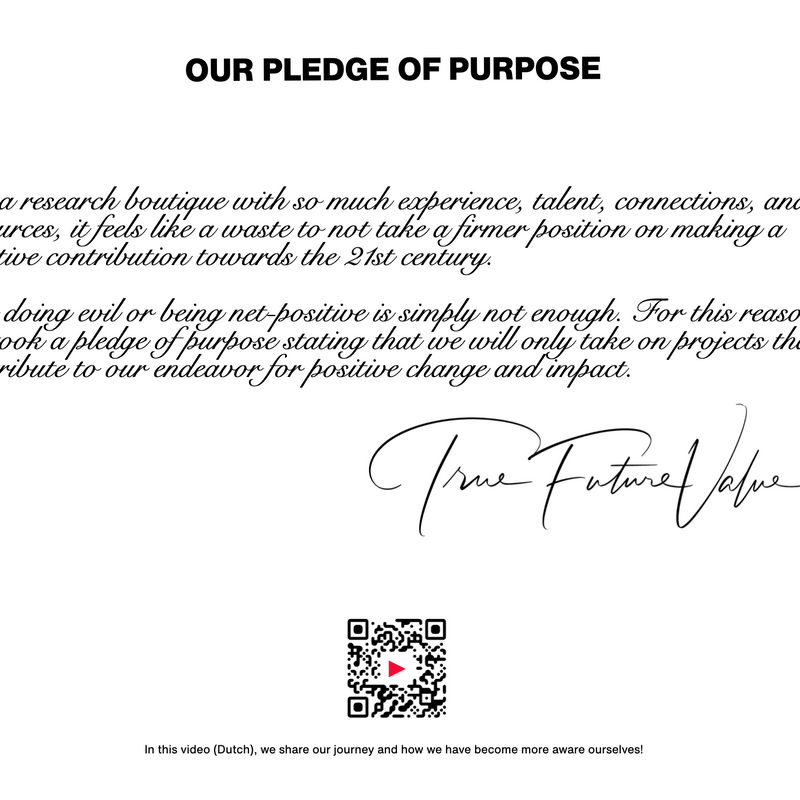
Pledge of Purpose

Today I made a personal commitment and posted it on my linkedIn; my 'Pledge for Purpose'. I've promised myself to only invest my energy, attention, talent, and network in projects that contribute positively to one of the 17 Sustainable Development Goals.

Sharing this pledge serves as motivation for myself and hopefully inspires others. As an entrepreneur, it's an exciting leap for us. I see this as encouragement to go beyond just 'don't be evil' or occasional NGO projects. It's about fully integrating positive contributions into daily business. It's not easy, but it's important and possible!

We decided to only focus our efforts on clients and projects that result in a net positive contribution to society and/or nature. Many fellow entrepreneurs told me our market would become too small, that we would not survive such a firm line.

Discussing this with clients and in projects has been nerve-wracking but has actually led to increased engagement and better results, both for the projects and their positive impact. We are growing more and more. I've noticed that this sense of purpose has an incredibly positive effect on employee and partner engagement, significantly boosting the quality of outcomes.

Our Pledge of Purpose

I now realize that it would be a shame if we would not spend all our energy, contacts, experience, knowhow, creativity on those clients and projects that deserve it most. I'll be sharing some concrete examples of this 'challenge' soon. In the video I will make my pledge, share my 15 year sustainability journey and explain why this matters to us.

I will try to arrange some subtitles in English.

The LinkedIn post I referred to;
https://www.linkedin.com/posts/arjanpostma_even-iets-persoonlijks-m%C3%ADjn-pledge-for-activity-6754323347271692288-SlnD?utm_source=share&utm_medium=member_desktop

Experimenting Podcast Season 2

The first Podcast serie is a success. At least in the narrow audience we are aiming at. We were Podcast of the month and are competing for business podcast of the year. Meanwhile we are thinking about a second series.


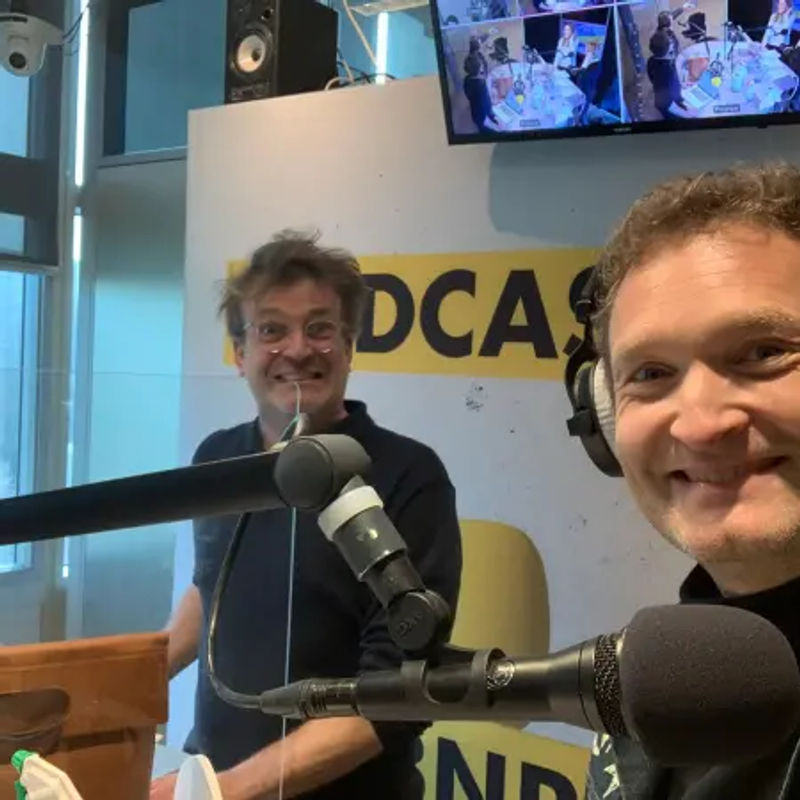
We have purchased our own recording equipment, the same as in the BNR studio. This will allow us more experimenting. One of these experiments is turning WWXD cases into a podcast. We will interview a leader/ company and then edit the interview in a spoken word column by us, supported by quotes from the interview. In this way we can make it real-life examples and a layer with our fresh perspective.

A second season?! #HowTo
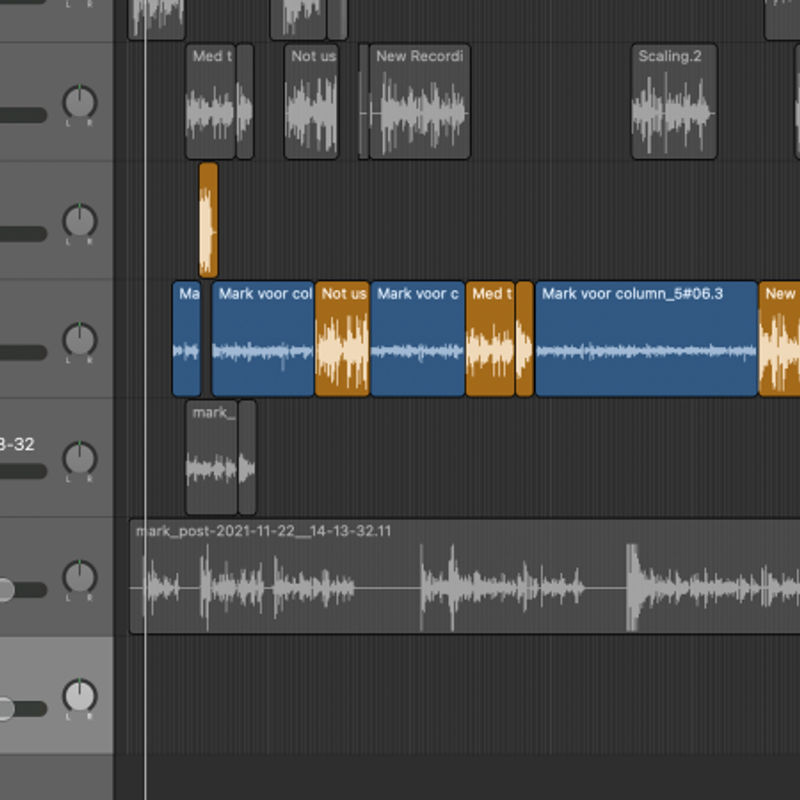
I have been editing two podcasts recorded by Jörgen to see if this might work. One WWXD is about making lab grow meat and the other one is about a company in the Metasphere.

Here are the two examples (sorry, mostly in Dutch)..

EXAMPLE 1 Interview by Jörgen with an intro and outtro

EXAMPLE 2 Column style edit with quotes from the interview


This is most definately what we meant by WWXD, but also too much work (I think)
I can see the column really working, if that would be my day job. It is far to intensive to listen, codify, edit, write own text, record etc... the brilliant thing about recording podcasts is that it can be done so rapidly and easily if you know what you want to say.

A special thanks to Minkowski for letting us play with their podcast and sharing the source files!!

So, what is it about?

These are the topics I'm writing for Season one. Pressure to share it with the general public is in many way very healthy haha.

About change. 
Future proof or Future ready?
The challenge: a more certain future by allowing more uncertainty.

About culture? 
How tools determine culture?!
Tools make us efficient in one specialty, but how do tools trigger diversity and effectiveness?

About strategy? 
Strategy is an experience!
Daily, everyone is engaged in working in and on the strategic direction.

About Purpose. 
The real impact of purpose.
Being able to make a difference is outcome x output, so scale x relevance. Not easy, but essential.

About Learning. 
The experiment we call organization.
Every day getting a little better together through what doesn't work yet, is the real capacity of an organization.

About Design. 
Designing, Researching, Entrepreneurial Organizing.
Balancing between safeguarding continuity and deploying disruptive change.


About Systems. 
The core of the matter.
Embracing complexity by recognizing patterns in systems makes everything simpler.

Listen on Spotify

We've wrapped up the recordings. Doing two in a day is quite intense. Everything's edited, and we've decided to host the series ourselves. For both Jeroen and myself it was a steep learning curve. A few months ago I was just a listener to podcasts and now a producer. But now we can potentially create a second series on our own - more of a HOW-TO based on the WWXD idea?????

Designing partnerships 2.0

We're very proud of the result and grateful to Erik Schut from (_NTCP) and the BNR team. And of course, to my co-host Marijke Roskam. It took while to get this of the ground, we needed to make a three party deal based on alignment between BNR (studio), NTCP (kind of the sponsor) and WWXD as a content partner. Coming week _NTCP will use the podcast, online ads and a newspaper ad to generate traffic to the podcast ánd there consultancy services.


Closing the loop; this blog started with a podcast!!

Podcasting remains a wonderful medium because listeners truly dedicate one-on-one time and attention to a topic. I always thoroughly enjoy it. An interesting detail is that this blog originally started based on the famous Start-Up podcast; https://www.futuresacademy.nl/post/mr-unconventional-is-building-the-impossible-company

And a very very long time ago, I was involved in making one of the very first podcasts in the world with the Podfather haha, but that's a whole different story!


Where can I listen?

Sorry for our English readers, this podcast is in Dutch and can be found on BNR or Spotify.
https://open.spotify.com/show/56CXUxvLuJX3u6W2WEgxhv

New digital home and already moving to the next

OMG the new Futures Academy website is live. Here is a first demo

Like you make a longlist and later a short list when making important decisions, we made a long-site before we are able to make a more compact, simpler version ;-) This website contains all our knowhow, all our materials, all the different projects we are developing.

The look and feel is vibrant though too complex, de content is inspirational though too much. Building a website is sometimes like building a little maquette of your organisation. You can now take a step back and look at it. So yes I'm happy with the site, the texts, the different pages... but we will already start building the next version... less broadcasting, more interaction. It will force us to simplify our offering and that is always great news for the future users.

A website is like a maquette of your company

Sometime working in different steps or generations seems like a waste of time but my experience is that keeping to think, think and think is not the answer dealing with complex matters. Sometimes you need to take a certain position, explore, reflect and plan a new action!

Wicked Sessions Podcast

Hmm, what does our brand sound like? #SonicBranding
Our podcast project is taking shape, but it's bringing up new questions. We need music, a name, a co-host - all elements that reflect on the podcast and us as creators. We're trying to figure out how we sound as a brand. Jeroen is working with the BNR team, but it's clear they see this as a factory product while we see it as a work of art. We're taking control of the production as a result.


Wicked sessions podcast

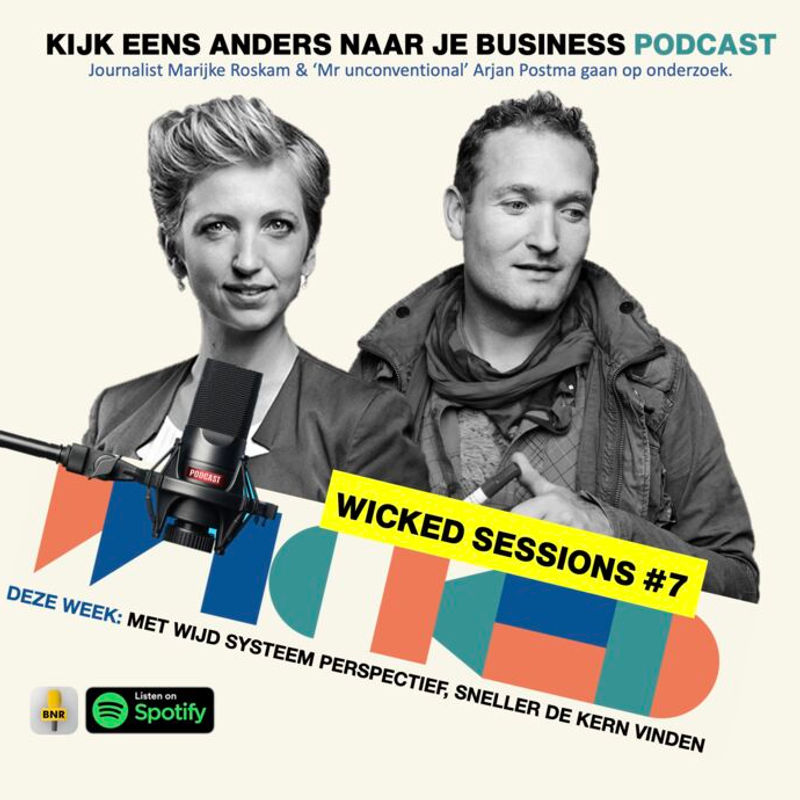
We've decided to call it "Wicked Sessions." "Wicked" comes from the concept of wicked problems - issues so complex and interconnected they're almost impossible to solve. In my view, it's not just the problems that are wicked, but the world itself. Especially when you involve people with all their diversity, emotions, and agendas. That's what makes everything wicked... and that's what I love.

We struggled with the "Sessions" part. We don't have a site or platform yet, but we do have our Boardroom sessions. It's a bit limiting, but we want to encourage listeners to sit with their teams and discuss how to anticipate possible futures. "Sessions" seems like a good marketing choice for now.


Landing page helps to give it a face

Jeroen has already designed a micro-site, giving us an extra face. I'm not sure about podcast-to-site conversion rates, but we can easily link this site to the podcast. Check out the draft


Subliminal branding?!

Now we just need to find a co-host, preferably a woman. Maybe one of the investigative journalists from the Dutch Financial Times to get some critical questions and a more intensive dialogue?! Jeroen likes the fact if the co-host is a newsreader at BNR, just as he sneaky used all the Financial Times colors on the site... borrowing some credibility. Luv you Jeroen!

We have a podcast!

Exciting news! After weeks of negotiations, we've finalized a deal with _nctp (pronounced "anticipation"), the Dutch Financial Times, and Business News Radio. We're collaborating on a podcast series about our Futures Ready approach. It'll be seven episodes, each nearly 40 minutes long, covering one pillar of our framework per episode.


Podcasts about the leadership challenges te become more future ready
Our goal is to share cutting-edge knowledge, guide and inspire business leaders on the seven major leadership challenges of the 21st century, and offer practical examples. It's quite the challenge, especially since I've never made a podcast before and I'll be recording it myself.


A story-arch of Information, Interest & Interaction

I'm already preparing to give the episodes some structure. Using our documentary teacher's advice of "Information, Interest," we've added "Interaction" to the mix. I think bringing in a host will make it more conversational. I'm using the story arc concept to create an outline – this will allow for free-flowing discussion while maintaining structure and conveying our message effectively.

This is a big step for us into the spotlights. I'm both nervous and thrilled about the opportunity to share our approach with a wider audience.

Spider graph for self-assessment

Our more modular approach works very well with clients, but it's still too complex for a quick 15-minute chat. We need a simpler entry point for a quick scan - a qualitative assessment we can do together swiftly.

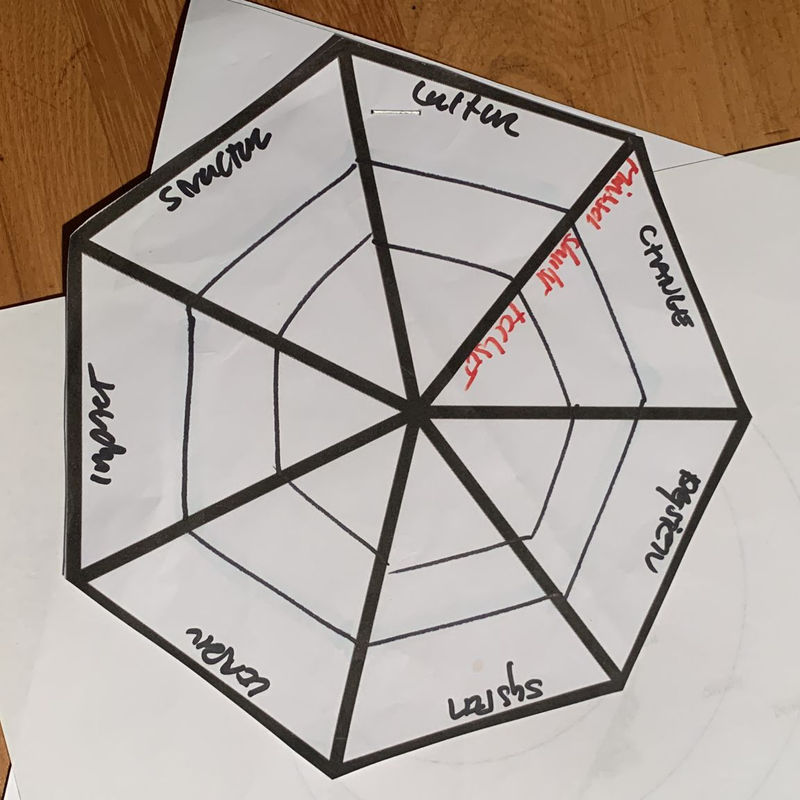
I'm experimenting with a new spider model
This spider graph has 7 axes representing Organizational Design aspects, each divided into 3 levels of change. Each axis has 9 points for easy scoring. In a single conversation, we can explore current status, strengths, and areas for improvement

Mapping the learning zone to become more Futures Ready
To find a potential learning-zone I'm looking for a 'gap'. I therefore often ask two different questions: "What are you already doing?" and "What do you want to do?" This reveals the gap between vision and practice in many organizations. For example, sometimes Agile is practiced on the ground but not part of the board's vision, or sustainability is talked about without clear implementation. These gaps present opportunities to enhance change potential.

The graph can be a quick-scan in 10 minutes or a summary of 100 measure points
Interestingly, filling out the underlying cards (21x5) and scoring them 1-5 based on the Rubric allows for a more detailed spider graph. This could serve as both an entry point and a summary.

Ans thus dreaming out loud... could this potentially become the foundation for a chatbot on our website, helping users find the right work models or courses?

To be continued...

Working models ánd learning goals

We need a more modular form
The book is a fantastic body of work, and the map tells our story, but we need to be able to work more effectively with clients using these materials, especially when developing and designing a program. If we don't make it more modular then I have to explain our whole approach before I can engage in dialogue... tit's impressive but too complex, too much. (literal feedback from clients).

It's time to bring out the learning objectives again. This time, they're not printed in the book (which was inconvenient), so I'm making a set of A5 sheets to work with


A new form factor next to book and map; The Card

Jeroen decided to transform them into a kind of card format, introducing the concept card. Slightly narrower than A4, with rounded corners and thick natural cardboard, it feels like real content that's also practical to work with.

AB testing the self-assessment/ learning goals
Now I can quickly select the right learning objectives for the relevant topics with a client and conduct an assessment. We usually use dots or mark the rubrics. I'm still experimenting with two perspectives: "What you say" (espoused values) vs. "What you do" (lived values), or "What you can do now" vs. "What you want to be able to do." This will be an A/B test in the coming period.

The set of cards now feels truly usable alongside the book, and we can leave them with the client or include a copy in the proposal.

Version 10.0
It's fascinating to see how self-assessment has been part of the process from day one, but it has gone through so many iterations to reach this point.

Form tells a story (affordance)

While it's thrilling to see our work in print, we immediately spotted areas for improvement. The current format feels too much like a 'classic book,' so we've decided to go bigger with an XL version that feels more like a 'portfolio.


Explore the over 1500 elements in our body of work

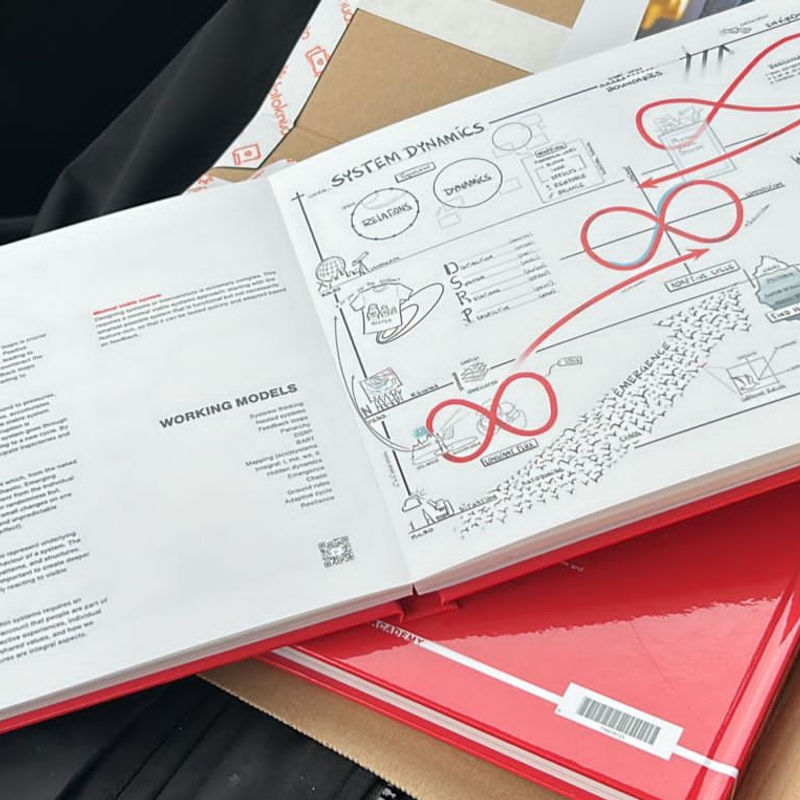
I've noticed that when I bring the book to partners or clients, they're eager to look through it, read, and engage with the puzzles. We're planning another print run, this time including an index to help quickly locate all 1,581 different models in the book. We're pretty impressed with ourselves for that!


The XL format; affordance to navigate and learn the framework through experience

Since we're doing a new print anyway, we thought we'd incorporate learning objectives into this edition. I'm writing this just after receiving the new books. The XL format really works, both in terms of usability and storytelling. However, we've realized the learning objectives should be kept separate - perhaps on cards or something similar. It's all part of the learning process!

How to capture the body of work?

How stupid can I be sometimes? We show people the framework and the 21 visual plates, and of course!!!, they want to see the larger version. It makes them curious.

So we're converting the plates to A4 and A3 sizes. I've already recorded videos with the underlying story for Jefta's briefing... and yes, everyone wants to have or read those too.

We've decided to take it a step further and put the framework into a book format. It's not meant to be a bestseller, but for our regular clients and partners, this will be a fantastic reference work. Perhaps it's also a great way to showcase our Body of Work in sales.

So, I'm getting started on the writing. Ouch. Why did we ever choose 21? Each new iteration costs me 21 times more effort, but okay, it must be done. I'm writing a page of text and explanation every day, slowly piecing the book together so others can proofread it.

Jeroen is already "playing" (as he calls it) with the form and navigation.

Unboxing the first prototype book, from Albelli ;-)

Another high concept of map interaction (AR)

The Virtual Reality (VR) experience blew everybody away this week. But that is the AWE of something new that people couldn't imagine yet. The real AWE is what that interface or experience will do to the quality of your project and cooperation. It is too soon for that.

From Virtual Reality to Augmented Reality
We have so much on our plate that VR is a nice conceptual demo, very much linked to the initial ideas we had about creating a learning experience. Today I tried to see if I can dial it down a bit and moved from VR to AR.


Grazing and exploring through the 21-map

In this demo I uploaded our tools as a kind of pattern language. Much like a QR code is the tool scanning and recognizing the artwork and then displaying the explainer video. It is interesting that this will still be AWE and amazing but far more comprehensable.

To the graveyard of too brilliant ideas?
Maybe this will also go straight to the graveyard of brilliant ideas but for now it is a lot of fun experimenting on what we can do with our 'map'.

Metaphor becomes reality: The map

From the beginning, we've always viewed it as an underlying structure rather than a dogma or rigid system. The metaphors of "navigating" and later "grazing" within the framework became crucial to our understanding.

The framework 0.5 in my back pocket.
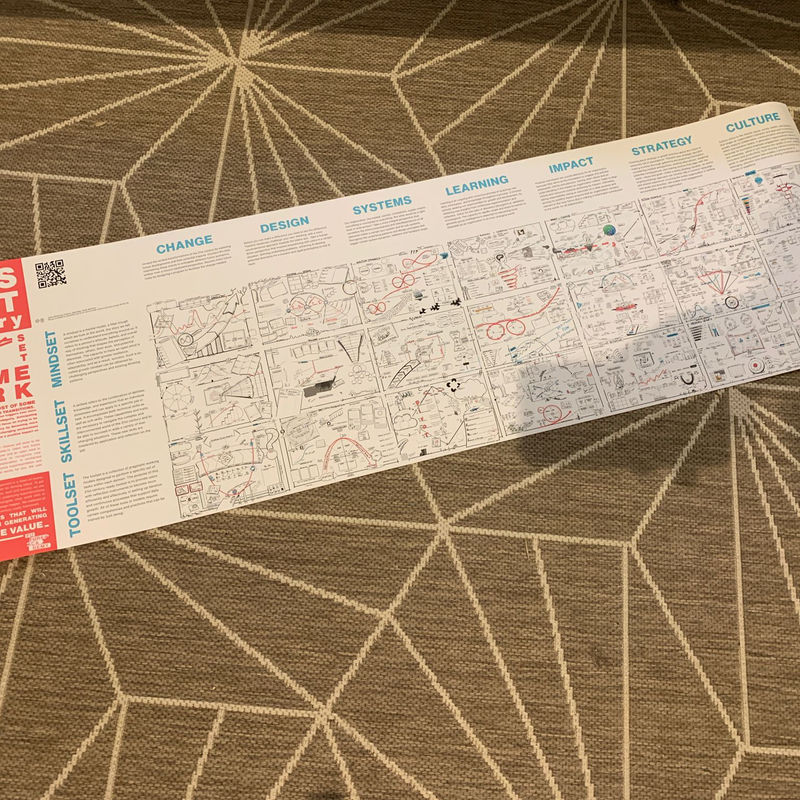
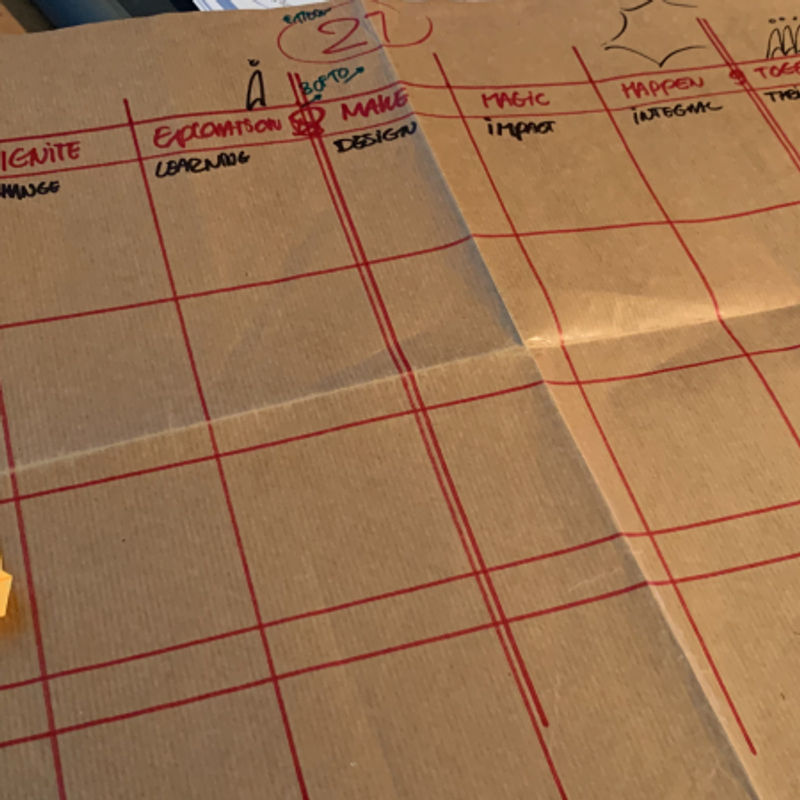
For months, I carried a folded sheet with 21 sections in my back pocket, filling in each compartment with insights I encountered. Interestingly, the 22nd section ("other stuff") remained mostly empty, validating our approach.

The document that needed to fit my back-pocket became a real form factor.

Mock-up, Proto-type, Test prints
Gradually, this document began to feel like a traditional road map. We progressed from a mock-up to a mini prototype, and then Jeroen boldly decided to seek a map printer to produce our framework as an actual map. I'm unsure about its practicality in daily use, though it could work well as a poster. Regardless, it's a giveaway that instantly communicates our philosophy. So, off to the printer we go!

The first prototype (mini format, too mini we learned)

This journey from concept to tangible product has been fascinating. It's exciting to see our ideas materialize in such a unique format. And once again... form does tell a story ;-)

Standing ín your strategy metasphere

Ever since we discovered the 21 framework, I've referred to it as a map. It feels like a way to navigate yourself or your team through a design sprint, a strategy process, or a change program.


Remodeling the business while the shop is open

As we explained earlier, we're trying to remodel the business while "the shop is open." We're running new masterclasses, including one on the future of tech where the Metaverse is a hot topic. I bought VR goggles so participants can truly experience virtual and augmented reality.


The way Alexander Osterwalder tlited my perspective on strategy (literally)

This reminded me of our first session with Alexander Osterwalder, working on his now-famous Business Model Canvas. He printed models on A0 posters and put them on the wall because no tables were big enough. The impact was striking - everyone was engaged and involved. Each person held a pen, feeling ownership to participate. The canvas was so large it felt more embodied, and the vertical orientation did something to our minds. This was a leap in approaching strategy and business planning. Before, I sat in my cubicle behind a screen, writing alone and then selling to others. Now, it was participatory, co-creative, multidisciplinary, embodied, and engaging. It's bizarre how form can fundamentally shift the entire experience.


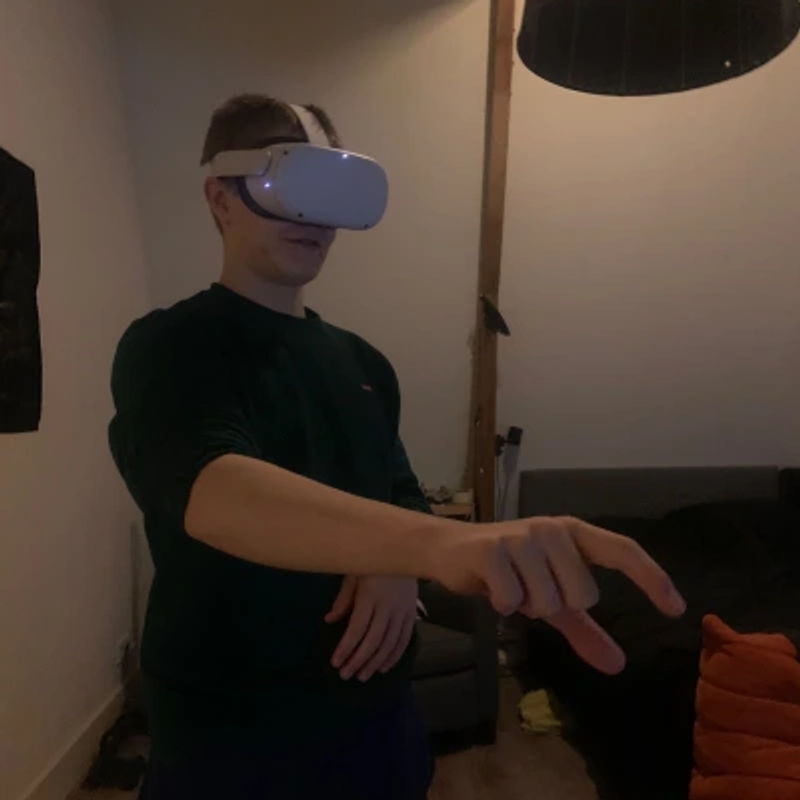
1 + 1 = 3... What if you could experience our 21-framework in VR?

Two unexpected topics connected: I wondered what if the new 21-map were a virtual, life-sized, interactive space. I created an image and uploaded it to a virtual bulletin board in the Metaverse, inviting two people to join. We stood literally in our own strategy or program, able to point, pick up, drag and drop items while seeing each other and having a dialogue.

This is a concept product we won't pursue, but it reinforced my thinking about the power of interfaces, embodiment, and navigation in strategy visualization.

21 visual representation. Check.

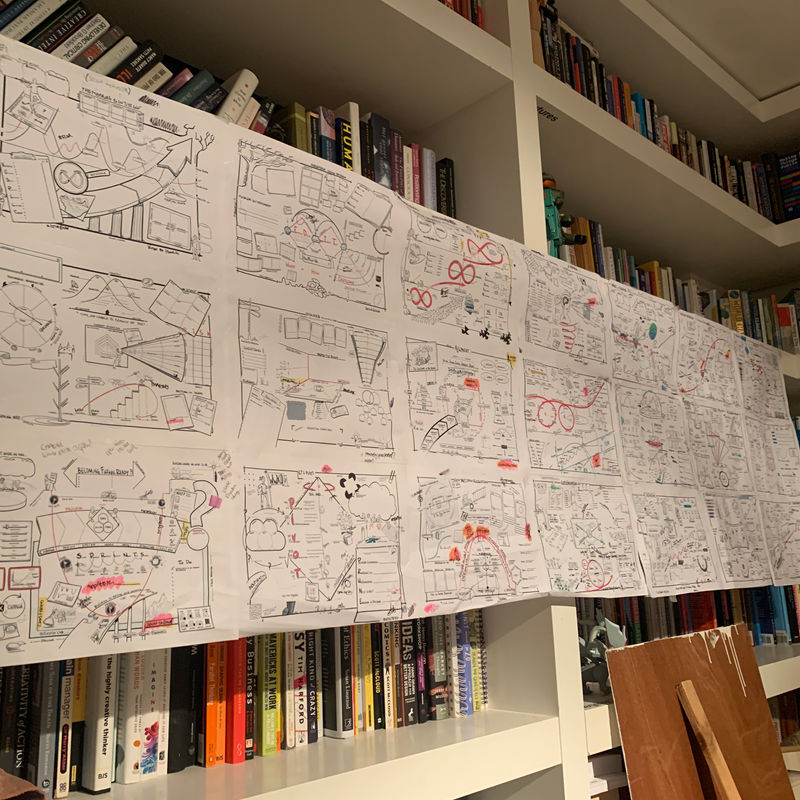
Unbelievable but true - all 21 plates are finally finished! I still can't believe this is real. Jeroen immediately jumped on the idea of creating an actual physical map alongside the digital plates. It's amazing to see this project come to life in both digital and tangible forms. The journey to complete these plates has been long and challenging, but the result is more rewarding than I ever imagined. I'm filled with a mix of relief, pride, and excitement for what comes next. This milestone feels like just the beginning of something bigger. WE ARE SOOOO HAPPY!


Left: all the 200 layers. Middle: the entire framework Right: Celebrate!
Thx a zillion, Jefta!!

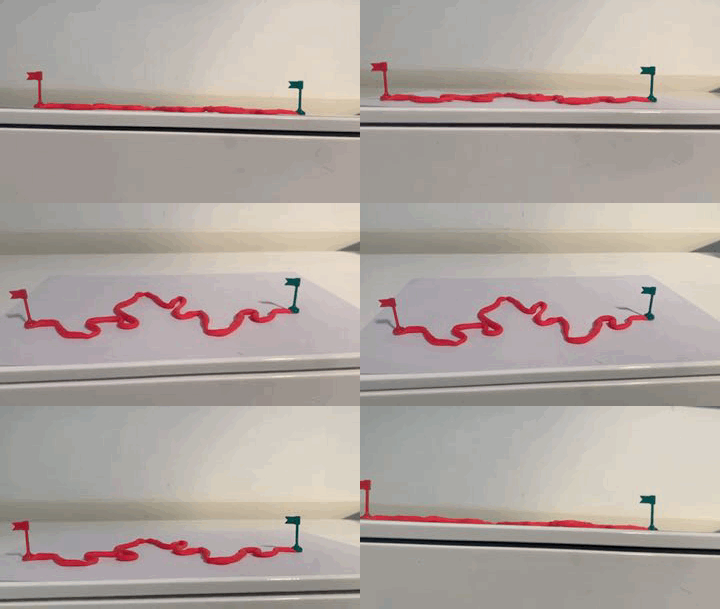
From A to B, never a straight line

I'm reading back the blog and had to create this little gif. Upfront many plans or strategies seem like a straight line from A to B... but in reality...

Our key consumption pattern

The whole concept of "grazing" - introduced yesterday - is still resonating. I've long wondered if there's a specific order to our framework. While we sense a certain logic in navigation, with the left side feeling different from the right, one can essentially move through it in a knight's-move fashion. This is because we're dealing with layers and the notion that problems are often not solved at the level where they originate.

Yes the framework has structure but it is non-directional or determent

If we are truly approaching 'future ready' as an agile way of working, instead of moving strictly top to bottom or left to right, you need to be able create your own path based on what the situation asks. I know this sounds somewhat conceptual, but it's something we've been pondering for a while now.

Levy Flight pattern
Yesterday's term, "grazing," reminded me of an old study about large grazers on the savanna. This pattern has been studied and compared to other patterns, from migrants to searching for your keys. There's a kind of similarity that even Google has used as a basis for its search engine: the Lévy flight pattern. In simple terms, it suggests that we pause somewhere and search/graze in detail, then move a distance and focus in detail somewhere else. We essentially hop through an unknown space.

I think this is literally how I ultimately envision a participant navigating through our framework, through our world.

Here is some more info on the Levy Flight pattern: https://en.wikipedia.org/wiki/L%C3%A9vy_flight#External_links

The Levy Flight pattern is not 'linear' but also not random (left).

Re-testing Working models & WWXD in Dubai

This will not work
The structure for WWXD is proving too complex. It reminds me of a digital magazine where you scroll vertically for long articles and horizontally for short ones, disrupting the natural flow. We're questioning whether we should approach it thematically at this stage, and if so, how to determine themes and relate them to the 21 elements.


And this will work

We're increasingly seeing two sides of the coin. The working models from the framework require good examples, and these examples inspire application. This will be our strength moving forward.


Making it modular will create more flexibility

Perhaps we've found the answer: separating themes or WWXDs (and soon models) will make us much more flexible. The Framework and Rubrics provide an underlying structure, but everything is possible on top of that. You can literally graze through it.

This new approach could simplify our content organization and improve user experience. We'll need to discuss this further in our next meeting.

I just neeeeeed some confirmation from clients that the whole idea of working models and WWXD examples will work for them. I will be facilitating a Futures Thinking course for the top-civil servants of the UA Emirates. Very well informed and educated group of people, but all their training is economics, business and logic... they are a bit less trained in design, creative thinking, digital culture, outside in thinking etc. So I'm going to use this group to re-test my assumptions on using the Framework, Working Models, WWXD's en Rubrics. Exciting.

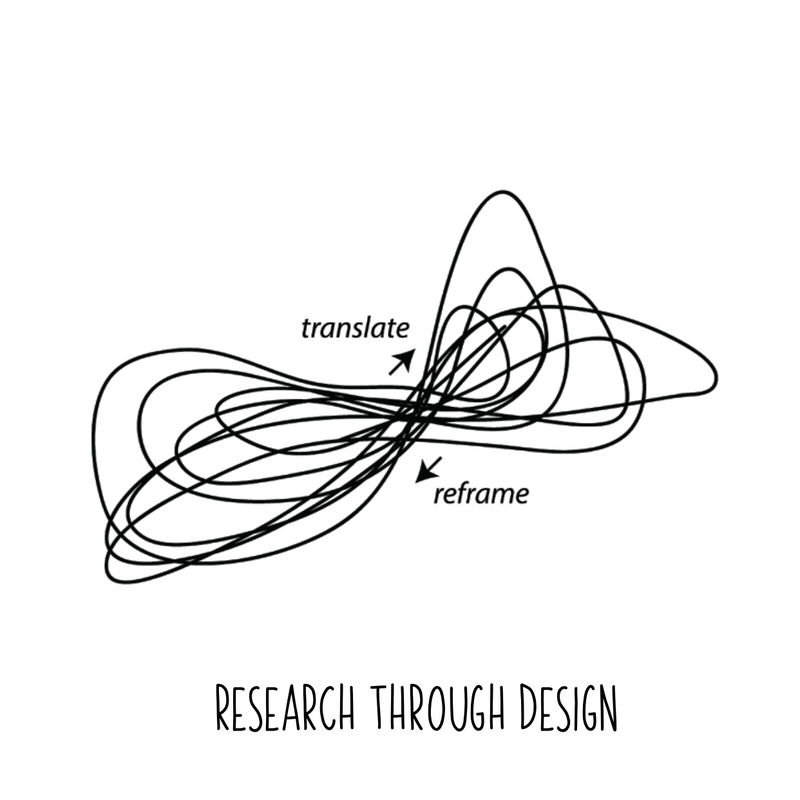
Research through Design

This is the best decision so far. By having to draw a visual per theme we ar discovering the true essence and story of each element and how they relate. This is what they call Research Through Design.

An efficient creative process
The process is simple, doing it... is a bit more complex. I start with the folder of a theme and lay out all the notes and tools. This is summarize in a theme-sheet because I need to connect all these visuals and tools to explainers, learning goals, courses etc in a later stage.


I then start drawing with a ft marker to find the structure and the main 'model'. As soon as I have the 'hook', I use the 9 field structure to draw with a grey pencil. This is a lot of trial & error. bit to the left, bigger, smaller etc. until all the models fit and are in the right place. Then I take the black sharpy and finalize the draft visual.

Final step is making a video with my Iphone flying through the fields and narrating the story. Jefta will use this to apply his secret sauce making it both 'simple' as well as super engaging.


Every project, each facilitator has its own learning goal: 100% digital

As I blogged earlier, we as facilitators have our own learning goals in each and every project. This guarentees us being sharp and our own personal growth. Jefta decided to leave the paper and pencils for this project and for the first time will make all 21 images digitally (on his Ipad Pro). This is also a bit more convenient as Jefta is now (tenporarely) located in Costa Rica.

Bekijk de video →

A live recording from my paper to Jefta his Digital space.

Thinking Yes, and...: work in layers
When we are going to work in a digital tool like Pixelmator... can Jefta then draw each and every model in a different layer. In that way I can re-use the models later in a coursebook, slide or poster for example. Oh yes... this is going to be a neat experiment.

In Pixelmator all elements have their own layer. We will be able to use all 200 models separately and maybe even put them in a visual library.

A chaordic process

A new milestone today. The first pillars (CHANGE & DESIGN) are ready in the brown paper stage. We have really nailed the process (since we have 21 visuals to create in 21 weeks ;-) It is an amazing feeling to see the sentences in the Rubric-tree, the chaordic collection of notes in the binders now connecting and coming to live in these A3 paper. WOW!

The 9 field approach

I have been working with Jefta for a long, long time. The great thing is that I have helped him in his leap towards entrepreneurship. And in the process I have tried to make his talent and knowhow more explicit. Yes he is a great visual artist but he is much much more. He can bring the most complex things back to a mature simplicity. BAM!

Magic to Method
Working with Jefta I observed that he is using some techniques he is not even aware of. By making this more explicit, Jefta can turn his talent from magic to method and it will help him to grow as a facilitator ánd he can turn this into training-courses.


For the 21 images we are going to create together we will be using one of these techniques, the 9 field technique. You can just fold a piece of paper into 9 squares and each square resembles a specific aspect of the theme you are working on.


Finding the super structure
The future or results are to the right, the resources to the left, the pragmatic at the bottom, the conceptual at the top... and yes in the middle is the essence. I'm using this tool to map my own 9 field visuals so I can brief Jefta. To my experience I work outside in.. so while drawing, I am starting to see the super-structure of this visual en this is how I can create a great story as well as distill the essence of it all.

Visualising the toolbox

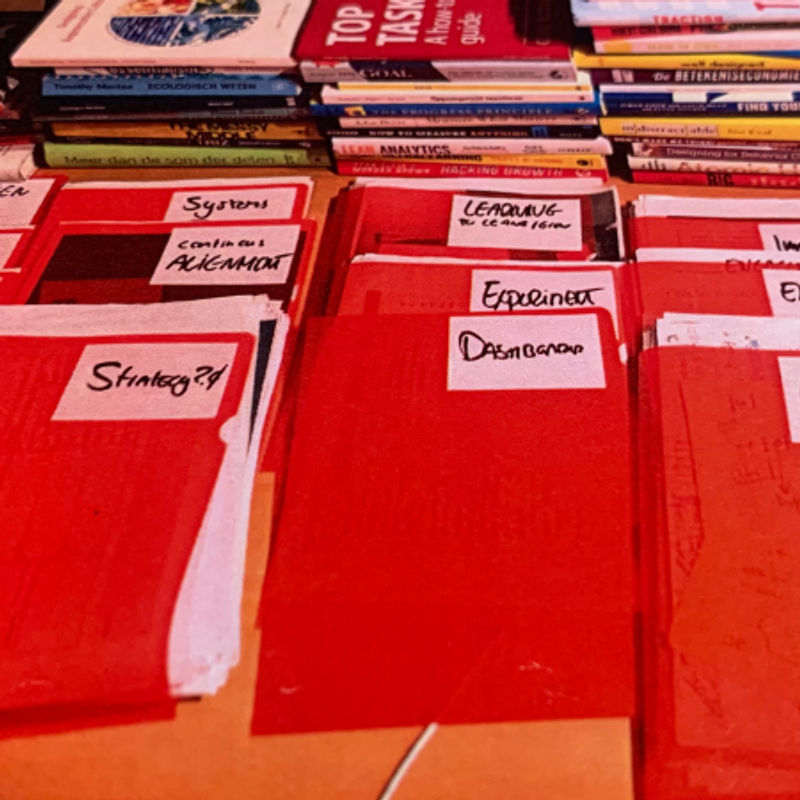
Today's challenge: Organizing our toolkit. We've neatly divided 21 capacities into 7 folders, each containing 50-100 tools we typically use when working on a specific theme. But I can't expect anyone to go through all these folders easily.

Tools are not checklists, they are obstacles for the mind

I've noticed that tools are often misused or treated as mere checklists. People say, "Great, the stakeholder map is done." But is it ever really "done"? These tools are meant to be reflection instruments, sharpening our thoughts and decisions. They're not forms to fill out but obstacles for the mind, forcing us to explore different perspectives, find the core issues, and recognize alternatives.


The output of one tools is input for another tool

Tools and working models are interconnected. The output of one model becomes input for another. I realized this when I recognized the relationship between Abell and Ansoff, for example.


Tools are reflection instruments... you are never 'done'.

We need to find a way to make these tools easily accessible, inviting, and part of a larger whole. They should foster the understanding that the work is never truly "finished." I'm considering creating a map with 21 sections, each sketching a capacity or working model. \\

Mapping out al tools!

I'll ask my friend Jefta if we can create one illustration per capacity each week in the coming period.

This approach could help us and future clients to better utilize our toolkit and understand the interconnected nature of our work.

Hybrid branding

A hybrid brand is the blending of two types of brands: a business brand and a personal brand. Why create a hybrid brand model? You'd choose this brand type if you know that by putting you as an expert (or with your reputation) front and center, your products and services will have an even greater appeal.

Clash of tools

Tools create culture as they limit, enforce or accelerate certain behaviors and values.

I'd like to share an interesting observation from my recent work experience that sheds light on what I call "Tool Culture" - the subtle ways our choice of tools reflects and shapes our thinking processes.

Last week, after a meeting with Jörgen, I instinctively created a MIRO board to visualize the WWXD architecture. This week, following a discussion with Jeroen, I found myself setting up a TRELLO board for the Podcast deployment. It wasn't until I was halfway through that I realized I was doing essentially the same thing - organizing information - but in distinctly different ways.

The same goes for continuous copy-pasting from Powerpoint to Keynote and vice versa. Grrrr.


Is this frustrating repetition, or an enlightening insight?

Trello, with its column-based layout and draggable "stories," is all about structure. It provides a clear overview, allowing for easy organization and "snap to grid" functionality. It's a tool that thrives on order and linear thinking.

Miro, on the other hand, often looks like a beautiful mess. It's a canvas for creating clusters of related ideas, emphasizing patterns and insights rather than rigid structure. It's less about overview and more about uncovering connections.

Digital copy of real world behavior? And vice versa??
This distinction mirrors what we see in physical brainstorming sessions. Some people meticulously align their post-it notes in neat columns, categorizing ideas to create structure and overview. Others shuffle their notes around, clustering thoughts to reveal patterns and generate insights.


Toolculture

This small example of Tool Culture highlights how our choice of tools isn't just about functionality - it's a reflection of our thinking styles and problem-solving approaches. It's a reminder that each tool serves a unique purpose, has distinct design principles and (im)possibilities. Understanding these nuances can lead to more effective collaboration and problem-solving.


BYOT: Bring Your Own Tool

This insight came from a simple act of "learning by doing", "understanding by sharing." It's a testament to the value of reflection in our daily work practices. Yet, now let's act upon these insights and make some choices? Or is that a drive towards senseless efficiency and is Bring Your Own Tool a better step, embracing diversity??

WWXD protoype 2

In addition to our framework deep-dive it is a pleasant distraction to also keep making stuff, to prototype our interaction with the end-user. How will the 21 capacities as a framework (the model of the Skool) relate to the Next practices of WWXD. Are this two very different propositions or is it an integral service? I don't hope we are ending with two companies, again!

Make it tangible

This week we crafted our first "WWXD" (What Would X Do) magazine or mailing or.... The theme we are focusing on is the Art of Meeting. This is either connected to capacity 17 (culture & skillset) or 11 (system & skillset)
As we tinker our way forward with Powerpoint and Keynote (let's make a decision pfff), we've discovered two distinct approaches:

1. CONCRETE; The "What Would X Do" approach, offering tips and tricks from real-world examples. WHat would Bezos do? What would Musk do? What would the UN do?

2. ABSTRACT; A pattern-based approach, providing a more instrumental view of how we perceive meetings. For example, what kind of meetings exist? What are the design elements and principles?


First mock-up

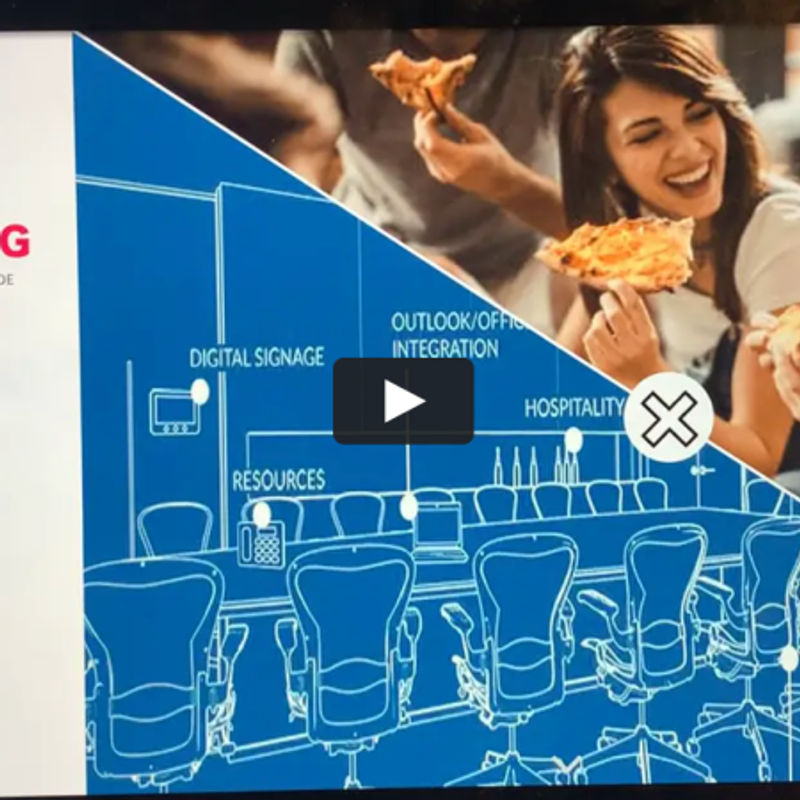
Our goal is to complete the first version by this Friday. To achieve this, we've created an initial mock-up to demonstrate how it might work. We've chosen a distinctive template featuring a diagonal layout: the upper section always displays a human photo, while the lower section showcases a structural visualization or illustration. We're aiming for high contrast in the color scheme to make it visually striking. This screams ACTION!

Navigation; Swiping left or down (oops too complex)
Navigation through the diverse WWXD examples is achieved by horizontal scrolling, while vertical scrolling allows users to explore the content in depth. This unique design ensures an engaging and intuitive user experience.

The L-template of the WWXD digital magazine

In our current prototype, we've included three fascinating examples:

1. The Ubuntu approach of a Tribe

2. Jeff Bezos's Two Pizza Rule (and his no PowerPoint policy)

3. Elon Musk's no-meeting strategy

These examples form the horizontal axis of our guide. Vertically, we delve into various types of meetings, each accompanied by concrete "hacks" to improve efficiency and effectiveness.


Our WWXD guide will offer fresh perspectives from successful leaders and organizations, while also providing practical tools for immediate implementation.

While I'm writing this our conceptual enthusiasm is a bit fading. Users need interfaces that are intuitive, which they recognize otherwise we have to sell our philosophy, our services ánd how to use them. That hurdle is too much. yet we will test anyhow since it is always good to see and learn what they do like (and maybe why?)

And... a first editorial overview... a topic model (term borrowed from Data Science);

Milestone; 500 rubrics defined

Today marks a significant moment in our journey. We've reached an impressive milestone: over 500 rubrics created!

Experimenting with the tool Notion (and Workflowy) to create oversight... the simpel tree structure provided a good feeling of the 21 capacities and the 500 underlying learning goals.

First editorial meetup

Defining the first 10 topics for our thematic WWXD publications based on demand by clients. We are wondering if we want WWXD to be that thematic or more really based on a singel business case, like Polestar or Amazon or... will this be a booklet, a PDF, a subscription? Lt's make some different versions.

Creating an interactive, online collaborative Miro board for the editorial team.

It doesn't need to be perfect

I've been sorting through my notes non-stop this entire week, filling in the grid from the bottom up with examples: Models, Theories, Exercises, Insights. I simply entered them as bullet points in each box. About 80% of it went smoothly, but 20% was like solving a puzzle. Questions like "Does Storytelling belong under engagements?" and "Should dashboards be under System or Structure?" came up. With some thought and practical application, that 20% will find its place. The great thing is that all these internal considerations really bring color to each box - it's amazing.

I keep reminding myself: It doesn't have to be perfect, dammit!

Morphology; seeing the world through form

As a systems thinker, one of the most powerful tools in our arsenal is pattern recognition. It's about constantly observing the relationships between elements, layers, underlying dynamics, and the behavior of systems. Over the years, I've come to admire how biologists examine natural ecosystems or how architects like Ben van Berkel view the built environment. They look through a lens of form.


Systems thinking; recognizing the patterns

Through this lens, we begin to see less of the individual parts and more of the sum of those parts, the movement within the whole. How does a skyscraper relate to the adjacent forest in terms of shape and contours? Why do two seemingly different plants belong to the same family? How are words like "hound" and "cat" related (or not)? In this perspective, we look beyond logic and play with form.

Morphology, seeing in form (like a biologist , linguist or architect)

This approach invites us to challenge our assumptions and see the bigger picture. It's about asking "What if?" and exploring possibilities beyond conventional thinking; PLAY!!! By focusing on form, we can uncover connections and patterns that might otherwise remain hidden.

For now, it's about literally playing with form. Next time you observe your surroundings, try to see beyond the individual elements. Look for the patterns, the relationships, and the overall form. You might be surprised by what you might discover.

What if the model had no beginning or end? What if it is linear and thus directional (left, right but also top and bottom) or what if it is layered?

The philosopher Gregory Bateson provided a beautiful example of how our thoughts can lead to assumptions that prevent us from seeing the whole. (I'll need to look up the specific example to share it with you.)

The 21 capacities for the 21st century

We need a comprehensive framework to guide our clients and members through organizational development. A fascinating model - that integrates multiple layers of change and growth - starts to emerge.

Three levels of change

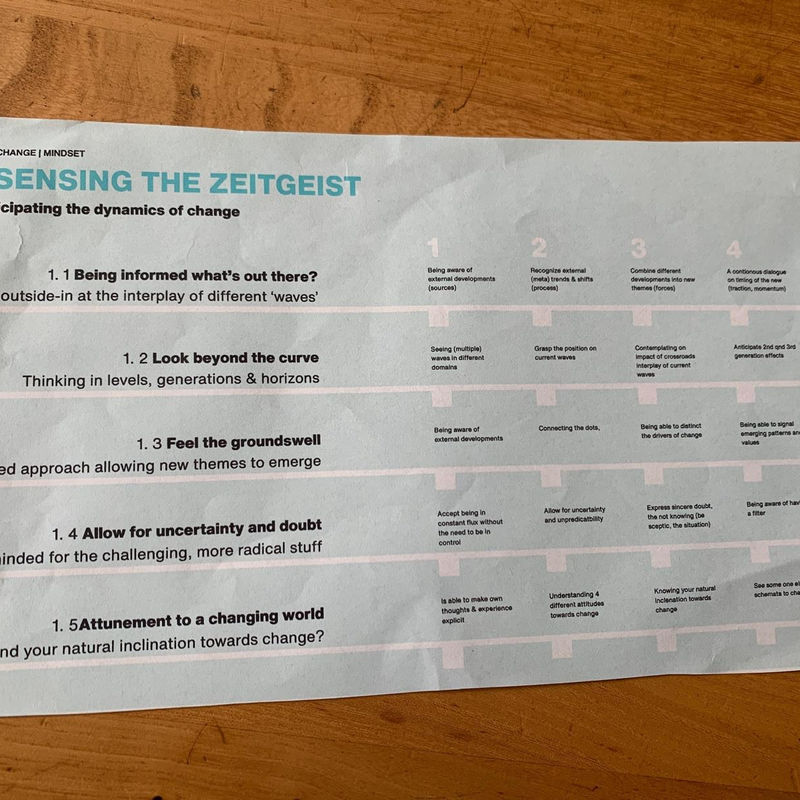
At the core of this framework are three fundamental levels of learning and (deep) change: Mindset, skillset and toolset.

Consider the Agile methodology as an example. The four core principles of the Agile Manifesto represent a mindset, while Scrum's kata cards are tools. To truly embrace Agile or Scrum, professionals need the right tools, an appropriate mindset, and often a set of new skills. These three levels represent the depth at which change needs to occur.

The cognitive aspect sits at the top, the affective in the middle, and the often underestimated but crucial conative aspect forms the bottom row. These dimensions form the Y-axis of our model.

Seven organizational layers

Intersecting with these levels of change is a new seven-layer framework. When combined, they create a matrix, a landscape map with 21 distinct areas. These areas represent what we're calling the "21st Century Capacities." (Yes, there's a difference between competencies, capabilities, and capacities, but that's a topic for another day!

Matrix: 3 x 7 =21 capacities for the 21st Century Professional

This matrix gives us 21 capacities for the 21st century professional, a serendipitous alignment with our current era. Each of these 21 areas contains approximately 10 underlying tools, providing a rich resource for professional development.

To summarize:

- 3 levels of change

- 7 organizational layers

- 21 capacities

- 210 working models

OMG? A thousand learning goals

As exciting as this framework is, it also presents a challenge. With 210 working models, each requiring multiple learning goals, we're looking at over a thousand Rubric learning goals to develop. It's a daunting task, but one that promises to provide a comprehensive roadmap for professional development in the 21st century.

In conclusion, this multifaceted framework offers a powerful structure for understanding and implementing change at both individual and organizational levels. By addressing mindset, skillset, and toolset across seven organizational layers, it provides a holistic approach to professional growth and adaptation in our ever-changing world. I will work on this a bit more but we are getting somewhere!

How might we... validate the 21 ready framework?
Doing the entire process in the reverse order. Take every piece of info, slide, model, insight and place it in one of the 21 boxes. If the model is right (enough) we should have a good balance and not too much category 'other'.

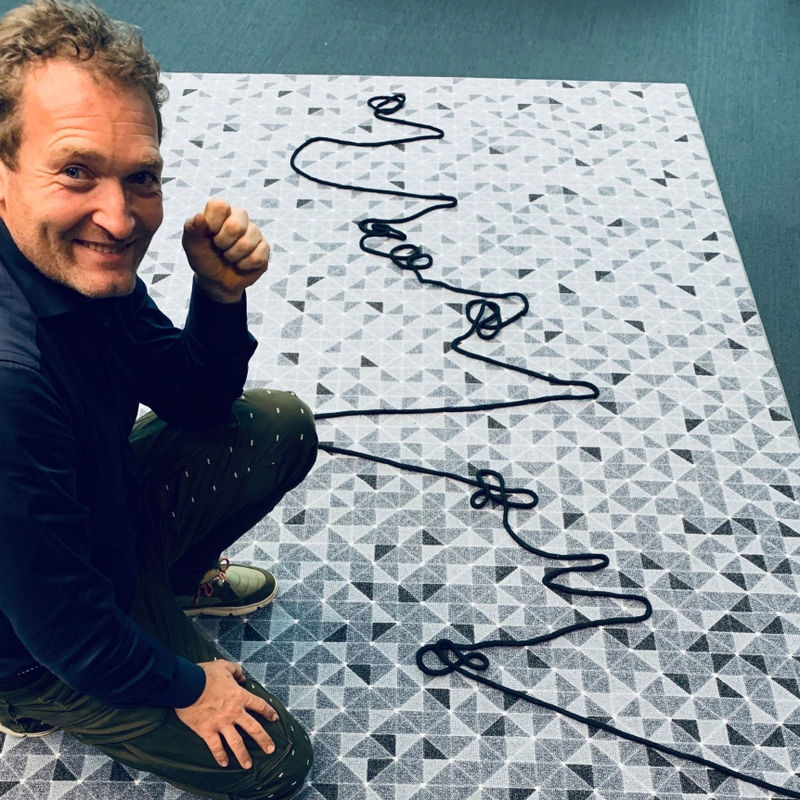
Embodied reflection; life in a rope

Narrative inquiry; analyze the stories we tell (ourselves)

As I reflect on this tumultuous year, I find myself drawn to a more embodied and intuitive approach to processing my experiences. Inspired by the Narrative Inquiry method I learned about earlier this year, I decided to use two shoelaces on my desk to map out my journey through the year.

This is something you can easily do yourself. Describe your day with one rope. And the other rope I used to plot how I felt during that day.

Embodied reflection tool

One lace represents the events of the year, while the other traces my emotional landscape. As I drape the laces, I'm struck by how often the two diverge - moments of external chaos paired with unexpected resilience, or periods of relative calm tinged with underlying anxiety.

The COVID-19 aftermath is large, creating steep peaks and valleys in both laces. I note the initial shock and fear, followed by a gradual adaptation to new routines. Business-wise, there are sharp turns representing pivots and challenges, but also gentle curves of innovation and growth.

This tactile exercise brings to light several key takeaways:

1. The event lace reveals the madness of deep-dives, new plans, pivots. But also how quickly we adjusted to new ways of working and living. This is the rollercoaster

2. The emotional lace shows more stability than I expected, given this year's challenges. But what does that mean? Are we able to cope very well? re we well trained to recuperate quickly? Or are we protecting ourselves by not getting to much emotionally attached?

3. Both laces smooth out during moments of meaningful projects with colleagues and loved ones. Moment it all makes sense

This embodied reflection has given me a fresh perspective on the year, highlighting not just what happened, but how I experienced and grew through it. It's a practice I plan to continue, as it offers insights that purely cognitive analysis might miss.

I learned this tool from my colleague Julika who is a psycho therapist who combines Design thinking with counseling. Very hands-on, very embodied, very powerful. We used big ropes on the floor to really use the whole body instead of just mind and hands.

The 7; And there was light!

A new framework is emerging that promises to revolutionize how wé think about and structure our businesses. After months of rigorous analysis, clustering, and affinity mapping, a compelling structure has taken shape: the Seven Layers of Organizational Design. This framework offers a comprehensive approach to building future-ready organizations, addressing key aspects from anticipating change to making a lasting impact.


The seven layers of Future Organizational Design: A framework for becoming Futures Ready

Let's explore these seven layers:

1. Change: At the foundation of this model is the ability to anticipate and adapt to changes in the external environment. Organizations must ask themselves: How can we foresee potential shifts in our industry? What future scenarios should we prepare for?

2. Design: This layer focuses on taking an active stance in shaping the organization's future. It emphasizes embracing the user perspective, encouraging businesses to ask: How can we design our processes and products with the end-user in mind?

3. Learn: Continuous improvement is key to staying relevant. This layer explores how organizations can establish feedback loops, experiment with new ideas, and validate their assumptions. It's about creating a culture of learning and adaptation.

4. System: Understanding the underlying patterns and structures within an organization is crucial. This layer examines the various components that make up the system and how they interact, providing insights into optimizing organizational efficiency.

5. Strategy: With a clear understanding of the system, organizations can make informed strategic choices. This layer addresses questions about direction and long-term goals, ensuring that the company's efforts are aligned with its vision.

6. Culture: The importance of organizational culture cannot be overstated. This layer explores how team members work together and the shared values that guide their actions, recognizing that a strong culture is essential for implementing any organizational design.

7. Impact: At the pinnacle of the framework is the organization's lasting impact. This layer encourages businesses to consider their purpose, the value they add to society, and the legacy they wish to leave behind.

While the exact order and structure of these layers are still being refined, this framework provides a robust foundation for organizations aiming to become more "Futures Ready." By addressing each of these layers, businesses can create a holistic approach to organizational design that is both flexible and forward-thinking.

All the content is know in binders representing one of the seven layers.

This offers a structured way to think about and implement changes that will help organizations not just survive, but thrive in the face of future challenges.

This emerging framework represents months of dedicated work and analysis, and while it's still evolving, it already shows great promise in helping organizations prepare and ourselves (!!!!!!) for whatever the future may hold. YES!

Action learning: Challenge status quo

In the recent weeks, we've engaged in several fascinating conversations that have brought us back to a fundamental principle: Let the world be your classroom. This idea has led us to explore the concept of an "Open Learning Landscape" - a space where professionals can access both the tools and inspiration needed to anticipate future developments and drive positive change.

What exactly is our role in this landscape?
The hallmark of most 21st-century skills is the ability to learn quickly as a team, cope with uncertainties, and constantly challenge ourselves to shift perspectives. It's about viewing the landscape with fresh eyes. Only then can we recognize underlying patterns and make a real difference. This is our core belief. This means that we can't provide too much structure or authority or affirmation. The learning of 21st century skills is about reflecting on ones own behavior, habits and intrinsic motivation.

Challenge based learning
Training this fresh, unconventional perspective involves continually challenging ourselves. As a renowned Dutch marketing guru aptly put it during one of our conversations: "When you're wavering, think carefully about which handrail you grab." In other words, where do you seek your stability?


WE ARE CHALLENGERS!

After this round of discussions, we've gained clarity on the position we want to occupy. We're not aiming to be gurus, consultants, agencies, magazines, or know-it-alls. Instead, we see ourselves more as guides or coaches. The original concept of a "Skout" is closer to our vision. For now, we've established that we are the challengers - challengers of the status quo, challengers of the open mind, challengers who demonstrate that things can be done differently.

A working tool or coaching session is like an Aikido move
This role feels right because we challenge you, employing a kind of judo throw. Like Aikido, we play off your movement to help you stand firmly yet nimbly in the future. We challenge you to continually reconsider your own position and assumptions. And believe me, every form of strategy and future vision is brimming with hidden assumptions. You'll need to bring these to the surface, exposing false confidence and limiting beliefs.

In this rapidly evolving world, our mission is to be your sparring partner, your challenger, and your guide. We're here to help you navigate the complexities of the future by encouraging you to question, learn, and adapt.

Rubric style learning goals

As Ricardo Semler, the innovative Brazilian businessman, often said during brainstorming sessions at Semco Style:

"Make choices, write them in pencil because you'll learn along the way, but make choices."

As challengers in the field of personal growth, our role is to nudge you out of your comfort zone and then collaboratively reflect on what this new "open" learning zone can offer you. It's important to note that we can never conduct an assessment of you - that's something only you can do for yourself. However, we can assist you in this process as challengers and facilitators!

Inspiration from Amsterdam School for Liberal Arts

Recently, I found inspiration in an unexpected place: my children's high school, Alasca School for Liberal Arts. This school has implemented a new concept that bears a striking resemblance to the philosophy we stand for. Interestingly, during the opening of their new building, they even featured my favorite education philosopher on the wall!

Not grades how you compare to the other but knowhow about yourself!

Alasca promotes peer learning, self-reflection, and self-motivation as much as possible. Their approach aligns with our belief that only when you set your own goals can you effectively evaluate yourself. However, we prefer the term "reflection" over "evaluation," as we're not looking for grades but for insights.

The Rubric Method: A Tool for Self-Assessment

The method Alasca uses is called the Rubric. Generally, you formulate a learning goal and five different skill levels, ranging from Novice to Expert or Master. Each step is well-documented, showing what you demonstrate when you've mastered that level.

We plan to create such a Rubric for each component of our Framework, or even for each tool. This process will help us thoroughly document what skills are needed, how they're developed, and why they're important. We'll use a five-point scale that aligns with the five steps of the Road to Mastery model we use in serious gaming and challenge-based learning.

Building a Comprehensive Framework

Creating these Rubrics will be a significant undertaking, but it will provide us with much-needed structure and understanding. Later, it will also benefit our participants. Whether it's used for a quick scan, a self-assessment, or as a structure for a navigator tool that helps you find the right instrument at the right time - we can only move forward by making our knowledge explicit in a framework.

Think of it as creating a map - a guide that helps navigate the complex terrain of personal and professional development.


More info on the Rubric method... check out Cornell University for example;
https://teaching.cornell.edu/teaching-resources/assessment-evaluation/using-rubrics#:~:text=A%20rubric%20is%20a%20type,projects%2C%20portfolios%2C%20and%20presentations.

The Grounded approach

In the rapidly evolving landscape of the 21st century, we find ourselves at a crossroads, facing unprecedented challenges that demand innovative solutions. As we delve into the concept of WWXD (presumably "What Would X Do?"), we're confronted with a fundamental question: Are we selecting our next practices based on mere intuition, or is there a deeper, underlying structure guiding our choices?

This inquiry leads us to reflect on the core skills needed to tackle modern challenges effectively. How can we become more future-ready? What does it take to create genuine, lasting impact in today's world?

A new Organizational Design for the future
We will need to examine our wealth of information gathered over 25 years, including notes, 150 interviews, presentations, learnings, and project outcomes. The task ahead is not merely about casual contemplation; it requires a rigorous, systematic approach to distill this vast knowledge into a coherent framework.

Our approach to change operates on three levels: Mindset, Skillset, and Toolset. But a new framework might about positive impact or realizing more innovations probably needs another axis, the different aspects of organizational design?!?!?


Seeing the overarching structure of a system

In systems thinking, we view the world in layers, recognizing that a problem experienced at one level often originates at another. For instance, declining revenue might be traced back to poor design, which in turn could stem from excessive internal focus and failure to anticipate changes, possibly rooted in a rigid, fear-based culture.


Grounded theory approach. Thanks Thieu!!
The next step in our journey involves mapping our tools to the appropriate columns or layers of our framework. However, the process might unfold in reverse – clustering all our tools through affinity mapping to reveal the suitable grid. This approach aligns with the concept of Grounded Research, as discussed with Thieu Besselink. Grounded theory is a systematic qualitative research method that collects empirical data first and then creates a theory 'grounded' in the results. It's particularly valuable in social sciences to avoid the pitfall of starting with a theoretical model and merely seeking confirmation of preconceived notions.

By grounding our strategies in empirical evidence and systemic understanding, a seasoned framework to navigate the challenges of the 21st century will emerge (I hope). To be continued... I might be under water for a while!!

WWXD identity; design system

I'm working with Jeroen on a compelling visual language for WWXD The starting point is the WWXD pattern, with X representing the great unknown that propels us forward. It's fascinating how this concept aligns with the definition of Hostmanship = 'stranger friendship'. In essence, it's an ode to alienation, which is both intriguing and slightly unsettling.

WWXD stands for an iterative proces.

We've been using tape to create the X, a familiar tool for any facilitator. The letter X itself symbolizes Mystery (wonder), Pivoting (change), Crossing (different perspectives), and Multiplication (scale).


And taking bold positions to see the red thread


We are experimenting with bold lines. The tape form adds layers of meaning: Pragmatism (action), Obstacle (trigger), Connections (linking), and Precision (like X marks the spot on a treasure map).

I'm excited about the potential of this tape-X becoming a font or a method for drawing patterns. It reminds me of the Vetter Edding 800 marker - bold and lacking nuance, which can be advantageous at times!!

Combine seemingly opposite element

The beauty of this concept lies in its ability to combine seemingly opposite elements: hard and soft, system and human, overview and insight, abstract and concrete, creative and planned. It encourages us to see both sides, to strengthen connections, and to envision more possibilities.

Our next challenge is to broaden our apply and test the communication approach.

See the difference before we can make a difference.

We need to give a face to WWXD and Jeroen is the one to do this. We will abandon the old logo. To be honest I don't know why? Does Jeroen think it is ugly? Standard? Otdated? Doesn't he like magenta? I have decided not to argue. Maybe rethinking our identity will also help to make the right choices going forward. I have the feeling that we are still gambling on several horses at the same time...

So what do we know... (first input for a new identity)..

Change of perspective

WWXD.COM will challenges members to broaden their perspective and see or create more possibilities. The idea is to put things into perspective, emphasizing that we need to see the difference before we can make a difference.


Learn from 'the other'

WWXD operates on the premise that the world is one big classroom, and we can learn from everyone and everything around us. We embrace diversity with their slogan "AMOR MUNDI" (love of the world). What would en amoebe do? What would Donald do? What would Tyra Banks do? What would an artist do?


Connecting the dots

The approach aims to make people "Future Ready" by encouraging them to think about how they can impact our future, rather than just how the future might impact them. It's an empowering shift in mindset to not just protect yourself against change but to embrace change and to strive for a positive future impact.


Tools are obstacles for the mind

I'm particularly intrigued by their challenge-based approach. We will offer a systematic approach through courses, a toolset of challenges, and inspiration based on common patterns. Interestingly, they view tools not as ends in themselves, but as means to an end – mental stumbling blocks that force us to look at things differently.


For instance, instead of a simple stakeholder tool, they offer a stakeholder challenge that compels you to adopt a different perspective.

It's a lot to process, but I'm excited how Jeroen is managing to start putting this in some kind of identity.

What type of decision when?

Ok, this isn’t a wise decision but more one from the gut. Interesting question when to make sure you are informed on all options and when to trust your entrepreneurial instincts (aka enthusiasm). After the prototype there were three new directions: Tooling framework, Card deck game/dialogue & Next practices prototype. All aimed for more DIY learning on the job. This is about making a bold move on action item 3: Next practices under the name of WWXD.


WWXD.COM priced at 10.000 euro. Is it worth it?

I participated in an auction in China trying top buy WWXD.com which will become available. This feels like a now or never moment. A .com URL might help us internationally… it might help us to establish authority.. but oops… we are only two weeks in the new brand and idea and the former idea an brand just lasted only two months.

Is this really worth 10k euro’s on an auction. Is it stupid or is that being a wise entrepreneur? I really don’t know (even not sure if it isn’t a scam!)

Iteration 2: Start over again?

As entrepreneurs and innovators, we often find ourselves on a winding path of discovery and refinement. Our initial ideas evolve, pivot, and transform as we learn and grow. This journey can be both exhilarating and challenging, especially when it comes to communicating our vision to others. Yes, in the process we start at the beginning of a new sprint, yet when explaining to others I need to start 'selling' a product to telling a making-of story.

Kill Your Darlings
Recently, I've been grappling with this very challenge, to let gooooo. What started as a simple workshop concept has undergone significant pivots. From a "Future Ready" presentation we moved to an 4D experience assessment workshop ;-) and now we pivot to a "WWXD subscription" model, the core idea has been constantly shifting and expanding.

It's time for a fresh start. A new beginning that cuts through the complexity and gets straight to the heart of what we're offering. Yet, like standing on the shoulders of giants, this feels like standing in the shoulders of previous learnings. It feels as more doable and more close to our purpose.

Grow up! Stop telling the 'how we got here story!!'
My problem is that up to now I have told the story as a kind of 'coming to age' movie. As In a kind of chronological order. #boring. I am now prepare for an important upcoming pitch meeting with JBR consultancy. I'm pushing myself to approach it already from this new angle. Instead of recounting the entire journey, I'm focusing on just explaining the core benefits for them;

Do you want to learn how to get to the heart of matters more quickly?
> Gain a better grip on new developments in the world?
> Want to make wiser decisions with your team?
> Need to make innovations more successful?

>Then Learn from the best with a WWXD.com subscription.

This approach is direct, benefit-focused, and intriguing. It speaks to the pain points of potential clients and offers a solution, without getting bogged down in the details of how we arrived at this point.

Not to myself; As we continue on this entrepreneurial journey, let's challenge ourselves to continually refine and simplify our message.

What is your key message?

Have you ever considered creating an advertisement for your organization? While it may seem like a daunting task, it can actually be an incredibly enlightening exercise. The process of distilling your organization's essence into a few impactful sentences and a striking visual forces you to take a clear stance and define your position in the market.

When crafting an ad, you're faced with limited space and time to capture your audience's attention. This constraint pushes you to be concise and deliberate with your messaging. You must ask yourself:

1. What do we want to say?

2. What do we believe in?

3. What should we leave unsaid?

4. What do we stand for?

These questions are not just relevant for advertising; they're fundamental to understanding and communicating your organization's core values and mission.

Recently, we at Skouted decided to experiment with this concept. We weren't aiming to create actual advertisements, but rather to gain a deeper insight into what our organization, Skouted, truly represents. This creative exercise allowed us to explore various potential positioning statements and visual representations of our brand.

Concept poster presentations

While the ads we created may never see the light of day in a real campaign, the exercise itself proved invaluable. It helped us refine our messaging, align our team's vision, and gain a fresh perspective on our organization's unique value proposition.

Remember, sometimes the most valuable outcomes come not from the final product, but from the journey of creation itself ;-))))

Portraying managers like frustrated angry kids will not really be a like-able message. What we did like is that it exactly represents what is happening, often we are forcing decision making down the chain in stead of looking at the broader picture... now find a more positive way of showing this ;-)

What Would X Do?

In the ever-evolving world of education and personal growth, change is often the only constant. This rings especially true for a certain learning platform that has recently undergone a significant transformation ;-)) We took some of our learnings from the test sessions. Every user and client. Literally every user and client had a peak experience with our so-called; Next practice examples. So let's go where the energy is!

What Would X Do?
After two decades under one name and a brief stint with another name for two months, a new identity has emerged: WWXD. WWXD, which stands for "What Would X Do?", represents a fresh approach to learning and inspiration. This innovative concept encourages learners to adopt different perspectives, drawing insights from a diverse range of influential figures. Whether it's visionaries like Tesla or Patagonia, tribal leaders, athletes, tech moguls like Mark Zuckerberg, or young activists like Greta Thunberg, WWXD prompts us to consider: How would these individuals approach a given situation?

The beauty of this approach lies in its versatility. It challenges us to step outside our comfort zones and view problems through various lenses. By doing so, we open ourselves up to a world of possibilities and solutions we might not have considered otherwise.

Dual approach or not?

While WWXD takes center stage as a new source of inspiration, it's worth noting that it may coexist with its predecessor, The Skool. The latter could continue to serve as a dedicated learning platform, while WWXD functions as a magazine-style resource for inspiration and innovative thinking.

This dual approach caters to different learning styles and needs. For those seeking specific tools or skills, The Skool might be the go-to resource. On the other hand, individuals looking for inspiration or real-world applications can turn to WWXD for thought-provoking examples and ideas.

The birth of WWXD embodies the idea that we can continuously adopt new perspectives and learn from everyone around us. Let the world be our classroom!!!!!!!!

Our pattern language

I've been reflecting about how my unique approach often gets described as unconventional or fresh. People say I quickly grasp core issues, think steps ahead, maintain overview, and simplify complex matters. It dawned on me that these traits stem from one key ability: pattern recognition. I'm a systems thinker through and through.

This way of perceiving the world felt limiting at first - different thinking, different humor. But I've turned it into my strength and career. I'm deeply inspired by Christopher Alexander's Pattern Language and the TRIZ system; https://www.patternlanguage.com/

Patterns bring clarity to complexity for me, but it's challenging to explain. It's like learning a new language - an Esperanto for organizational change. I'm bilingual in big picture and detail, using the Hoby sphere to illustrate.

The Hoberman sphere can become 1 meter wide

Jeroen's artwork shares similarities, perhaps explaining his Bauhaus influence. We're slowly developing a new language, which might seem futile now but could prove invaluable when experimenting with AI. For now, these patterns simmer beneath the surface, waiting for their moment.

And Jeroen is secretly hiding patterns an structures in everything we do ;-)))

An interesting read;

Dyslexic thinking is defined as “an approach to problem-solving, assessing information, and learning, often used by people with dyslexia, it involves pattern recognition, spatial reasoning, lateral thinking, and interpersonal communication.”

The cards as communication tool

An exciting idea emerged during my brainstorming sessions with Jeroen. We discussed adding a card system to our card game approach. It might help our members understand and adapt to new developments in technology, business, and global trends.

Subscribe to a Pack of cards from the future
The concept is simple yet powerful: each month, we'd send our members a new pack of cards, similar to FIFA or Magic: The Gathering. These cards would represent current trends like Agile, Blockchain, Fragmented World, Right Wing politics, or the Metasphere. Each card would contain patterns and insights to help comprehend change.

The special box on your desk with all strategic options
After playing our scenario, members would keep a 7-card wooden box, reminiscent of a tea box. The top would display their seven most crucial cards from their recent "game." This daily reminder of their journey could guide decision-making and offer alternative perspectives.

The monthly packs would introduce meta-trends or highlight disruptive forces and opportunities. I'm intrigued by the potential of this card game to become a platform for communication, strategizing, and assessment.

This idea feels like it could revolutionize how we engage with our members and help them navigate and strategize in this ever-changing world. My focus is especially the fact that by playing the games the participant learns to think in patters and structure (aka Systems Thinking). This will help better informed and wise decision making.

An example of Gerard his simulation game adding the element of time-shortage to the 'game'

Mindgame

A new round in our cardgame project. Through Jan Rapmund ( our partner at the Executive Network), I've been connected with MindGame, a local game studio specializing in serious games. Their focus on non-digital formats, including board games and large-scale games for 50+ players. This aligns perfectly with our needs.

Gerard their game master and I are set to discuss possible game designs. We've made significant progress in our thinking in a few brainstorm sessions, particularly regarding point assignment and card characteristics (defining the underlying economy).

Gerard's idea of card strings representing specific moves, like Agile being an aggregation of 5 different patterns, is intriguing, though I wonder if he's leaning too heavily towards complex game mechanics. This for me looks and feels like a game but it is 'just' a form of interaction and dialogue. The game look & feel is to make it more intuitive, to nudge them out of their thinking habits.

We're now exploring several directions:

1. A simulation-style board game to better understand the dynamics in a team

2. A quick & dirty desk game focusing on pattern comprehension, potentially requiring more online tools.

3. Several mirco games and challenges

This collaboration with MindGame feels promising. I'm hopeful this final attempt will bring our card game vision to fruition. At the same time, as mentioned before... if this is not a real game are we then not just hiring them as designers... and isn't it cheaper then to go to Fiverr?!

Still in divergent mode, thinking in different options. Board game, simulation, micro-game, desktop game or more an AI chat engine.

Game Play

I've been playtesting almost daily now, inviting leaders, managers, and founders for coffee to 'play' with my card set for about an hour. The process is evolving, and I'm seeing some fascinating results. I do need to remind myself... this feels like play to spot intuitive behavior under stressful challenges, this looks like a game but it is all about the dialogue and decision making.

The Playbook
For now it is all about the card deck, an empty table to lay out 7 cards representing their high-level strategy and a great conversation. Because of the dialogue I'm using these rounds as a kind of turn-based game.

The current format:

1. Quick selection: 10 minutes to choose top 10 resources per theme.

2. Present state: Place one card per theme, representing the organization's current state.

3. Future vision: Select a card per theme depicting where they want/need to be in 5-10 years.

4. Bridge the gap: Identify a card to connect present and future states.

The Playing field
I'm still tweaking the rules, especially around card placement. We're using stacking for multiple concepts in one box and tilting for negative expressions. I've also added a reflection phase after each round, using an "equalizer" approach to prioritize importance. Moving cards up and down based on importance.


Final question

The final question is to point out the pivotal point or critical path on the board. This is where the magic happens. It's incredible to see how this simple exercise can reveal so much about an organization's strategy and challenges.

We may have stumbled upon a new kind of assessment tool here. A great way to engage in strategic conversations instantly... and continuously focusing on the right level without loosing yourself in details. The challenge now is deciding where to focus our efforts and investments to develop this further. There's potential, but how much time, energy, budget are we willing to invest?

Let your hands do the talking

In the sprint of this week, I applied our game design workshop steps to our project. It's fascinating how games balance play and rules, with rules providing structure to gameplay. We've got our resources (card decks), and now we need a playing field and rule system.


PLAYTEST!!!

I could spend ages thinking about this, but sometimes it's best to just start playing. I need to keep our goal in mind: using play as a method to guide users through intuitive decision-making under pressure. It's a serious game, straddling the line between pure play and purposeful activity.

A game is about the Magic Circle

The "Magic Circle" - the overall experience and interaction - is crucial for us. That's why I'm leaning towards a turn-based game, allowing dialogue between players (or facilitator and player), which is one of our main objectives.

The Arena/ playing field

During play testing, the need for a game board became clear. We settled on a 3x7 matrix, representing our 7 organizational design themes across three layers: NOW, FUTURE, and STEPPING STONE. This structure worked brilliantly, and I'm excited to explain it further as we develop the game.

Research through design

The card game project is progressing, albeit slowly. It reminds me of what Lex, the Lightyear founder, said about reinventing every part of a car to make it solar-powered. Our journey feels similar – each step requires a redesign.


Research Through Design

Jeroen van Mastrigt's - a well known game expert -words echo in my mind. This truly is Research Through Design. As we develop and playtest, we're uncovering the essence of our creation.

Setting up the 'game'

I've gathered a dozens patterns for each pillar. These range from 'individuality' for the future, 'Agile' for organization, to 'subscription model' for strategy. Each represents a unique design principle for the business of the future.

An initial list of pattern per theme. Patterns in change are meta-trends, patterns in strategy are different future business models etc.

All resources are now in place, they kind of form the economy of the a game: seven stacks of cards, color-coded to match the pillar themes (using Spiral Dynamics colors for added depth). Each card features a pattern and a description.

Now comes the challenging part – transforming these elements into a cohesive 'game'.

What's in the cards?

The Card Game high concept;

The challenges in the Paperplane challenge will be leading to a certain configuration of your organisation and resources. Remember metaphorically spoken this is the step from start-up to scale-up. You don't win or loose the challenges in the morning part of this session, you are just earning certain skills, traits and resources based on your actions.

Using a Card Game to force players to make a decision
In the second round you will play out a card game which is all about decision making. Imagine a kind of Risk meets Magic the Game with a Dungeons & Dragons playbook. So at the end of the morning challenge you have deserved yourself a card-deck, now use these cards for a second round of challenges. For those who are familiar with MMORG games, think of the deck being full of defense tools, weapons and spells... only now they are called Motivation, Cash flow and Creativity.

Next step: We'll then compare your configuration and decisions with companies like Uber or Etsy, or Musk or Wolfe, exploring what we can learn from them.

In short; It's just like a game of quartet or poker - as middle management, we're shuffling and dealing resources and decisions to find new growth strategies and future business models

An image is forming.

And do I realize that this is far to conceptual for leaders in a session. Yes... it's a high concept, we will work it out. Let's play.

Design with the end in mind

We've said it so often to clients: "Always start with the solved state in mind". It's the design/appreciative inquiry approach of Dream to Discover to Design, Do, and Dare. But of course, as human beings we experience time from beginning to end, so... we started prototyping the Paper Plane challenge from the beginning. Not so smart.


Now, in the midst of the Paper Plane Challenge, we realize we need to know what the end-game should be. What's the result of the PPC that should serve as input for the second part of the day, the Card Game? Because the card-game or the decision making game is at the core of it all.

Sh*t! We now have to momentarily let go of the Paper Plan and leapfrog to a rough version of the card game first.

Test failed or success?

After my conversation with Nicolas, it's become clear that while we can come up with exciting experiences based on intuition, we need more structure for a proper assessment. We need a framework with concrete learning objectives. Otherwise, the experience will take over, and we'll become more of an entertainment company – far from our goal.

Was this a fail fast? Of not fast enough??
So, has our prototype failed? Yes, in the sense that we weren't able to conduct a somewhat objective assessment. We couldn't adequately help participants reflect deeply. But it has also given us invaluable insights. Better to fail now than later. In my view, this makes it a successful prototype. The question now is: where do we go from here? Do we abandon everything, or do we move on to the next test to discover and learn more in a continuous flow?


Based on our learnings, I'm considering several new directions:

  1. PROTOTYPE: I want to experiment further with our reflection dialogue. How can we quickly assess someone's mastery of 21st-century skills? Are they already more "Future Ready"? We envisioned some kind of Magic The Game card-game forcing you to deal with choices and dilemma's
  2. THINK: How can we avoid positioning ourselves as the all-knowing authority? It should be genuine reflection, true self-assessment. HOW???
  3. RESEARCH: If we make our intuition and implicit experience tangible (think of the "Wise Company" book), what would that look like? A framework of learning goals?
  4. PROTOTYPE: What role can "next practices" play in this (as opposed to best practices, "next" doesn't refer to the average but to the new)?
  5. THINK: If we want to focus our efforts on developing good tools and usable content rather than a circus of experiences, boxes, and trainers, what's a more practical model?


Some aspects require more research, like the framework, while others, such as the reflection dialogue, we can start testing now. Of course, everything is interconnected but we need to start somewhere.

Our prototype failed and succeeded at the same time
In conclusion, our prototype has both failed and succeeded. It's given us a clearer direction and highlighted areas for improvement. I'm excited about the potential of our next steps, particularly in developing a more structured approach while maintaining the essence of self-reflection and future-readiness. Time to roll up our sleeves and get to work on the next iteration!

Space matters

We're making good progress with the Paper Plane Challenge Prototype Day. Our bias toward action is really paying off. With a deadline set and participants lined up, it's time to stop overthinking and start doing!

While creating materials is familiar territory for us, this immersive learning experience puts a new emphasis on the role of physical space. To address this, we've developed a special proto-kit for facilitators. I'm curious to see if it works and if it's scalable.

Different roles, different layers. We are prototyping the interaction!
I'm fascinated by the multiple layers and roles we're working with. One of our two facilitators will act as an observer, gathering input for the third round: the self-assessment. This reminds me of how I often take photos or jot down quotes during sessions to prompt participants later. It's a powerful tool for reflection, allowing us to ask: Why? What was your reasoning? Were there alternatives? Seeing or reading their own words and actions helps participants step back from the "it's just your opinion" mindset.

Mock-up of an ipad-screen for the observer

For this prototype day to be truly successful, we need to test these various layers. It's all about the interaction between the space, the challenge, the group, the individual participant, the facilitator, the methods, and the observations. The day's dialogue and self-reflection are like a grand finale.

I'm intrigued by our anthropological approach.
How do we capture expressions, attitudes, emotions, dialogue content, tone, choices, locations, considerations, and even things left unsaid or undone? We're drawing from our experience with user interviews, applying a trained eye. The observer takes an etic perspective, like an anthropologist looking from the outside in, while the facilitator steps just over that line, more emic and embedded in the group. We need a special note-taking method, almost like shorthand, to capture events and immediately code them for later analysis.

Dave deserves a special thanks.
He's been reaching out to numerous parties to learn about sensor-based tech. We now have concrete ideas and examples of what's possible (and what isn't). It's invaluable knowledge, complete with an understanding of the possibilities, limitations, and costs. Perfect for our Informed Design process!

We are not de-signing it. We are in a mode of feature creep.
I can see it all coming together, but I'm also feeling that this might be getting too complex. Are we shooting past our goal? It's a concern I'll need to keep in mind as we move forward.

Using IOT and data visualisation to spark reflection
This project is pushing us to new levels of learning experiences with data-driven technologies. We're considering how to automate parts of the process to save time on analysis, provide feedback we otherwise couldn't, and create a tech/data experience for participants (and ourselves - practice what we preach!). The challenge now is figuring out how to apply IoT, sensors, and data visualization effectively.

The feature image of the post is an example of our room-sensors measuring team dynamics, the volume of speaking, movement etc.

Let's see how it all unfolds during the prototype day.

The deep why? A fresh perspective.

Trying to make sense of all our learnings, I had a session with Nicolas. It was surprisingly eye-opening, though not in the way I expected.

I laid out everything about our project to Nicolas. Given his background as an assessment and future leadership expert, I thought he'd immediately dive deep into the specifics. But no – he had just one question that he kept coming back to: "Why do you want to do this?" Only then can we answer the question about what we want to assess and how?! So logic, so simple.


Challenge yourself! Invite feedback!

At first, it was irritating. I mean, really irritating. But as the session went on, I realized just how powerful and necessary that question was. The thing is, everything I do is usually dripping with purpose and consideration for the greater good. But as Nicolas pointed out, none of that was coming through in my explanation. We've gotten so caught up in the form, the 'how', that we've lost sight of the 'why'.


Not What. Not How. But what is our deep Why is the first and formost question?

It's frustrating to realize we need to go back to the drawing board. We have to step away from focusing on the product and its functions, and instead reconnect with the user benefits. We need to rediscover and articulate our deep 'why' – the very thing that started this whole journey in the first place.

Fail often, fail fast

As annoying as it is to backtrack, I'm grateful for Nicolas's insight. It's a tough pill to swallow, but I know it's necessary. We've got to strip everything back and rebuild from our core purpose.

Note to self: Never underestimate the power of inviting a fresh perspective to the table. And always, always keep the 'why' at the forefront.

Thanks, Nicolas.

Testing the opposite: Zooming in

Today I want to share Jörgen's latest experiment. It's fascinating how we keep pushing the boundaries of our testing methods. We are all in!


Would this work online?

Jörgen decided to take a completely different approach this time. Instead of running through the entire process, he chose to focus on just one element - a single challenge. What's more interesting is that he didn't use a physical space or even our planned box setup. He opted for a much more constrained environment: Zoom.


Extreme situations, extreme constraints: Zooming in

Why? Business wise we could argue that it makes us more resilient (we are living in the Corona aftermath) or it could scale better... but conceptually also because you learn sometimes better in extreme situations or with a lot of crazy constraints. It challenges your limiting beliefs.

He had a session scheduled and decided to use it as an opportunity to test one component of the Paper-plane challenge. His main focus was on the instructions - what to say, how participants react, and what can be learned from their results. But there's more to it than just gathering data. We're increasingly realizing that this should really be about self-assessment for the participants.

The beauty of Jörgen's approach is its simplicity and adaptability. By testing in such a limited environment, we might uncover insights. It's a reminder that sometimes, less is more when it comes to experimentation. Oh, and Jörgen conducted some mini-user tests, literally at home with the kids. It's so like him to turn every moment into a learning opportunity. I wonder what insights he'll gain from those impromptu sessions.

This whole process is making me reflect on our journey. We're constantly evolving, adapting, and finding new ways to improve our methods. I'm looking forward to hearing about the results of Jörgen's Zoom experiment. Who knows? This could be the beginning of a whole new direction for our work.

Minimal Viable Product or System?

In the world of product development and innovation, we often hear about the importance of rapid prototyping, failing fast, and learning quickly. This approach is especially crucial during the discovery phase of a project. The concept of a Minimal Viable Product (MVP) has been a cornerstone of this philosophy, emphasizing the idea that you don't need to create and test an entire product, but rather focus on a crucial component.

Testing elements or the whole?
However, a recent debate within my team and at home has made me question whether we're taking this approach too far. Are we oversimplifying things or testing too many small elements without considering the bigger picture?

Learning from Lightyear cars
A conversation with Lex Hoefsloot, the founder of Lightyear, shed some interesting light on this dilemma. Lightyear is developing a car that runs on solar energy, and Lex shared how their journey involved constantly inventing new things. Through iterative testing, they arrived at the revolutionary idea of having a motor in each wheel instead of a single central motor. This decision had a cascading effect, requiring changes to the solar panels, paint, car shape, brakes, tires, and even the method of charging along the road.

A Minimal Viable System to prototype dynamics
This example illustrates that sometimes, step-by-step improvements aren't enough. You need to consider the entire system and how each component interacts with others. This realization led us to coin a new term: MVS or Minimal Viable System.

An MVS is the smallest possible variant of all interactions and layers within a system. Instead of prototyping a single element, you're testing the dynamics of the whole. This approach allows you to see how different components work together and influence each other, providing a more holistic view of your product or service.

Reflecting on our own practices, I realized that our complex and multifaceted Prototype Day is actually an example of MVS in action. We're not testing individual components in isolation; we're examining the dynamics of the entire system.

This shift in perspective from MVP to MVS can be particularly valuable when dealing with complex products or services where the interplay between different elements is crucial. It allows us to identify potential issues or opportunities that might be missed when focusing on individual components.

However, it's important to note that MVS doesn't replace MVP – both have their place in the prototyping toolkit. The key is knowing when to use each approach. For simpler products or when testing specific features, an MVP might be more appropriate. For complex systems with many interdependencies, an MVS could provide more valuable insights.

The Lightyear car development required a complete new systems rethinking way of what a car is about. From 3D printing, new materials, components and moving from one to four engines to make it ever more efficient.

Testing hypothesis

We started this month with a significant milestone in our project. As I've mentioned before, after a year of research, it's crucial to put our ideas into practice and test them. We need to make things much more concrete.

We're starting one of our first user tests today. I had previously thought through this entire session in my head - that was n=1. Then we went through it in detail with the team, bringing us to n=7. But today, we have our first actual users who will go through the entire run-through in a day-long session.

Problem or User driven hypothesis for testing?

I know, I know... we should only be testing one element, but we couldn't decide where to start. We discussed what our we needed a hypothesis or test-goal. Our first testgoal was;
"When users are extremely engaged with a challenge it provides a great reflection and learning opportunity. So we want to test where we find the biggest correlation between an out of your comfort zone challenge and the engagement of the user." In short, we wanted to discover potential learning zone's.

With hindsight this was still testing our idea, maybe we should have written down a more user driven hypothesis like; "We believe that managers are most easily triggered by an element of competition, and the need/want to compare themselves to others on how well they are doing."

If, This, Then, That, Else

We translated this using an IFTTT statement; "IF a user is extremely challenged THIS will get them out of their comforts zone THEN we will observe more natural leadership behavior THAT we can use for self-reflection ELSE we will fall in the trap to start explaining new tools in stead of experiencing the much needed mindset-shift."

Prototyping one element or a quick & dirty version of the entire runthrough?

So we've opted for a full day run-through, with the plan to identify the element with the most traction during the reflection (while still accomplishing a good portion of our mission). For this test, we have a diverse group - a designer, an anthropologist, a data scientist, a coach, and a strategist - who will tackle various challenges during the session. I've decided not to provide any direction, wanting to conduct an extreme experiment in self-organization and motivation while observing how they handle the different challenges.

I'm not sure if this is the smartest approach, but it feels right to put ourselves completely in the hands of the users. They found it extremely difficult, which was part of the plan. I wanted to see how they would cope without guidance. It's a bit nerve-wracking, but also exciting to see our ideas finally being tested in a real-world scenario (and ofcourse nothing is going accord=int to 'plan).

Building the bridge while crossing

What was it that management guru Robert Quinn called this? Ah yes, "building the bridge as you walk on it." That's exactly what we're doing today. It's a big step forward, and regardless of the outcome, I know we'll gain valuable insights that will help shape our project moving forward. Here's to taking a daring leap and learning from them!

Layered approach; Science and Fiction

What an exciting week it's been! Jörgen came through with an absolute gem of a case study that will connect all layers.YES! We've been looking for ways to bridge the gap between fiction and reality in our work, and this might just be the ticket. A part of what we want to do is to use a lot of real business-cases on our work that challenge your thinking. It would be perfect if this onboarding session really provides a real taste of what is to come.

From best practices to next practices

You know how business cases are a dime a dozen in the leadership and change management world? Well, even though we're more inclined towards "Next Practices" rather than "Best Practices," it's refreshing to have a touch of reality running alongside our methods.

What Would Honda Do?

Jörgen's found this extraordinary case study from Japan, of all places! It's about Honda, but not the cars we're all familiar with. It's about Honda Airplanes! I'd never even heard of that division before. The connection to our Paper Plane Challenge was instantly apparent, but what's truly magical is how the steps, troubles, breakthroughs, and approaches in this case study align perfectly with our challenge. It's like they're mirror images of each other!


Wise Decision making

When I asked Jörgen about the source of this case study, he mentioned it came from a book about WISE companies. Talk about hitting another bullseye! We've been deep into exploring the transition from smart to wise decision-making, so this couldn't be more relevant. And get this – the book cover uses colors that clearly represent Graves' Spiral Dynamics model. It's like all the pieces are falling into place!

Following Jörgen's recommendation, I started reading about their advocacy for better and more conscious combination of tacit and explicit knowledge. You know that feeling when everything just clicks and you know you're on the right track? BAM.

Customer Journey from Enter to Exit

This was a crucial day in our journey to create our new flagship program. We've been so focused on developing the content that we continuously postponed the crucial step of testing. It's a bit ironic, given that we always emphasize the importance of testing to our clients.


Volatile, Uncertain, Complex and Ambiguous (VUCA

Our flagship-day is shaping up to be a powerful tool for onboarding and/or assessment. I'm excited about the concept of a team challenge that helps professionals identify their strengths and weaknesses in the context of our volatile, uncertain and complex 21st century. But the question of how to test effectively has sparked quite a debate among our team.


Validation or Discovery testing?

We grappled with various testing approaches - from creating a simple flyer to gauge interest, to testing a single challenge, or even an entire module. It was refreshing to realize that our goal at this stage is discovery rather than validation. We're not trying to prove our idea right; we're trying to learn and improve.


The Customer journey: 5xE

The discussion made me realize how many aspects of our program there are to learn from. It's both exciting and a little overwhelming. But then we had a breakthrough - we decided to shift our perspective from our own viewpoint to that of the user. This change in focus led us to map out the customer journey using the five E's: Entice, Enter, Engage, Exit, and Extend.

Standing in front of that whiteboard, plotting out each stage of the journey, was an eye-opening experience. We've been so engrossed in the product itself that we'd neglected to view it holistically as a service! Visualizing the entire journey from the initial trigger of interest to how we engage, what do the take away, to what might prompt a repeat visit. This was incredibly enlightening.


Finding the Power moment

I'm amazed at how helpful this exercise was. It's given us a clearer direction for our testing and helped us identify key moments in the user experience that we need to focus on.

This experience has reminded me of the importance of stepping back and looking at the broader picture. It's so easy to get caught up in the details and lose sight of the overall user experience.

A New Identity Emerges

We've finally found a name that encapsulates our essence. It's fascinating how sometimes you work in your business, and other times you need to work on your business!!! Today was definitely the latter.


Mr Unconventional, according to Jefta

It's become increasingly clear that clients and partners reach out for our fresh perspective. Jefta always calls me "Mr. Unconventional" - the guy you call when the 'usual' approach no longer works. It's a bit of a badge of honor, one that I'm learning to embrace. There's a kernel of truth in it that I haven't fully dared to stand behind yet.


SKOUT.ED: Skool for Unconventional Thinking

Building on this idea and considering our unique philosophy and desire to share knowledge, we've come up with "Skool for Unconventional Thinking." The 'SKool' part stands for "School of Thought." It's a working title for now, but it gives us an identity to rally around.

We're calling ourselves "Skouts": we venture out and return to share our experiences. We're on the lookout for what's coming next, acting as guides for others.


Design elements

We've even settled on a color scheme: Magenta (which doesn't really exist - it's actually red and blue very close together), black for structure, white for openness, and blue as an accent color.

This new logo, designed by Kristiaan der Nederlanden (though we secretly flipped it), represents setting out lines, connecting the dots, forming connections, but also bottom-up growth like a lotus or the surf sign for 'stoked.'

It feels good to have this initial form of identity. It's certainly good enough for now to give us a sense of who we are and what we stand for. The last name Eliace which stood for Even Life Is A Concept will vanish. Thank you for a great 20 year long journey!

Immersive storytelling

We've started with the Paper Plane challenge. The assignment scales from a single A4 sheet to encompass an entire company during a one-day session. It's amazing to see how such a simple concept can grow into something so comprehensive.

We've created numerous excellent challenges that require participants to show their true colors, allowing us to reflect on their actions and decisions. I've realized that to truly test participants and help them learn from reflections on their natural behavior, the session needs to be incredibly immersive.


Storytelling 4.0

This demands, among other things, exceptional storytelling. We have applied our own Ix3 storyline method:

  1. Information: What we want to convey
  2. Interest: What will captivate the user
  3. Interaction: How we can make it a two-way communication

Excitingly, based on our prototype, we've added a fourth 'I':

  1. Intelligence: What we can learn from that interaction (and does it influence the story?)

This new addition feels like a breakthrough. It's not just about delivering an experience anymore; it's about creating a dynamic, learning environment where we, as facilitators, also gain insights. This could potentially lead to real-time adjustments in our storytelling and overall session structure.


Data-driven feedback loops?

I'm particularly intrigued by how this fourth 'I' might change our approach to designing and running these sessions using a (data-driven) feedback loop. Will we be able to adapt on the fly based on the intelligence we gather? How might this impact the participants' experience and learning outcomes? Tomorrow, I plan to brainstorm some ideas on how we can practically implement this 'Intelligence' aspect into our existing challenges.

There's so much potential here, and I can't wait to explore it further.

Setting-up a warroom

This week, a breakthrough moment happened in our project. We've been using our tried-and-true methods for a while now, but I've noticed that things were getting a bit overwhelming.

Warroom

There's just so much information to keep track of, and it's becoming increasingly difficult to effectively communicate and signpost everything. That's when it hit me - we need to move things from the drawing board to reality. We need a warroom or prototype space.

I'm excited about this new development. I can already envision how it's going to look. The producers we will have a whitewall, we'll have the storyline laid out so we can keep shuffling. This visual representation will help everyone stay on the same page and see the big picture at a glance. It will also serve as a place to capture all learnings and insights.


Prototype space
We'll also set up a prototyping area, a space that will serve the three layers of our experience:

  1. For the participants: We'll have a place to invite test-groups. All the materials and setup they need to engage fully in the prototyping process are ready.
  2. For the facilitator: We'll create a travel kit (I'm thinking of repurposing our old lightbox that's been around the world with us before) to ensure they have everything needed to guide the session effectively.
  3. And let's not forget about the observer - they'll have a dedicated dashboard/iPad/notebook to monitor and analyze the process and assess all participants,


    I can't wait to see this prototype space come to life.

The messy middle

I'm feeling a mix of excitement and frustration as we continue to work on our project. It's clear that what we have is still way too complex, but I'm reminding myself that this is all part of the process. We're in the exploration phase, deliberately expanding our problem space to consider all possibilities before we start narrowing things down.

Ai, the groan zone
Looking at our current prototype, I can't help but feel it's too ambitious and large in scope. But I'm giving ourselves permission to dream big for now. It's actually quite liberating to allow our ideas to flow without immediate constraints. We are most definately in the messy middle, the groan zone of what we call the complexity curve (or creative process)


Looking for some simplicity
The next step is what really excites me - we'll be selecting just one element to test thoroughly. I love that we're adopting a Lean Startup approach. It'll be challenging to choose which aspect to focus on, but I'm looking forward to diving deep and getting real, actionable feedback.

It's messy and uncertain at times, but I believe we're on the right track. We're not rushing to solutions but taking the time to explore, expand, and then refine. It's a balance of creativity and practicality that I find both challenging and rewarding.

Tomorrow's goal: Start discussing which element we might choose for our focused testing phase. I'm curious to see what insights emerge from that conversation.

Mindset, skillset & toolset

Today, I want to jot down some thoughts about our prototype project. We've been working on three different phases of our 'assessment' and it's fascinating to see how they're shaping up.


1. Entrepreneur; Triggering natural behavior
The first module is the entrepreneurial tine of LIFT PaperPlane Challenge. It's a hands-on team experience that's all about building thriving teams. I love how it gets everyone involved and really showcases team dynamics. As I learned as a sports-trainer, we need some pressure in this part of the session to trigger natural behavior in problem solving.

2. Board; Wise decision making

Next phase you are on the board. Based on the first part of the session we've got this intriguing card game focused on 'wise decisions'. It's like a mashup of dialogue and poker, which sounds odd but works surprisingly well. I'm curious to see how participants will respond to this unique approach.

3. Investor; Retrospective dialogue
The third module you are an investor. It is a kind of retrospective, emphasizing learning capacity. This feels crucial - after all, what's the point of experiences if we don't learn from them?

A first step towards our framework; Toolset, Skillset, and Mindset
What's really striking me is how this prototype is helping us discover what we're truly trying to convey. It's like we're uncovering our own message as we go along. We're starting to frame the three experience levels as Toolset, Skillset, and Mindset. Or, in more academic terms, conative, affective, and cognitive aspects.

It's all about iterative learning and improvement.I'm excited about the start of this framework. It feels like we're onto something significant here. The way these elements interact and build upon each other could be really powerful for organizational development.

Prototyping roleplay

Prototype time. We've started with a fascinating simulation concept: a team session, building a scale-up named LIFT in just one day. The idea is to put participants in the shoes of visionaries like Mark Zuckerberg, Elon Musk, or Whitney Wolfe. It's an intense, one-day sprint to build a company from the ground up. Every hour is an iteration in the process. The prototyping technique for now: Roleplaying... just acting out the day as a kind of dry-run. Sometimes I just close my eyes and visualize the entire session (that is a fast way of iterating) and some iterations are really acting the session out in a room together. Always so insightful.

Challenge based learning
We're building on our challenge-based learning approach, turning the LIFT experience into something akin to an escape room. The level of freedom we're giving participants is exhilarating - it's almost like an open world (such as Grand Theft Auto ;-). As facilitators, we'll use this setup to assess which skills people use and need to become even more Future Ready. It's a brilliant blend of fun and practical skill development.

The birth of new tooling
The great part about prototyping is the bias towards action. We are truly building stuff. Drawing, Powerpointing, writing a programming on the whiteboard... and every now or then we have to stap back from the table and reflect. What is happening? What is emerging? What are we building here? Conceptually we notice that we have to kind of blend two models: Kolbs-learning cycle and the Google Sprint approach. And maybe even combining that with the 5xE model of Experience design. That is fascinating research and dialogue for later. And this is exactly how many of our tooling has been created based on real life challenges.

Going where the energy takes us?!
The energy around this project is palpable. It's thrilling to be part of something so innovative and potentially impactful. I can't wait to see how this prototype evolves and what we'll learn from it. The possibilities seem endless, and that's what makes this journey so exciting and difficult. This process is reminding me why I love what we do. We're not just creating an assessment day; we're potentially reshaping how people learn and grow in their careers. It's challenging, it's creative, and it's deeply fulfilling.

I'm looking forward to our next session. Who knows what breakthroughs we might have? Or when we maybe finalize realize this is all just a fantasy? #imposterSyndrome

Brownpaper session: Connecting dots

Today we had one of our classic brown paper sessions. We've found our go-to spot: Café Polder at Science Park. It's become our creative haven. There's something special about gathering around a table, armed with brown paper, markers, and pens, ready to dive into a world of ideas.

As we talked, drew, scribbled, questioned, and shifted perspectives, I felt a sense of clarity emerging. It's amazing how these sessions help us bring scattered thoughts together, placing them in logical spots and then connecting the dots. Slowly but surely, it's all coming together into a cohesive system.


Peeling of the onion layer by layer

We kept asking ourselves: "Why is this? What does that do?" Layer by layer, we peeled back the onion. Like vultures circling our prey, we moved from the outside in, searching for that elusive core. I noticed we started using phrases like "I firmly believe" more often. It feels like we're transitioning from creative ideas and gut feelings to something more rational and logical.


Why does this matter to us? And why does this matter for the user?

What's really exciting is seeing this construct emerge that delves deeper into the question of "Why this matters?" And not just for us, but for potential end-users, organizations, and even society at large. It's typical of us to think both big and small simultaneously.

Now comes the challenge: Can we make all these layers we've sketched out more concrete? It's a daunting task, but I'm eager to see where it leads us.

Let's see what insights tomorrow brings. For now, I'm content with the progress we've made and the questions we've uncovered.

The oath of a 'teacher'

Dealing with unforeseen circumstances
Today, the world felt like a crucible of serendipity. While visiting my father-in-law in a hospital in another part of the country, I received a message from my best friend, the philosopher Rene Gude. He had been admitted to that same hospital after a unfortunate fall. I went to see him, finding him alone in a dark room with a reading lamp. He was proofreading a new manuscript by German philosopher Peter Sloterdijk, tears streaming down his face. He had just received a cancer diagnosis but couldn't yet bring himself to say the word.

'Who is the Führer of this program?'"

I spent an hour by his bedside, he had rather that we talked 'world affairs' for now, as we did every Wednesday morning. We started discussing snippets from the manuscript as a distraction. The book, which would later be titled "Du solst dein Leben ändern," was a plea for education based largely on Frankfurt School ideas. Sloterdijk's words resonated deeply: "In any education you receive, always ask yourself, 'Who is the Führer of this program?'" The deliberate use of "Führer" was striking.


Do we need to declare our approach, publish a kind of manifesto?

These conversations touch me profoundly. While we focus on "learning" rather than "teaching" or "education," I find Sloterdijk's point valid. When we push people out of their comfort zone and into the learning zone, shouldn't they be able to ask about our vision and core values? Perhaps we as educators should make a declaration, a sort of oath.

Given our eclectic mix of action learning, challenge-based learning, and peer learning, it might be beneficial to provide participants with more clarity about our learning approach. I plan to articulate this in a manifesto soon. While these approaches differ, they share a common DNA - learning through experience, with intention, seeking challenges to create space for open-mindedness. The educational philosopher Dewey has been a tremendous inspiration in this regard.

Dialogue walks: Why Do You Do What You Do?

It's been quite some time since I've seen or spoken with some of my colleagues and friends from FreedomLab. I've been feeling a strong urge to reconnect with them, not just because of nostalgia, but because we share so many experiences, our collaborations have always been enjoyable and inspiring, we complement each other so well, and we share this unique passion for our work.

As we embark on this new adventure, I decided to start with an extensive check-in. So, I organized a series of long walks (my feet are still aching!) with the purpose of exploring and articulating what we truly want for the coming years. It's not about just continuing on autopilot, but about living and working with real intention.

Dialogue walks; a great check-in

During these walks, we delved deep into our thoughts and feelings. We discussed what we want to keep in our lives, what needs to go, our dreams, and the necessities. It was essentially a dialogue walk with a hefty dose of WhyDoYouDoWhatYouDo. Somehow walking next to each other, talking ánd listening without looking each other in they eye is a fantastic way to discover some deeper why's.

What struck me most is how these conversations have already started influencing our decision-making. We keep referring back to these initial walks when faced with choices, big or small. It's as if these walks have become a touchstone for us, guiding our path forward.

Intentional living and working

I'm grateful for these friends and colleagues. Despite the time apart, our connection remains strong, and our shared vision for the future ánd society is invigorating. These walks have reinforced for me the importance of intentional living and working, and I'm excited to see how this renewed focus will shape our future endeavors.

Here's to new beginnings, meaningful work, and the power of deep, intentional conversations with like-minded souls.

Project Pandora; Unboxing an idea

Today, we mark the start of Project Pandora. After extensive research and experimentation these last few month, I realize we have created upon something truly special. It felt both innovative and like a natural progression from previous work at FreedomLab.

I remember telling Jörgen, "I have something that's a real next step from our earlier work. I can feel it's right, it works, and there's a demand for it, but it's still too complex. I can't do this alone and I need a sparring partner - and that's YOU!" I asked him to help me "unbox" this idea to build a platform and methodology. To help break it down until we reached its core.

Learn by doing: Prototype!
To understand what all this work was about we decided to fall back on our dogma; Stop thinking, learn by doing. Prototype. So we started with designing an assessment day. The assumption was; if we invite people and start to think about ways to assess them on Future Ready skills, we kind of find out what all our work is about.

Great projects deserve great names
In the early stages we created this vision of a box participants would enter. This image stuck with us. I learned at my time with Hewlett-Packard that great projects with aspirations need equally aspirational names, we came up with "Pandora." It perfectly captured the essence of what we were doing - unboxing challenges for organizations and society.

Jörgen later dove deep into the myth of Pandora, exploring the underlying stories about Prometheus (the Greek god of the future) and Heracles (representing the here and now). It's fascinating how many parallels we found between the myth and our work, drawing so much inspiration from it. This experience has reinforced for me how crucial it is to capture the feeling of a project in its name early in the process. It truly brings the project to life! The name "Pandora" has given our work a deeper meaning and context, connecting it to timeless themes and ideas.


I'm grateful for Jörgen's partnership and insight throughout this process. I can't wait to see what emerges next from our Pandora's box of ideas!

Read (and Write) the f*cking manual

Today, I find myself reflecting on the incredible journey of the past twenty years. It's hard to believe we've been conducting programs, sessions, and trainings with organizations for so long. What strikes me most is how we've approached each and every session with our own learning goal as facilitators. We've been in a constant state of experimentation, always striving to improve our methods and tools.

We experimented with many tools and approaches from many different fields like pshychology, sociology, anthropology, business economics, biology, design etc. For me it was logic since an organization does not just exist as an orgchart, product, balance-sheet or KPI's. We collected an eclectic mix of approaches that help to build a thriving organizition.


How to make this fit for business and innovation?

I remember all the questions we've grappled with: Where in the process does each tool fit best? Which instructions are most effective? How can we empower participants to truly take ownership? What combination of tools leads to the best results? How can we achieve all this with our team in the shortest time possible? And crucially, how can I use this tooling without having to become an expert first?!

For example, we use Socratic dialogue in our sessions. When I followed the formal training this approach took at least a day and that is time we often don't have... so our challenge was; How could we achieve a dialogue around the same principles in maybe 1-2 hours? The same goes for many of our tools. How can we do this shorter? How do we make this fit for business? How can we make sure people can do this with their own team?

Good enough over perfect

One of our biggest realizations has been the power of iteration. We've learned that with these thought-provoking tools, it's far more effective to go through several "good enough" cycles than to aim for one perfect iteration. This approach has really transformed how we work.

Looking back, I'm amazed at how we've documented all these learnings in our manual. It's become this incredible resource, capturing years of insights and discoveries.


Retrospectives: Good, Bad, Better
After every session we did a quick Good, Bad, Better reflection and update our manual. And we sticked to the manual to turn our experience and intuition into a methodology. Hence within the team we incorporated a discipline and many time we would hear the phrase 'Read (of Write) the F*cking Manual'. In a way, that manual is where it all began.

An new agonizing research question

One of the very first moments on this journey was a long walk with my friend Jefta. Jefta had also been a member of the FreedomLab community and wanted to start his own business. With his newborn baby strapped to his chest, we walked countless rounds through The Hague. It was a dialogue walk. We mused about entrepreneurship, the decline of FreedomLab, and our roles now and in the future.

Is a tool just a tool?
I explained to him my realization that in my personal reflection on leaving FreedomLab, I had also still had some treasures, namely the many tools we tested and a proven methodology. I told him that I now wanted to start a platform with all the learnings, but didn't want to make the same mistake again. What I wondered most was how to make these tools more than just tools. They're not fill-in forms that magically provide answers. Tools are obstacles for the mind to challenge yourself. It was precisely that layer, the layer of meaning-making, that I missed in the renewed FreedomLab. So my research question became: How does one actually create meaning as a human?

How does one actually create meaning as a human?

A clear question that I subsequently posed to countless experts. And everyone was eager to explain it to me. They all start confidently telling me, but after a few seconds, they completely get stuck. Because you feel it in your core, but putting it into words was so difficult. It became a question that I could finally sink my teeth into again, and it felt like something truly fundamental.

This journey of exploration into meaning-making has opened up a whole new world of inquiry for me. It's fascinating how such a seemingly simple question can lead to such a profound new advanture.

Mr unconventional is building the impossible company

I recently finished listening to the podcast "StartUp," one of the first series I've completed in its entirety. It's fascinating to follow such an entrepreneurial adventure, with all its ups and downs. Being an entrepreneur can be incredibly lonely. Each day brings new challenges, requiring constant self-motivation, critical self-reflection, and the ability to inspire others.

The podcast reminded me of the rollercoaster that is entrepreneurship - from handling setbacks to adapting to success, it's a constant balancing act. While it can be isolating and tough, there's an undeniable satisfaction in seeing your plans slowly become reality.

"I will explore the edges and 100% transparent share your findings and experiences."

The good, the bad, the ugly. Fully transparent.
"StartUp" inspired me in two ways: to keep a record of my own new venture and to push my boundaries a bit more. I tend to play it safe, but perhaps it's time to take some calculated risks. I will share my plans, actions, results, experiences and emotions. The good, the bad, the ugly. Fully transparent.

I'm envisioning a sort of "Lonely Planet" guide for entrepreneurship. My journey now has a title: "Mr. Unconventional is Building the Impossible Company." I want to try everything the gurus recommend, building a theoretical "super company" – though reality might prove quite different!

For months, I've been carrying around a notepad and microphone to record our sessions. Each day I started and ended with a audio message to check-in and reflect.That by itself was already a fantastic way of intentional entrepreneurship ;-) Who knows? Maybe I'll do something with it someday. For now, this blog is my outlet.

__________
This is the podcast which inspired me #brilliant
https://open.spotify.com/show/5CnDmMUG0S5bSSw612fs8C

Tacit to explicit knowhow; an open learning landscape (OLL)

The non-compete clause, which initially felt like a burden, turned out to be a blessing in disguise. It forced me to pause and reconsider my path instead of falling back into familiar patterns.

This is how we've always done things around here?

As I kept in touch with my former colleagues and community members, I witnessed an alarming transformation within the organization. The culture shifted rapidly, embracing traditional corporate structures - bilateral meetings, bonus schemes, management hierarchies. The team tried to cling to our original identity, but their only defense was a weak "This is how we've always done things." Ironically, that's the same argument used by conservative organizations resistant to change.

Time to cut the cord
It was truly disheartening to see how quickly the soul departed from the organization we had built. My attempts to inject some of the old spirit through casual conversations or brief visits were met with resistance. Eventually, I received a letter from the new management asking me to stay away, claiming my presence caused "unrest." Of course it did - it reminded them of the drive and passion they once had. It was time to cut ties completely, as painful as that was.

Why wasn't our culture more sticky?
This experience led me to reflect deeply on how an organization we had carefully cultivated for 15 years, full of passion and a unique culture, could so rapidly devolve into a standard corporate entity. Why was the culture not based on true values and turned most of our unique traits to be 'just habits'.Was the traditional management school right all along? Is efficiency truly superior to effectiveness and engagement? Or had I made a critical error somewhere along the line?

Pragmatism or idealism?
Upon introspection, I realized that we had built our culture organically through ideas and experiments, keeping what worked best. The most human-centric approaches often yielded the best results, especially with our talented team. We had countless practices - from the Campus Council to the morning tweet, annual gatherings, and a no-staff policy. However, I now see that while the original team had launched many of these ideas, we never fully documented or articulated why they worked. It just felt right.

Creating explicit knowhow
In essence, we had created an organization rich in tacit knowledge, values, and norms that were never made explicit. This left the team with no choice but to either resist completely or succumb to well-documented traditional management tools when faced with change.

Learn by doing + understand by sharing

This realization has sparked a new mission: to document and share all the learnings from 15 years of FreedomLab in an Open Learning Landscape. I see it as democratizing tools that can truly make a difference for individuals, organizations, and society at large.

Without even realizing it, a new journey and mission have been born from this experience. It's time to transform our tacit knowledge into explicit wisdom that can benefit others and perhaps prevent similar cultural erosions in the future.

Jingu Principle: Continuous reinventing the organization

I observe a common phenomenon: as organizations grow, they often lose their entrepreneurial spirit. This realization led me to embrace an unusual approach inspired by an ancient Japanese tradition - the Jingu Principle.


A Japanese ritual

The Jingu Principle derives its name from the Ise Grand Shrine in Japan, where every 30 years, the community completely dismantles and rebuilds the temple. This ritual serves multiple purposes: preventive maintenance of the wooden structure, preserving craftsmanship across generations, and ensuring cultural knowledge continuity.

5 year iterations
At FreedomLab, we adapted this concept to maintain our boutique spirit and resist the pressure to grow continuously. Our version of the Jingu Principle involved completely dismantling our organization every five years. This meant no staff, no office, no clients, no products, and no credit cards. We would close on Friday and start anew on Monday.

Start, Stop, Continue?
This radical approach forced us to deeply consider which legacy elements to carry forward and what to leave behind. It was essentially a grand-scale "Start, Stop, Continue" exercise. Each iteration gave birth to a slightly different version of FreedomLab - from a research boutique to a social innovation agency to a campus. And yes we closed down services or teams and spin-outs emerged to became stand alone entities.

Thinking in generations
I won't recommend this approach to everyone, but it was an incredible adventure. It challenged us to rethink our entire existence and purpose every five years. The name FreedomLab remained after the sale and departure of the Original Group, but the soul of our approach and philosophy lives on.

Towards a fourth version?!
Now, as we embark on a new venture, I see it as a fourth Jingu iteration. We're building everything from the ground up once again, and I'm excited to see where this journey takes us.

This principle of cyclical reinvention stands in stark contrast to traditional business thinking. It's a reminder that sometimes, to move forward, we need to be willing to start over. By embracing change and shedding the weight of the past, we can remain agile, innovative, and true to our core mission.


Progress while remaing true to the roots

The Jingu Principle isn't just about organizational structure; it's a mindset. It's about valuing adaptability, preserving the essence of your mission while being open to radical change, and never becoming too comfortable with the status quo. And at the same time this is about heritage, keeping the true spirit, skills and values nurtured through the years.


Rubuilding our 'temple' several times

Enterprise and/vs entrepreneur?!

When I founded my company, I never imagined the day I'd have to say goodbye. Yet, after years of nurturing and growing my business, that moment arrived. It's a common narrative in the entrepreneurial world, but one that's rarely discussed openly.

Throughout my journey, I've met countless founders, and I've come to realize that the decision to leave or sell one's company is seldom a completely voluntary choice. For some, the well of inspiration runs dry. Others find themselves frustrated by the sluggishness of a growing organization. In my case, it was a clash with new shareholders that led to my departure.

The process was painful. Leaving felt like abandoning my family and my own children. The FreedomLab campus and organization was truly unique - a living laboratory where we experimented with various management, organizational design, and leadership models. From Semco-style management to Design Thinking and Systems Thinking, we tried it all. It became a platform that made a real impact on community members, partners, and clients alike. Every day was a learning experience.

Our journey wasn't easy, but it was incredible. We grew from a tiny 30m² office in the heart of Amsterdam to a sprawling 3000m² campus opposite the zoo. It was our playground, our home.

However, the time came when I had to leave. My passion for social entrepreneurship had grown immensely, and FreedomLab's unique philosophy had become almost a way of life. My identity had become completely intertwined with the company.

Enter the new private equity partner. In hindsight, their behavior was typical of such investors. Before the deal, everything was an opportunity for growth. Afterwards, everything became a risk. Initially, they praised our unique approach. Later, all they cared about was benchmarking against the average.

They saw commercial potential if we became less of a social enterprise and more like McKinsey. That hurt. I found myself constantly fighting internal battles, watching our principles erode. I tried to make one last push, to make the company so large and different that it would be uncontrollable for a Private Equity firm. But I failed. I couldn't even get my own team on board anymore.

It was time to leave my own organization, my own brainchild.

This experience taught me valuable lessons about the realities of entrepreneurship and the challenges of maintaining a company's vision and values in the face of external pressures. While it was a difficult decision, it has opened new doors and allowed me to reflect on my journey as a founder.

To fellow entrepreneurs out there: cherish your journey, stay true to your values, but also be prepared for the day when you might need to let go. It's not an easy path, but it's one that can lead to growth, both personally and professionally.

Found an edge; our own time machine

I think our decision to continue conducting interviews after our documentary projects was a game-changer. We realized that as a future studies boutique, we needed deep insights into future developments. Our approach became a sort of time machine.


The future is already in the warehouse!!

We discovered that influencers in leadership often had ideas that took 5-7 years to become mainstream. By interviewing these thought leaders early, we gained access to concepts that wouldn't be widely published and invited to conferences for years. This strategy extended to visiting research labs like CERN, Samsung, Google and MIT Media Labs, where we saw products in development long before market release. Going out to these labs and authors felt like traveling in time.


The power of true conversations

As an unknown interview-team, it required thorough research, reading all their books, and truly immersing ourselves in their worldview. To secure these high-profile interviews, we had to deeply understand each subject's work and ask insightful questions to surpass the agent, manager or secretary ánd ask the question that would trigger them to call back. Especially those writing a new book appeared to be open to a challenging conversation.The intense preparation and intimate nature of filming these conversations left lasting impressions.

Over time, we've spoken with around 150 diverse business leaders worldwide – from country presidents to Apple designers, Harvard professors and startup founders. This body of work has become the foundation for everything we've developed since.


Yes we had to be bold and cross some boundaries

Ofcourse we had to go above and beyond to speak to some of the truly famous leaders like Secretary Madeleine Albright, Harvard professor Clayton Christensen and many more... and yes we had to be creative as newbie entrepreneurs. Falsified press badges to get through security, barging in at a conference with a rolling camera etc. Those ar stories for a campfire night.

A different kind of research: Powerplay

Barabas Strategic Creativity was from day one a research boutique. Focussed on better understanding transitions in economy, society, technology, geo-politics, ecology. Especially in seeing the underlying patterns of change. Together with J¨orgen I travelled the world, spoke to many experts, read meters of books and created an informative documentary about the future of tech and society. This sparked a moment to turn Barabas into a real company, a new office on the Amsterdam canals, and a new name; FreedomLab Future Studies.

The impact of technoilogy on society and vice versa
More and more clients asked us about the Future of Technology and a theme grew upon us. What is the role of technology in society and maybe even more important, what is the role of society in technology? We are talking the rise of Internet, the web and the brink of the Iphone here.


Long waves

It became apparent that in order to make decisions, leaders needed a vision. Not on the company but on society at large. And to create a vision you need a lot of input to sense what is emerging. Most leader were not 'a digital native' nor did they spend a lot of time analyzing meta-trends or observing disruptions. Do leaders understand, see, know the long waves that are shaping our world?

Long waves; who determines your near future?
We decided to make a book and a documentary on the Powerplay in the early 2000's. About the interplay of the market, technology and society. Is there a clash of cycles going on and who (or what) is pulling the strings. In short; Who is determining your near future.


A business report in an entertainment format: this gets personal!

The format documentary and magazine style book was to load the content with emotion and not the rational modeling of a classical business book or report. This was about informing leaders and enabling them to make up their own informed mind. As we explained to the hundreds of users a the time. You are not a CEO, you are a person in the role of a CEO. So watch this documentary at home, with friends and family. Engage in a dialogue and create a personal vision first. Then bring these future perspectives into the boardroom and engage in dialogue again. And YESSSS we can facilitate these beautiful conversations in the boardroom (or in the living room).

Link to the full documentary; https://vimeo.com/191191636

My entrepreneurial journey

In 1990, I took my first step into the world of entrepreneurship by starting a one-person marketing research company while still a university student. This venture specialized in customer satisfaction studies and niche target group activation campaigns, employing fellow students to conduct research. It was the perfect complement to my studies, and soon I landed major clients like ABN Bank, Hewlett-Packard, and a national newspaper.

The HP way; a good education

My experience with Hewlett-Packard proved to be a pivotal moment in my career. Joining them during the dawn of the personal computer era and the rise of Windows, I was introduced to agile methodologies before they were widely known. HP's famous "HP Way" was infused with Japanese Kaizen thinking, utilizing tools like Hoshin Kanri. The matrix organization and KPI-driven approach, combined with the freedom to market products, felt like entrepreneurship within a structured environment.

Starting with emerging products in a department with minimal marketing budget forced me to be creative. I sought partnerships to build solutions, listened closely to early adopters, and developed guerrilla marketing tactics. This experience at HP became an invaluable learning ground for my future endeavors.

Even Life is a Concept

As I grew within the company, I felt the constraints of corporate culture tightening. Just before the dot-com boom, I decided to take a leap back into entrepreneurship. This led to the creation of two companies: Eliace ("Even Life Is A Concept"), a creative agency, and Barabas , a strategy boutique named after a famous professor in the Suske en Wiske comic books.

Strategic Creativity & Creative Strategies

With the slogans "Strategic Creativity" and "Creative Strategies," these companies aimed to bridge the gap between strategy and creativity – two disciplines that were like oil and water at the time. This period also marked the beginning of my collaboration with Jörgen on our first vision document, a documentary called "Powerplay - Who Determines Your Near Future."
FreedomLab Future Studies

Barabas eventually evolved into FreedomLab Future Studies, a boutique with a 3000m2 campus, focused on guiding people through specific approaches to tackle major social problems. It became a Living Lab where we conducted daily experiments in problem-solving, agile organization, and social entrepreneurship. This attracted a community of nearly 150 participants, leading to numerous global adventures and learning experiences.
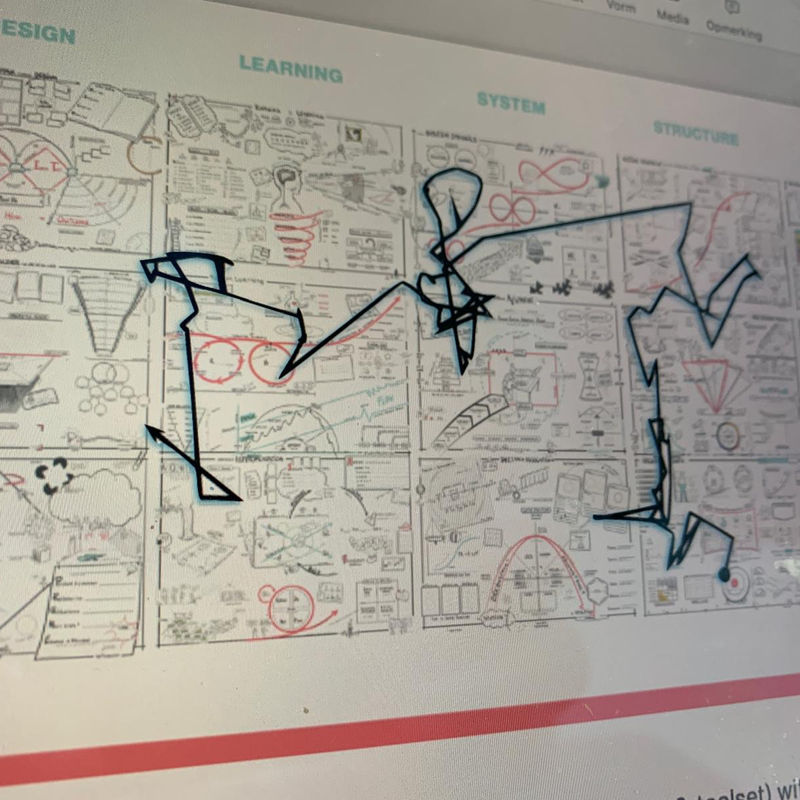
Throughout this journey, Eliace remained my personal "pod" for initiating and funding research. Together with my partner Jörgen, i conducted over 150 interviews with leaders and change experts worldwide, experimenting with new software and methodologies. I documented my learnings daily or weekly, turning Eliace into a personal super journal of sorts, powered by Evernote and numerous folders of notes, notes and notes.

.